Genista monspessulana
French broom
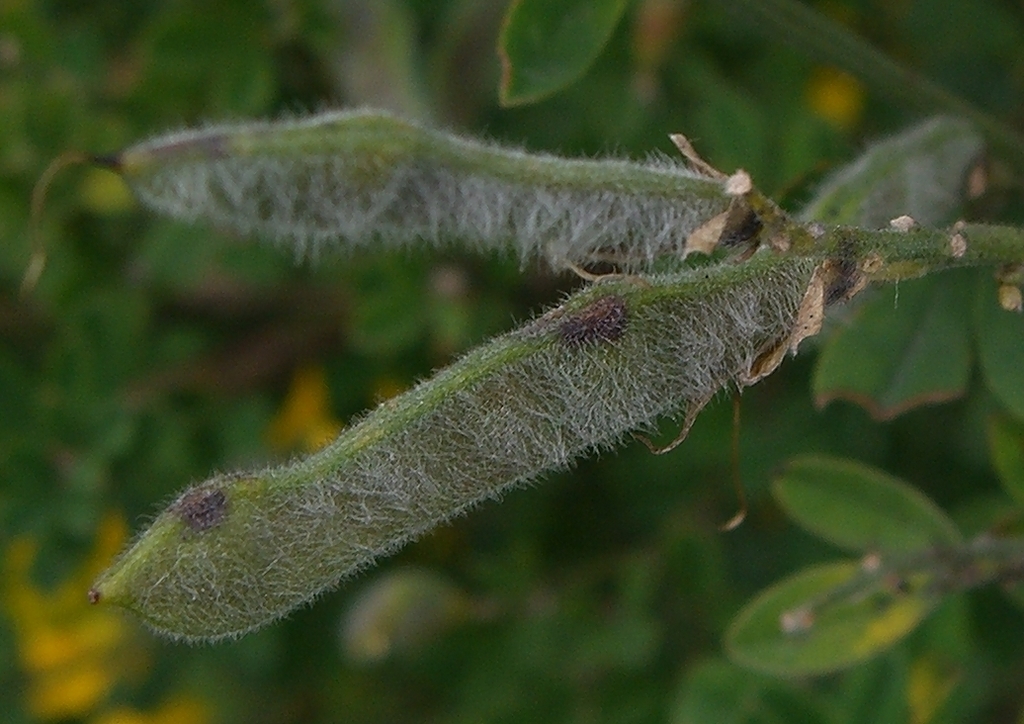
(c) Philipp Weigell, some rights reserved (CC BY) · licence
Family: Fabaceae · Type: Shrub · Not Native
Conservation status: Cal-IPC Yes
Genista monspessulana (French broom) is a non-native California shrub in the Fabaceae family, recognized by axillary racemes on short-shoots and widespread distribution are key features.
French broom is a naturalized shrub found in coastal and interior regions of California, including the North Coast, Klamath Ranges, San Francisco Bay Area, southern California islands, and San Diego County in disturbed places at elevations below 900 meters. Flowering from March to June, this plant produces bright yellow flowers in dense, short racemes with 4 to 10 blossoms. Growing as a shrub up to 3 meters tall with silvery-silky hairy twigs, particularly when young, it forms a dense, multi-branched structure. Its leaves are composed of 10 to 15 millimeter oblanceolate to widely obovate leaflets, typically with appressed or spreading hairs on the lower surface. The fruit is a 15 to 25 millimeter pod densely covered in silky hairs, which contributes to its distinctive appearance.
Identification and appearance
Key characters: 4 sympatric species; axillary racemes on short-shoots and widespread distribution are key features
Habitat and range
Habitat: Common. Disturbed places
Elevation: < 900 m
California counties: San Luis Obispo, Sonoma, Humboldt, Solano, Placer, San Diego, Butte, Shasta, Marin, Santa Cruz, Ventura, Los Angeles, San Mateo, Monterey, El Dorado, Amador, Contra Costa, Alameda, Santa Barbara, Napa, Lake, Kern, Calaveras, Mendocino, San Francisco, Santa Clara, Plumas, Madera, Del Norte, Riverside, Tuolumne, Yuba
Outside California: native to Mediterranean, the Azores, Canary Islands
Bloom period
Genista monspessulana blooms Mar-Jun.
Conservation status
Cal-IPC Yes
How to tell it apart
vs Cytisus: Genista style bends sharply at tip; Scotch broom style curves gently throughout or bends in middle.; vs Acmispon: Genista is tall woody shrub; deerweed is low herbaceous plant with flowers in small clusters.; vs Spartium: Genista has leafy stems; Spanish broom has nearly leafless rush-like stems.; vs Lupinus: Genista has 1-3 tiny leaflets; lupine has 5-17 large leaflets in palm arrangement.; vs Baccharis: Genista has yellow pea flowers; baccharis has tiny white/cream fuzzy flowers in clusters.
Frequently asked questions
Is Genista monspessulana native to California?
No. Genista monspessulana is not native to California (recorded as not native).
When does Genista monspessulana bloom?
Genista monspessulana blooms Mar-Jun.
Where in California does Genista monspessulana grow?
Genista monspessulana occurs in San Luis Obispo, Sonoma, Humboldt, Solano, Placer, San Diego, Butte, Shasta and other counties, at elevations of < 900 m.
What plant family does Genista monspessulana belong to?
Genista monspessulana is in the Fabaceae family, genus Genista.
Is Genista monspessulana invasive in California?
Genista monspessulana is listed by Cal-IPC with an invasiveness rating of Yes.
Related species
Other California species in the same genus, family, or bioregion.
Sources: Jepson eFlora · Index of California Plant Names · CalPhotos
Last updated 2026-10-07
Data from The California Species Project — 14,000+ California species with verified data from CNPS, CDFW, USFWS, Cal-IPC, and more.