Githopsis specularioides
Common bluecup
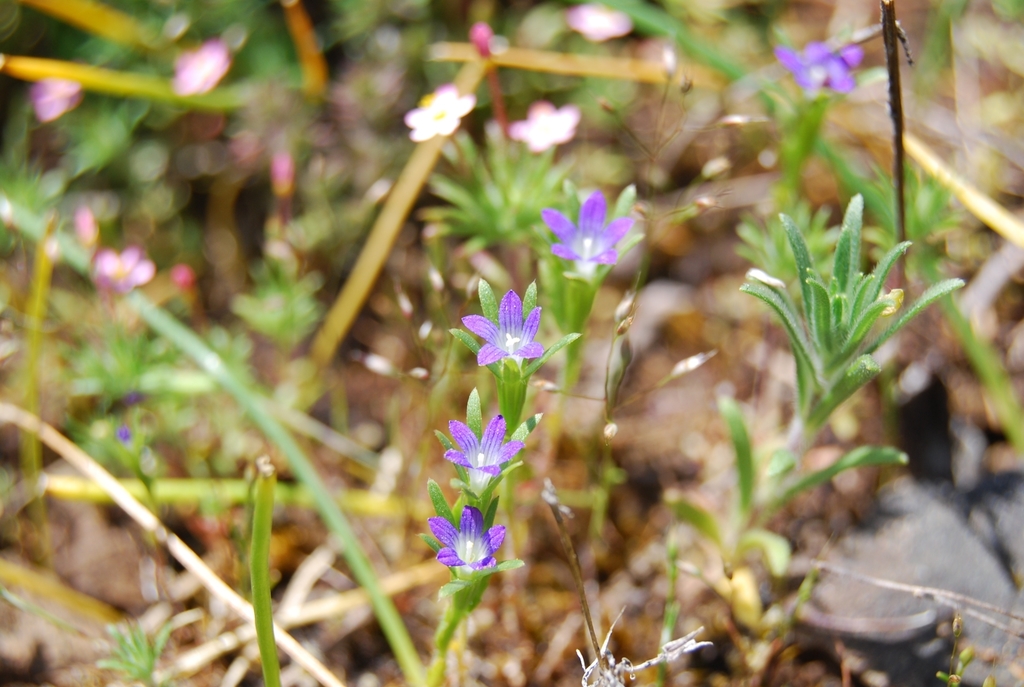
no rights reserved · CC0
Family: Campanulaceae · Type: Herb · Native
Githopsis specularioides (Common bluecup) is a native California herb in the Campanulaceae family, recognized by obconic ovary shape and typically stalked flowers.
Common bluecup is a California native annual found in the Klamath Ranges, northern Coast Ranges, Cascade Range, Sierra Nevada, Sacramento Valley, San Francisco Bay Area, and southern Coast Ranges in San Luis Obispo, Kern, and San Bernardino counties in chaparral and oak woodland at elevations of 60 to 1,500 meters. Flowering from April to May, this plant produces deep blue flowers 4.5 to 14 millimeters long, funnel-shaped with lobes slightly shorter than the flower tube. Growing with slender stems 2 to 40 centimeters tall, it can be either entirely glabrous or slightly hairy. Its leaves are small, measuring 4 to 20 millimeters long, with lanceolate to oblong bracts 3 to 12 millimeters in length. The plant's distinctive deep blue flowers and delicate structure make it a charming component of California's spring wildflower landscapes.
Identification and appearance
Key characters: 7 sympatric species; obconic ovary shape and typically stalked flowers
Habitat and range
Habitat: Chaparral, oak woodland
Elevation: 60-1500 m
California counties: Humboldt, Sonoma, Calaveras, Mariposa, Lake, Madera, Placer, El Dorado, Napa, Santa Clara, Butte, Monterey, Del Norte, Fresno, Siskiyou, Tuolumne, Trinity, Alameda, Kern, San Mateo, Modoc, Marin, San Benito, Sacramento, Tehama, Plumas, Sutter, Shasta, Glenn, Sierra, Colusa, Stanislaus, Santa Cruz, Contra Costa, Nevada, Mendocino, Tulare, Amador, San Luis Obispo, Santa Barbara, San Diego, Yuba, Solano, San Bernardino, Riverside
Outside California: to British Columbia
Bloom period
Githopsis specularioides blooms Apr-May.
How to tell it apart
vs Campanula: Campanula flowers on stalks along stem; Githopsis flowers cluster at stem tips with ragged-opening capsules.; vs Asyneuma: Asyneuma has 2-4 flowers per node along stem; Githopsis has flowers massed at stem tips.; vs Triodanis: Triodanis flowers press to stem in leaf joints; Githopsis flowers cluster at stem tips.; vs Heterocodon: Heterocodon flowers press to stem with huge leafy sepals; Githopsis flowers sit at stem tips with small bracts.
Frequently asked questions
Is Githopsis specularioides native to California?
Yes. Githopsis specularioides is native to California (recorded as native).
When does Githopsis specularioides bloom?
Githopsis specularioides blooms Apr-May.
Where in California does Githopsis specularioides grow?
Githopsis specularioides occurs in Humboldt, Sonoma, Calaveras, Mariposa, Lake, Madera, Placer, El Dorado and other counties, at elevations of 60-1500 m.
What plant family does Githopsis specularioides belong to?
Githopsis specularioides is in the Campanulaceae family, genus Githopsis.
What habitat does Githopsis specularioides grow in?
Githopsis specularioides grows in Chaparral, oak woodland.
Related species
Other California species in the same genus, family, or bioregion.
- Githopsis tenella — Delicate bluecup
- Githopsis diffusa — San Gabriel bluecup
- Githopsis diffusa subsp. candida
- Githopsis diffusa subsp. diffusa
- Githopsis diffusa subsp. filicaulis — Mission canyon bluecup
- Githopsis diffusa subsp. robusta
- Heterocodon rariflorum — Few flowered heterocodon
- Heterocodon sp.
- Howellia aquatilis — Water howellia
Sources: Jepson eFlora · Index of California Plant Names · CalPhotos
Last updated 2026-10-07
Data from The California Species Project — 14,000+ California species with verified data from CNPS, CDFW, USFWS, Cal-IPC, and more.