Glaucium flavum
Sea poppy, Sea Poppy
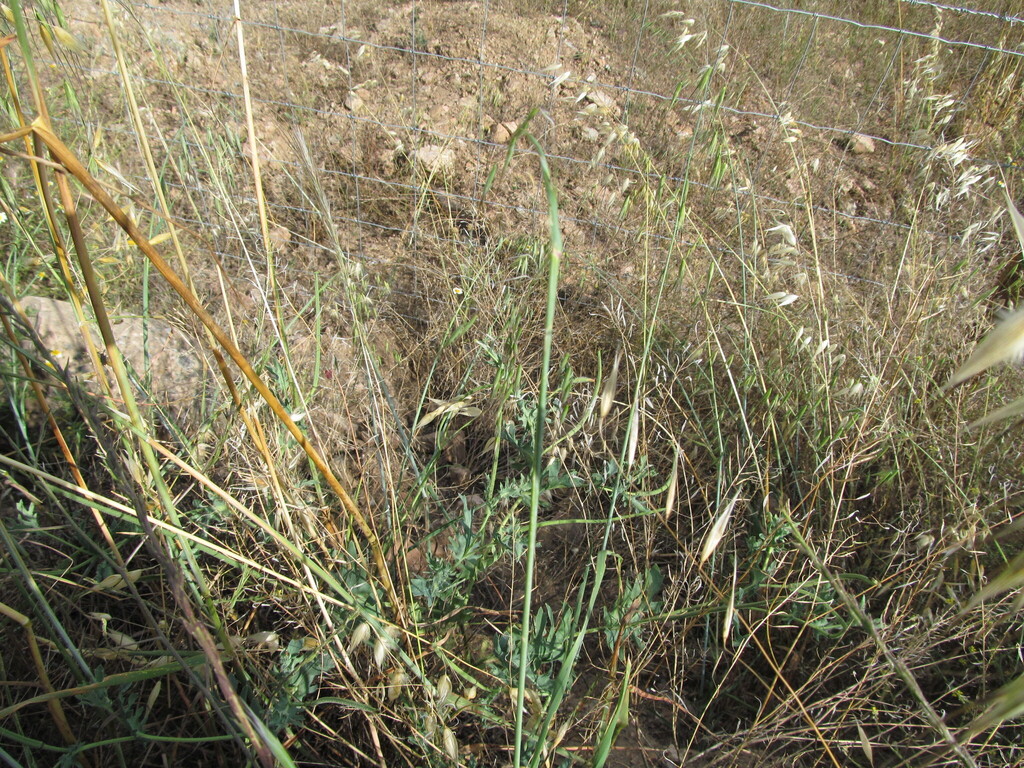
(c) zebedeugalinha, some rights reserved (CC BY) · licence
Family: Papaveraceae · Type: Herb · Not Native
Glaucium flavum (Sea poppy) is a non-native California herb in the Papaveraceae family, recognized by European genus rarely established in California, representing Mediterranean poppy flora.
Sea poppy is a naturalized perennial found in coastal western and southwestern California in disturbed areas at elevations below 1,000 meters. Flowering from June to September, this plant produces large yellow to orange flowers with petals 2 to 4 centimeters long. Growing with robust stems 50 to 100 centimeters tall, it develops stiff, hairy foliage with distinctive characteristics. Its upper leaves are ovate, toothed, and clasp the stem, ranging 5 to 30 centimeters in length. The plant produces striking elongated fruits 15 to 30 centimeters long, making it a dramatic and unusual addition to disturbed landscapes.
Identification and appearance
Key characters: European genus rarely established in California, representing Mediterranean poppy flora
Habitat and range
Habitat: Uncommon. Disturbed areas
Elevation: < 1000 m
Outside California: native to Europe
Bloom period
Glaucium flavum blooms Jun-Sep.
How to tell it apart
vs Eschscholzia: Glaucium has 2 free sepals; Eschscholzia sepals are fused into a pointed cap.; vs Papaver: Glaucium fruit splits along 2 seams; Papaver opens by pores at top.; vs Argemone: Glaucium is unarmed; Argemone is covered in sharp spines.; vs Arctomecon: Glaucium has short hairs; Arctomecon has conspicuous long wavy hairs.
Frequently asked questions
Is Glaucium flavum native to California?
No. Glaucium flavum is not native to California (recorded as not native).
When does Glaucium flavum bloom?
Glaucium flavum blooms Jun-Sep.
What plant family does Glaucium flavum belong to?
Glaucium flavum is in the Papaveraceae family, genus Glaucium.
What habitat does Glaucium flavum grow in?
Glaucium flavum grows in Uncommon. Disturbed areas.
Related species
Other California species in the same genus, family, or bioregion.
Sources: Jepson eFlora · CalPhotos
Last updated 2026-10-07
Data from The California Species Project — 14,000+ California species with verified data from CNPS, CDFW, USFWS, Cal-IPC, and more.