Glycyrrhiza lepidota
Wild licorice, Wild Licorice
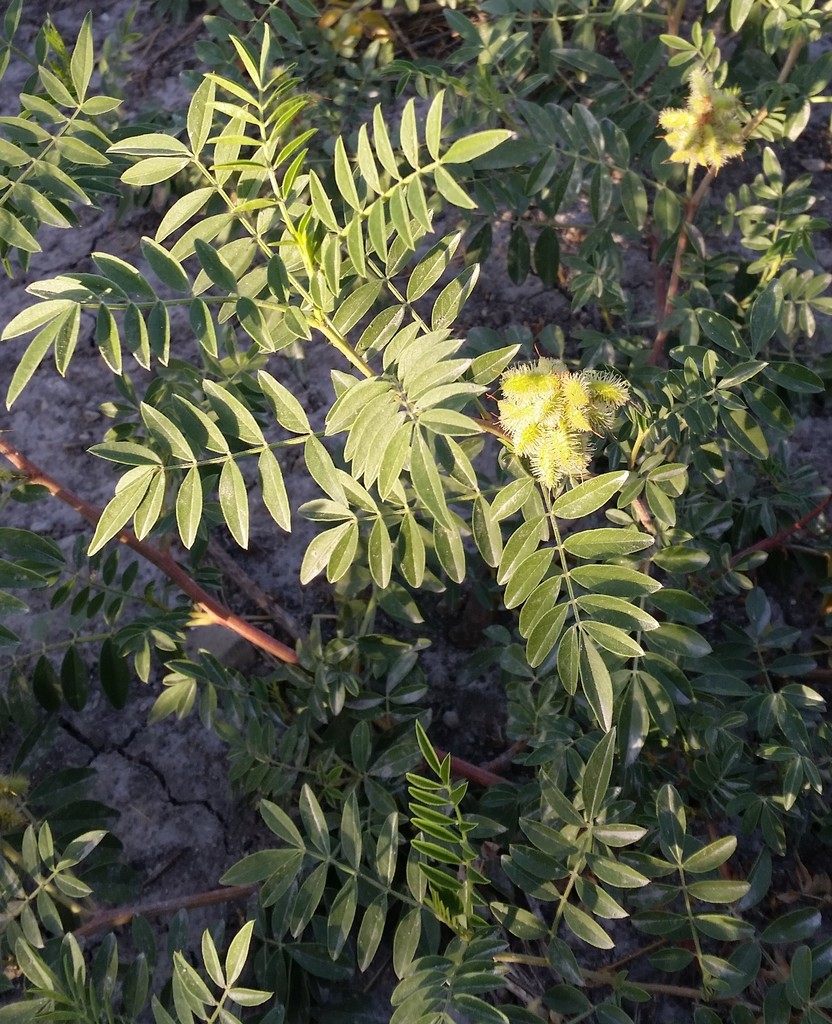
(c) zookanthos, some rights reserved (CC BY), uploaded by zookanthos · licence
Family: Fabaceae · Type: Herb · Native
Glycyrrhiza lepidota (Wild licorice) is a native California herb in the Fabaceae family, recognized by (G. glabra). Clear differences in flower color, leaflet shape, inflorescence density, and native status.
Wild licorice is a California native perennial found in moist, open disturbed areas including streambanks and roadsides at elevations below 2,000 meters. Flowering from May to July, this plant produces pale yellow to green-white flowers with a faint purple tinge, clustered in dense inflorescences. Growing with stems that range from completely smooth to glandular-hairy, it forms colonies in various habitats including alkaline soils. Its compound leaves feature 9 to 19 narrow leaflets, each lanceolate to ovate in shape. The fruit develops 12 to 20 millimeters long, contributing to the plant's distinctive legume characteristics.
Identification and appearance
Key characters: 1 sympatric species (G. glabra). Clear differences in flower color, leaflet shape, inflorescence density, and native status.
Habitat and range
Habitat: In colonies, moist, generally open, disturbed areas including streambanks, roadsides, alkaline soils or not
Elevation: < 2000 m
California counties: Riverside, Kern, Los Angeles, Ventura, Inyo, San Bernardino, Orange, San Luis Obispo, San Joaquin, Imperial, San Benito, San Diego, Mendocino, Alameda, Santa Clara, San Mateo, Fresno, Tulare, Sonoma, Lake, Contra Costa, Mono, Shasta, Solano, Sacramento, Yolo, Butte, Merced, Glenn, Colusa, Tehama, Monterey, Santa Barbara, Stanislaus, Amador, Napa, Siskiyou, Humboldt, Tuolumne, Del Norte
Outside California: to Canada, central United States, Mexico
Bloom period
Glycyrrhiza lepidota blooms May-Jul.
How to tell it apart
vs Foeniculum: Glycyrrhiza has bristly legume pods; Foeniculum has smooth ridged seeds and anise smell.; vs Astragalus: Glycyrrhiza leaflets 6-10mm wide; Astragalus leaflets narrower, typically under 5mm.; vs Juglans: Glycyrrhiza is herbaceous with bristly pods; Juglans is woody tree with nuts.; vs Psorothamnus: Glycyrrhiza lacks gland-dots and has broad leaflets; Psorothamnus has gland-dotted narrow leaflets.; vs Marina: Glycyrrhiza has broad 6-10mm leaflets; Marina has tiny narrow leaflets.
Frequently asked questions
Is Glycyrrhiza lepidota native to California?
Yes. Glycyrrhiza lepidota is native to California (recorded as native).
When does Glycyrrhiza lepidota bloom?
Glycyrrhiza lepidota blooms May-Jul.
Where in California does Glycyrrhiza lepidota grow?
Glycyrrhiza lepidota occurs in Riverside, Kern, Los Angeles, Ventura, Inyo, San Bernardino, Orange, San Luis Obispo and other counties, at elevations of < 2000 m.
What plant family does Glycyrrhiza lepidota belong to?
Glycyrrhiza lepidota is in the Fabaceae family, genus Glycyrrhiza.
What habitat does Glycyrrhiza lepidota grow in?
Glycyrrhiza lepidota grows in In colonies, moist, generally open, disturbed areas including streambanks, roadsides, alkaline soils or not.
Related species
Other California species in the same genus, family, or bioregion.
Sources: Jepson eFlora · Index of California Plant Names · CalPhotos
Last updated 2026-10-07
Data from The California Species Project — 14,000+ California species with verified data from CNPS, CDFW, USFWS, Cal-IPC, and more.