Gnaphalium palustre
Lowland cudweed
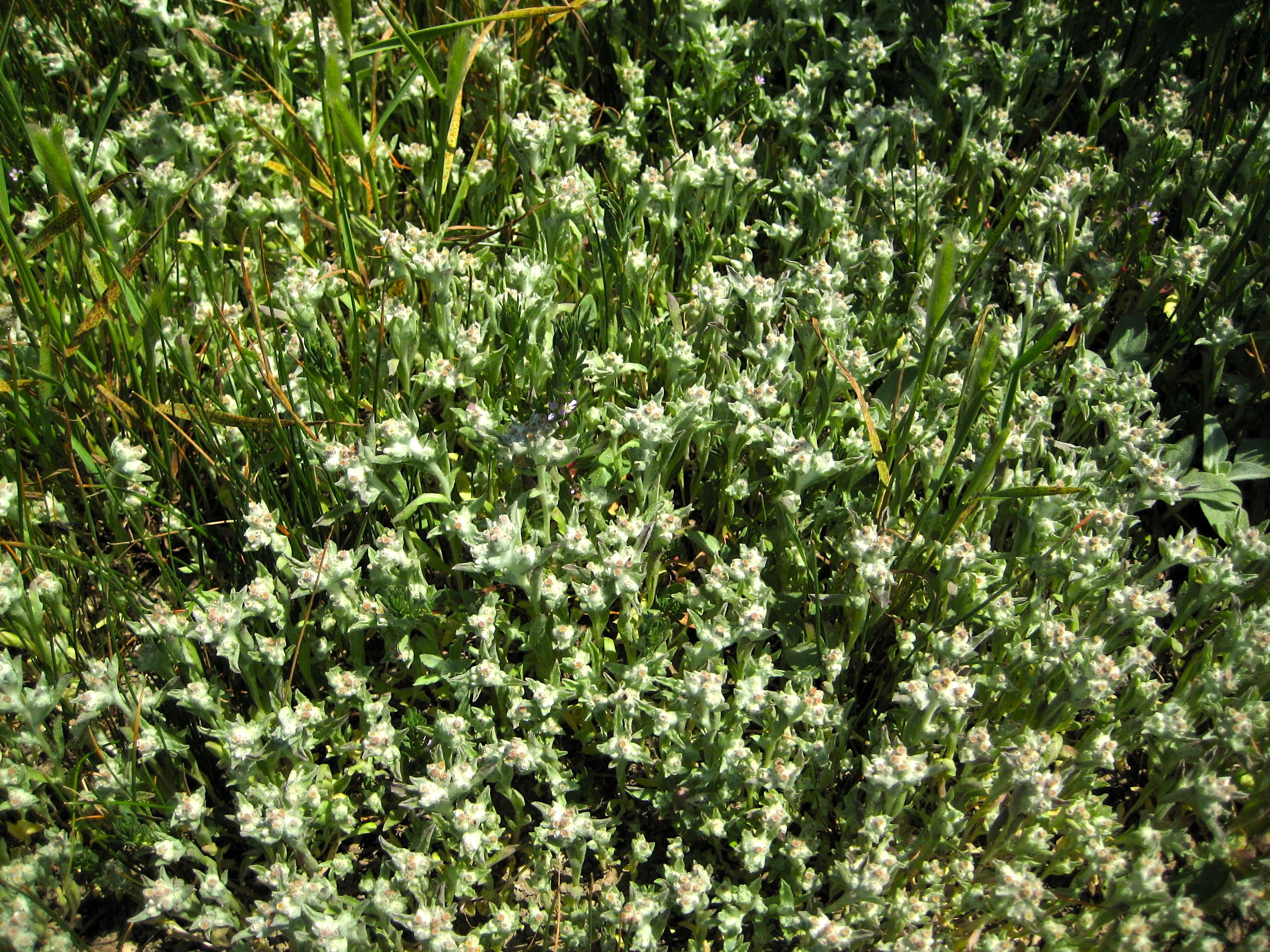
Photo by Chez Brungraber
Family: Asteraceae · Type: Herb · Native
Gnaphalium palustre (Lowland cudweed) is a native California herb in the Asteraceae family, recognized by Only Gnaphalium species remaining in California after genus split with Pseudognaphalium.
Lowland cudweed is a California native annual found in sandy streambeds, arroyos, and pond edges at elevations below 3,590 meters. Flowering from May to October, this plant produces small white to pale yellow flowers in compact head-like clusters at the tips of decumbent stems. Growing with delicate branching stems 3 to 15 centimeters tall, it develops a distinctive low-spreading growth habit. Its leaves are spoon-shaped to oblanceolate, measuring 1 to 3.5 centimeters long and 3 to 8 millimeters wide, creating a soft green ground-hugging appearance. The plant's subtle inflorescences feature woolly-based bracts with brownish inner phyllaries that have opaque, blunt tips.
Identification and appearance
Key characters: Only Gnaphalium species remaining in California after genus split with Pseudognaphalium
Habitat and range
Habitat: Arroyos, sandy streambeds, pond edges, potholes
Elevation: < 3590 m
Outside California: Canada, western United States, Mexico
Bloom period
Gnaphalium palustre blooms May-Oct.
How to tell it apart
vs Pseudognaphalium: Gnaphalium stays low and prostrate in wet habitats; Pseudognaphalium grows erect to 200 cm in dry habitats.; vs Logfia: Gnaphalium has woolly flower heads visible above the foliage; Logfia has heads hidden among dense woolly leaves.; vs Eriophyllum: Gnaphalium has white woolly heads without ray petals; Eriophyllum has bright yellow daisy-like flowers with obvious rays.; vs Psilocarphus: Gnaphalium has woolly flower clusters along stems; Psilocarphus has heads in dense, spherical woolly balls at branch tips.; vs Gamochaeta: Gnaphalium has open, spreading stems with looser flower clusters; Gamochaeta has tight spike-like flower clusters with purple-tinged bracts.
Frequently asked questions
Is Gnaphalium palustre native to California?
Yes. Gnaphalium palustre is native to California (recorded as native).
When does Gnaphalium palustre bloom?
Gnaphalium palustre blooms May-Oct.
What plant family does Gnaphalium palustre belong to?
Gnaphalium palustre is in the Asteraceae family, genus Gnaphalium.
What habitat does Gnaphalium palustre grow in?
Gnaphalium palustre grows in Arroyos, sandy streambeds, pond edges, potholes.
Related species
Other California species in the same genus, family, or bioregion.
Sources: Jepson eFlora · Index of California Plant Names · CalPhotos
Last updated 2026-10-07
Data from The California Species Project — 14,000+ California species with verified data from CNPS, CDFW, USFWS, Cal-IPC, and more.