Gypsophila vaccaria
Cow-herb
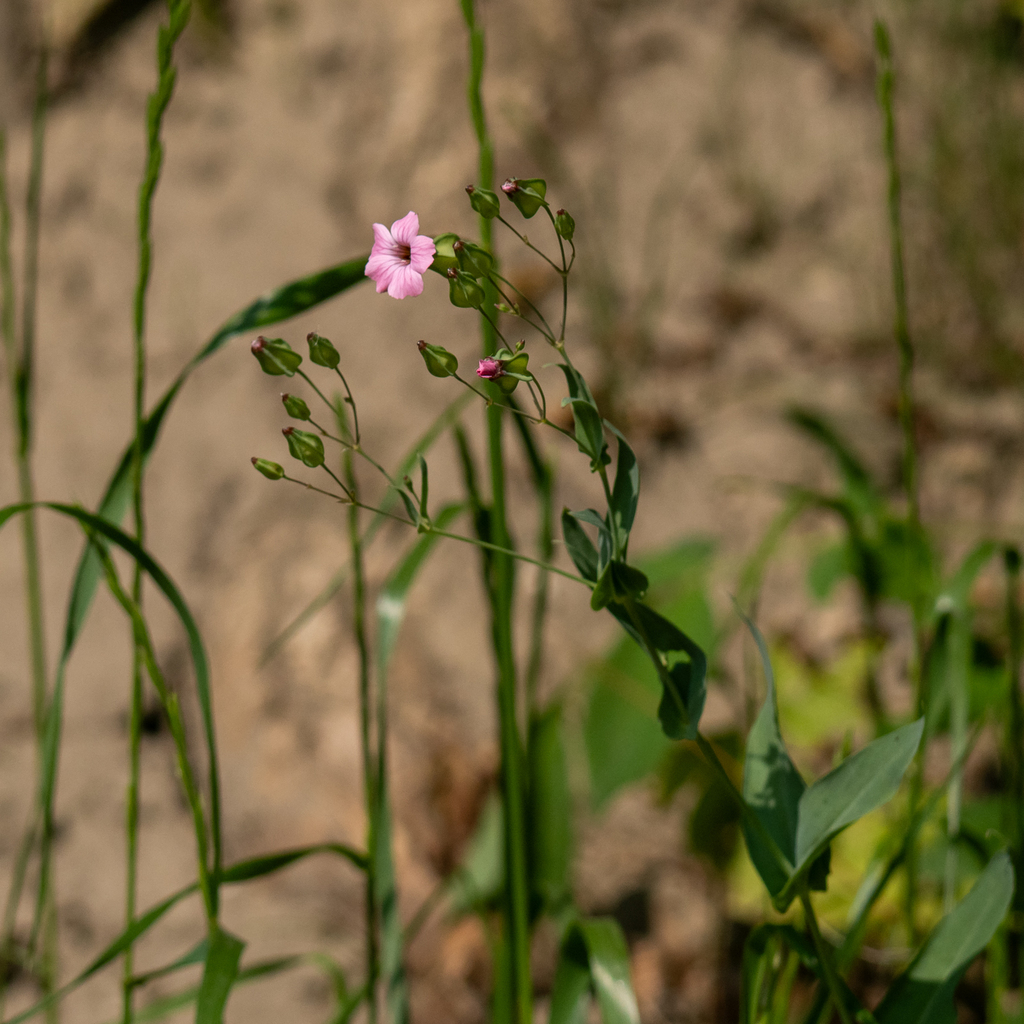
(c) Piotr Lukasik, some rights reserved (CC BY) · licence
Family: Caryophyllaceae · Type: Herb · Not Native
Gypsophila vaccaria (Cow-herb) is a non-native California herb in the Caryophyllaceae family, recognized by large size, winged calyx, and large pink flowers.
Cow-herb is a naturalized annual found in the Klamath Ranges, northern California Coast Ranges, California Ranges, central Sierra Nevada Foothills, northern Sierra Nevada, Tehachapi Mountains, Sacramento Valley, Central Western California, southern California, Peninsular Ranges, and Great Basin in disturbed areas at elevations below 2,800 meters. Flowering from May to August, this plant produces pink to reddish flowers 15 to 25 millimeters long with oblanceolate to obovate petals. Growing 20 to 100 centimeters tall with a glaucous, glabrous appearance and a deep taproot, it forms an upright annual with a flat-topped, open flowering structure. Its leaves are lanceolate to ovate, 8 to 30 millimeters wide, with rounded to heart-shaped bases that may be petioled or sessile. The flower's distinctive calyx is cylindric to urn-shaped, 7.5 to 17 millimeters long, with five slightly winged angles and triangular teeth.
Identification and appearance
Key characters: 3 sympatric species; distinguished by large size, winged calyx, and large pink flowers
Habitat and range
Habitat: Disturbed areas
Elevation: < 2800 m
California counties: San Bernardino, Orange, Los Angeles, Kern, Lake, Modoc, Alameda, Amador, Calaveras, Inyo, Monterey, Plumas, San Diego, San Luis Obispo, Santa Barbara, Sierra, Siskiyou, Sonoma, Tulare, Tuolumne, Merced, Lassen, Sutter, Humboldt, Mono, Colusa, Shasta, Butte
Outside California: +- North America; native to Eurasia, Mediterranean.
Bloom period
Gypsophila vaccaria blooms May-Aug.
How to tell it apart
vs Torilis: Gypsophila has cloud-like flower masses with 5-petaled flowers; Torilis has umbrella-shaped clusters with tiny white umbels.; vs Lobularia: Gypsophila has tubular flowers with visible sepals; Lobularia has 4-petaled cross-shaped flowers with no visible tube.; vs Eriogonum: Gypsophila has opposite leaves and tubular flowers; Eriogonum has basal leaf rosettes and papery flower bracts.; vs Saponaria: Gypsophila has tiny flowers (tube under 5mm) with white-striped tubes; Saponaria has large flowers (tube 9-25mm) with solid green tubes.; vs Vaccaria: Gypsophila has cup-shaped tubes under 5mm with white stripes; Vaccaria has angled tubes 9-25mm that are solid green.
Frequently asked questions
Is Gypsophila vaccaria native to California?
No. Gypsophila vaccaria is not native to California (recorded as not native).
When does Gypsophila vaccaria bloom?
Gypsophila vaccaria blooms May-Aug.
Where in California does Gypsophila vaccaria grow?
Gypsophila vaccaria occurs in San Bernardino, Orange, Los Angeles, Kern, Lake, Modoc, Alameda, Amador and other counties, at elevations of < 2800 m.
What plant family does Gypsophila vaccaria belong to?
Gypsophila vaccaria is in the Caryophyllaceae family, genus Gypsophila.
What habitat does Gypsophila vaccaria grow in?
Gypsophila vaccaria grows in Disturbed areas.
Related species
Other California species in the same genus, family, or bioregion.
Sources: Jepson eFlora · CalPhotos
Last updated 2026-10-07
Data from The California Species Project — 14,000+ California species with verified data from CNPS, CDFW, USFWS, Cal-IPC, and more.