Helianthus petiolaris subsp. canescens
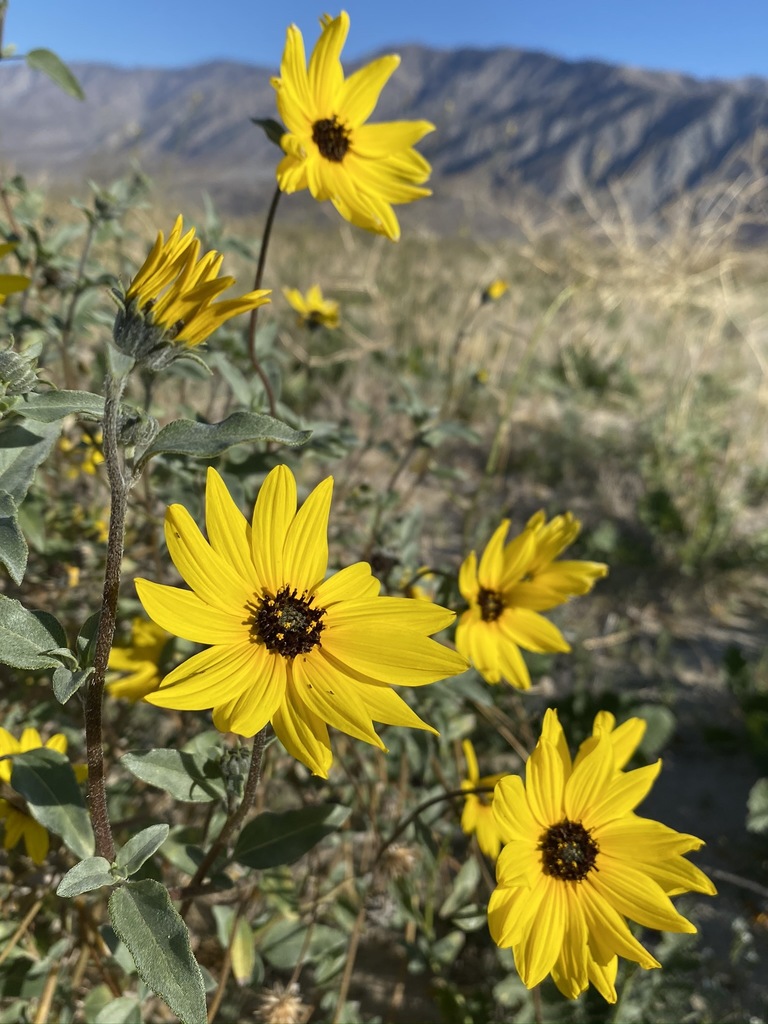
(c) Matt Berger, some rights reserved (CC BY), uploaded by Matt Berger · licence
Family: Asteraceae · Type: Subshrub · Native
Helianthus petiolaris subsp. canescens is a native California subshrub in the Asteraceae family, recognized by dense gray hairiness and glandular leaves.
Alkali sunflower is a California native annual found in the southern deserts, particularly in sandy soils at elevations below 300 meters. Flowering from March to June, this plant produces yellow flowers with dark centers in heads surrounded by densely hairy bracts. Growing with stiff-spreading stems densely covered in grayish strigose hairs, it reaches moderate heights in its arid desert habitat. Its leaves are similarly densely covered in grayish hairs, with a notably glandular undersurface that gives the foliage a distinctive silvery-green appearance. The plant thrives in challenging sandy environments, adapting to the sparse, harsh conditions of its desert ecosystem.
Identification and appearance
Key characters: 2 sympatric species; distinguished by dense gray hairiness and glandular leaves
Habitat and range
Habitat: Sandy soils
Elevation: < 300 m
California counties: San Diego, Riverside
Bloom period
Helianthus petiolaris subsp. canescens blooms Mar-Jun.
How to tell it apart
vs Encelia: Helianthus is herbaceous with soft stems; Encelia is a woody shrub with persistent branches.; vs Bahiopsis: Helianthus has soft herbaceous stems; Bahiopsis is woody-based with persistent woody stems.; vs Wyethia: Helianthus has smaller disk flowers and readily falling seed scales; Wyethia has very large 8-12mm disk flowers.; vs Rudbeckia: Helianthus has a flat or rounded yellow center; Rudbeckia has a tall dark cone-shaped center.; vs Venegasia: Helianthus dies back to ground level; Venegasia is a large evergreen shrub in shaded canyons.
Frequently asked questions
Is Helianthus petiolaris subsp. canescens native to California?
Yes. Helianthus petiolaris subsp. canescens is native to California (recorded as native).
When does Helianthus petiolaris subsp. canescens bloom?
Helianthus petiolaris subsp. canescens blooms Mar-Jun.
Where in California does Helianthus petiolaris subsp. canescens grow?
Helianthus petiolaris subsp. canescens occurs in San Diego, Riverside, at elevations of < 300 m.
What plant family does Helianthus petiolaris subsp. canescens belong to?
Helianthus petiolaris subsp. canescens is in the Asteraceae family, genus Helianthus.
What habitat does Helianthus petiolaris subsp. canescens grow in?
Helianthus petiolaris subsp. canescens grows in Sandy soils.
Related species
Other California species in the same genus, family, or bioregion.
Sources: Jepson eFlora · Index of California Plant Names · CalPhotos
Last updated 2026-10-07
Data from The California Species Project — 14,000+ California species with verified data from CNPS, CDFW, USFWS, Cal-IPC, and more.