Hesperocyparis nevadensis
Piute cypress
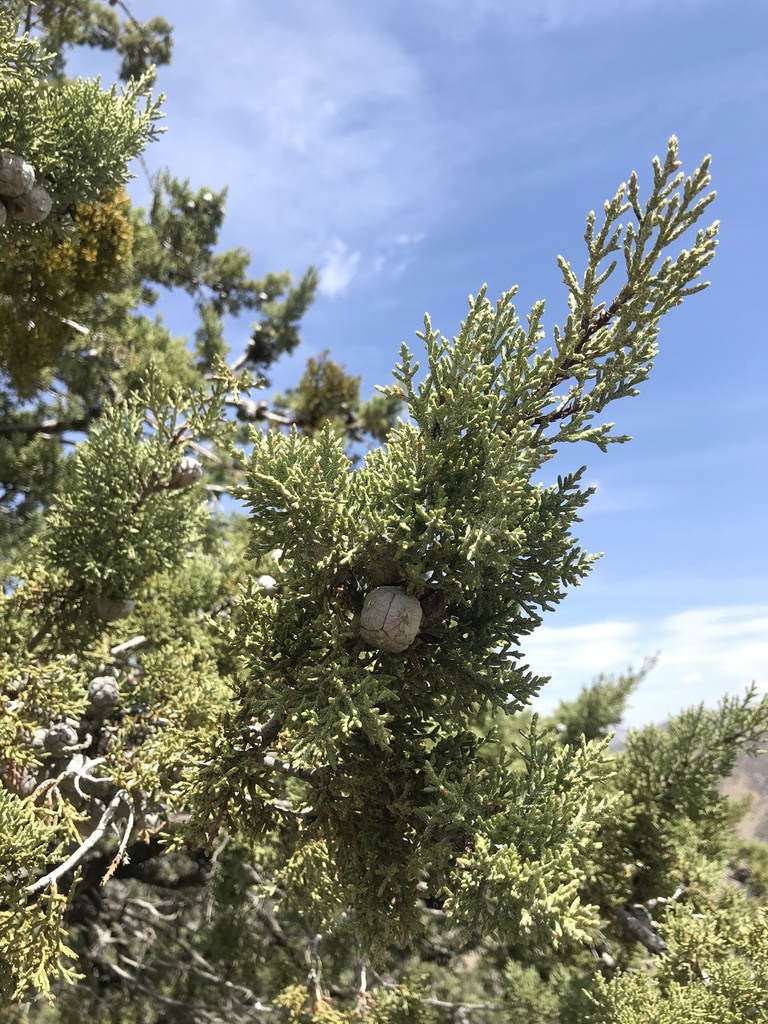
(c) Mike Heine, some rights reserved (CC BY) · licence
Family: Cupressaceae · Type: Tree · Native
Conservation status: CNPS 1B.2
Hesperocyparis nevadensis (Piute cypress) is a native California tree in the Cupressaceae family, recognized by geographic range, resin glands, and cone characteristics diagnostic.
Piute cypress is a rare (CNPS 1B.2) native tree found in southern Sierra Nevada Mountains in Kern and Tulare counties, growing in pinyon/juniper woodland, oak/pine woodland, chaparral, and closed-cone cypress forest at elevations of 750 to 1,800 meters. Its bark ranges from gray to red-brown or cherry-red, with a distinctive fibrous texture that distinguishes this cypress from other species. Growing 5 to 12 meters tall, with occasional specimens reaching 25 meters, the tree features ultimate branches approximately 1 to 1.2 millimeters in diameter and dull to gray-green leaves with conspicuous resin-covering glands. Its leaves are characterized by a distinctive grayish-green color with prominent resin glands that give the foliage a unique appearance. The tree produces seed cones 20 to 30 millimeters long, often turning silver-gray with age and containing seeds that are 3 to 6 millimeters long, typically light to red-brown and glaucous.
Identification and appearance
Key characters: 2 sympatric species; geographic range, resin glands, and cone characteristics diagnostic
Habitat and range
Habitat: Pinyon/juniper or oak/pine woodland, chaparral, closed-cone-cypress forest
Elevation: 750-1800 m
California counties: Kern, Ventura, Tulare, Los Angeles
Conservation status
CNPS 1B.2
How to tell it apart
vs Cupressus: Same genus (Cupressus is old name for Hesperocyparis); check current taxonomy for your region.; vs Juniperus: Hesperocyparis has woody cones with 6-12 scales; Juniperus has fleshy berry-like cones.; vs Pinus: Hesperocyparis has tiny scale leaves; Pinus has long needles in bundles.; vs Sequoia: Hesperocyparis has 3D spreading branches and persistent closed cones; Sequoia has horizontal branches with flat needles.; vs Cedrus: Hesperocyparis has scale leaves and round cones; Cedrus has needles in clusters and upright barrel-shaped cones.
Frequently asked questions
Is Hesperocyparis nevadensis native to California?
Yes. Hesperocyparis nevadensis is native to California (recorded as native).
Where in California does Hesperocyparis nevadensis grow?
Hesperocyparis nevadensis occurs in Kern, Ventura, Tulare, Los Angeles, at elevations of 750-1800 m.
What plant family does Hesperocyparis nevadensis belong to?
Hesperocyparis nevadensis is in the Cupressaceae family, genus Hesperocyparis.
Is Hesperocyparis nevadensis rare or endangered?
Hesperocyparis nevadensis carries California Rare Plant Rank 1B.2, state rank S2.
What habitat does Hesperocyparis nevadensis grow in?
Hesperocyparis nevadensis grows in Pinyon/juniper or oak/pine woodland, chaparral, closed-cone-cypress forest.
Related species
Other California species in the same genus, family, or bioregion.
Sources: Jepson eFlora · CNPS Rare Plant Inventory · Index of California Plant Names · CalPhotos · CDFW CNDDB
Last updated 2026-10-07
Data from The California Species Project — 14,000+ California species with verified data from CNPS, CDFW, USFWS, Cal-IPC, and more.