Hesperocyparis sargentii
Sargent cypress
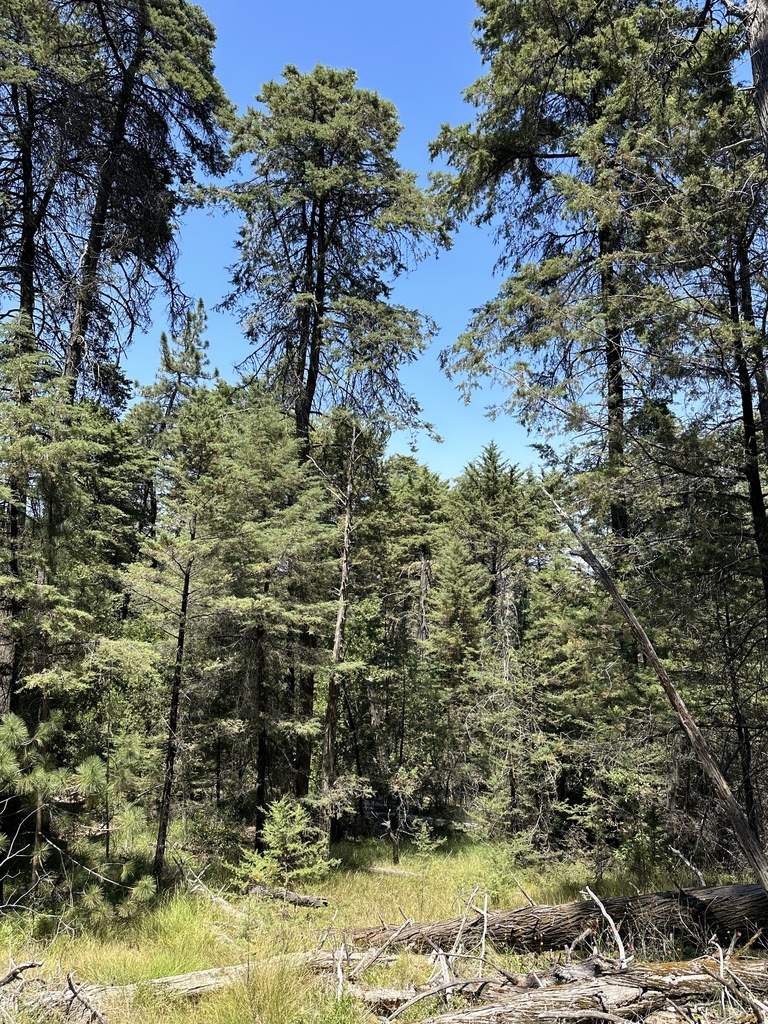
(c) paulexcoff, some rights reserved (CC BY-SA), uploaded by paulexcoff · licence
Family: Cupressaceae · Type: Shrub / Tree · Native
Hesperocyparis sargentii (Sargent cypress) is a native California shrub / tree in the Cupressaceae family, recognized by bark thickness, foliage color, and serpentine habitat diagnostic.
Sargent cypress is a California native tree found in the northern Coast Ranges, San Francisco Bay Area, and southern Coast Ranges in closed-cone pine and cypress forests, yellow-pine forests, and chaparral, particularly on serpentine landscapes at elevations of 60 to 1,370 meters. A distinctive conifer with thick, fibrous bark that ranges from gray to dark brown, this tree can reach heights of 6 to 20 meters with ultimate branches less than 1.2 millimeters in diameter. Its leaves are a muted, dusty to gray-green color, creating a soft, understated appearance across its cylindric to four-sided branching structure. The tree produces seed cones that are spheric, 15 to 25 millimeters long, with a rough surface in dull brown to gray tones and 6 to 10 distinct scales. Seeds are dark brown, approximately 3 to 5.3 millimeters long, with a notably conspicuous attachment scar.
Identification and appearance
Key characters: 3 sympatric species; bark thickness, foliage color, and serpentine habitat diagnostic
Habitat and range
Habitat: Closed-cone-pine/cypress, yellow-pine forests, chaparral, on serpentine
Elevation: 60-1370 m
California counties: Mendocino, Marin, Lake, Napa, Sonoma, Alameda, San Luis Obispo, Monterey, Santa Barbara, Colusa
Outside California: reported from southwestern Oregon
How to tell it apart
vs Cupressus: Same genus (Cupressus is old name for Hesperocyparis); check current taxonomy for your region.; vs Juniperus: Hesperocyparis has woody cones with 6-12 scales; Juniperus has fleshy berry-like cones.; vs Pinus: Hesperocyparis has tiny scale leaves; Pinus has long needles in bundles.; vs Sequoia: Hesperocyparis has 3D spreading branches and persistent closed cones; Sequoia has horizontal branches with flat needles.; vs Cedrus: Hesperocyparis has scale leaves and round cones; Cedrus has needles in clusters and upright barrel-shaped cones.
Frequently asked questions
Is Hesperocyparis sargentii native to California?
Yes. Hesperocyparis sargentii is native to California (recorded as native).
Where in California does Hesperocyparis sargentii grow?
Hesperocyparis sargentii occurs in Mendocino, Marin, Lake, Napa, Sonoma, Alameda, San Luis Obispo, Monterey and other counties, at elevations of 60-1370 m.
What plant family does Hesperocyparis sargentii belong to?
Hesperocyparis sargentii is in the Cupressaceae family, genus Hesperocyparis.
What habitat does Hesperocyparis sargentii grow in?
Hesperocyparis sargentii grows in Closed-cone-pine/cypress, yellow-pine forests, chaparral, on serpentine.
Related species
Other California species in the same genus, family, or bioregion.
- Hesperocyparis sp. — Western cypress
- Hesperocyparis stephensonii — Cuyamaca cypress
- Hesperocyparis abramsiana — Santa cruz cypress
- Hesperocyparis abramsiana var. abramsiana — Santa Cruz Cypress
- Hesperocyparis abramsiana var. butanoensis — Santa Cruz Cypress
- Hesperocyparis bakeri — Baker cypress
- Juniperus californica — California juniper
- Juniperus communis — Common juniper
Sources: Jepson eFlora · Index of California Plant Names · CalPhotos
Last updated 2026-10-07
Data from The California Species Project — 14,000+ California species with verified data from CNPS, CDFW, USFWS, Cal-IPC, and more.