Hesperolinon californicum
California dwarf flax
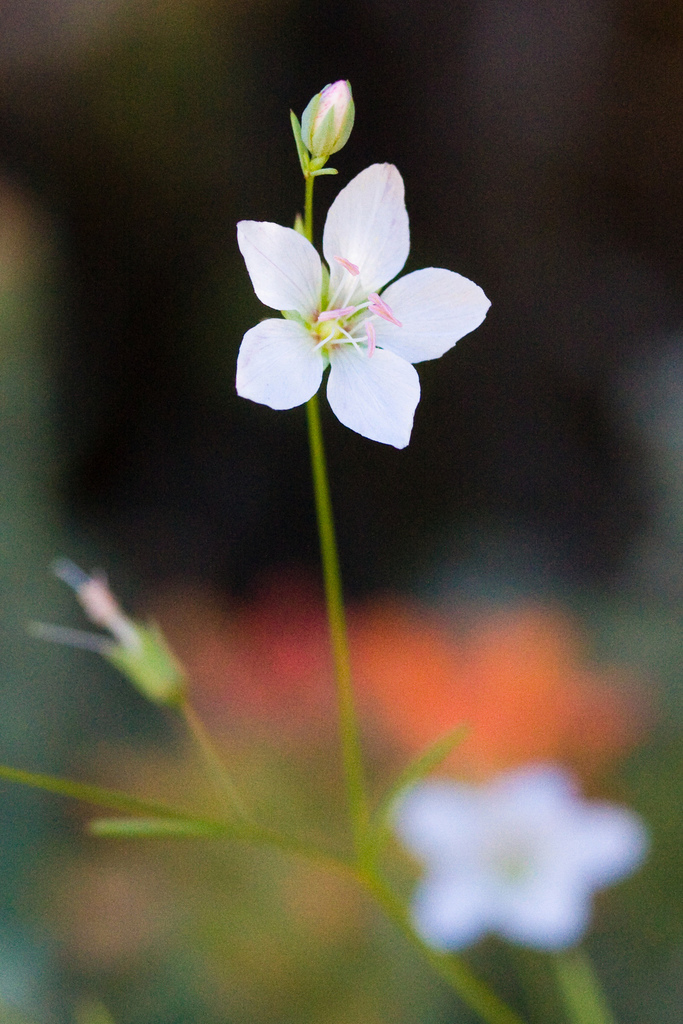
(c) Ken-ichi Ueda, some rights reserved (CC BY) · licence
Family: Linaceae · Type: Herb · Native
Hesperolinon californicum (California dwarf flax) is a native California herb in the Linaceae family, recognized by unique white/pink flowers with red stipule glands.
California dwarf flax is a California native annual found in central and northern coastal California regions, including San Francisco Bay Area, San Francisco Peninsula, coastal areas, and Sierra Nevada foothills in rocky chaparral, grassland, and occasionally serpentine areas at elevations of 30 to 1,300 meters. Flowering from April to July, this delicate plant produces white to partly pink flowers with distinctive rose-colored anthers and white stamens. Growing with slender stems 10 to 25 centimeters tall, it develops thread-like to linear alternate leaves with well-developed stipule glands that produce red exudate. Its leaves are characterized by fine, thread-like structures with glandular edges that create visual interest against its subtle floral display. The plant's small flowers feature glabrous sepals with minutely gland-toothed margins, creating a delicate and intricate botanical profile.
Identification and appearance
Key characters: 5 sympatric species; unique white/pink flowers with red stipule glands
Habitat and range
Habitat: Rocky areas, chaparral, grassland, occasionally on serpentine
Elevation: 30-1300 m
California counties: Lake, Solano, Placer, Colusa, Alameda, Contra Costa, Marin, Merced, Stanislaus, Sutter, Butte, Napa, Sacramento, Tehama, San Joaquin, San Francisco, Sonoma, Yolo, Fresno
Bloom period
Hesperolinon californicum blooms Apr-Jul.
How to tell it apart
vs Linum: Hesperolinon has 2-3 styles and whorled basal leaves; Linum has 5 styles and alternate leaves.; vs Gayophytum: Hesperolinon has whorled leaves and 2-3 styles; Gayophytum has alternate leaves and 4-parted flowers.; vs Eremogone: Hesperolinon has 2-3 styles; Eremogone has 3 styles and opposite leaves throughout.; vs Nemacladus: Hesperolinon has regular radial flowers; Nemacladus has strongly bilateral flowers.; vs Sclerolinon: Hesperolinon has 3 styles and stipule glands present; Sclerolinon has 2 club-shaped styles and no glands.
Frequently asked questions
Is Hesperolinon californicum native to California?
Yes. Hesperolinon californicum is native to California (recorded as native).
When does Hesperolinon californicum bloom?
Hesperolinon californicum blooms Apr-Jul.
Where in California does Hesperolinon californicum grow?
Hesperolinon californicum occurs in Lake, Solano, Placer, Colusa, Alameda, Contra Costa, Marin, Merced and other counties, at elevations of 30-1300 m.
What plant family does Hesperolinon californicum belong to?
Hesperolinon californicum is in the Linaceae family, genus Hesperolinon.
What habitat does Hesperolinon californicum grow in?
Hesperolinon californicum grows in Rocky areas, chaparral, grassland, occasionally on serpentine.
Related species
Other California species in the same genus, family, or bioregion.
Sources: Jepson eFlora · Index of California Plant Names · CalPhotos
Last updated 2026-10-07
Data from The California Species Project — 14,000+ California species with verified data from CNPS, CDFW, USFWS, Cal-IPC, and more.