Hesperolinon drymarioides
Drymaria-like western flax
no rights reserved · CC0
Family: Linaceae · Type: Herb · Native
Conservation status: CNPS 1B.2
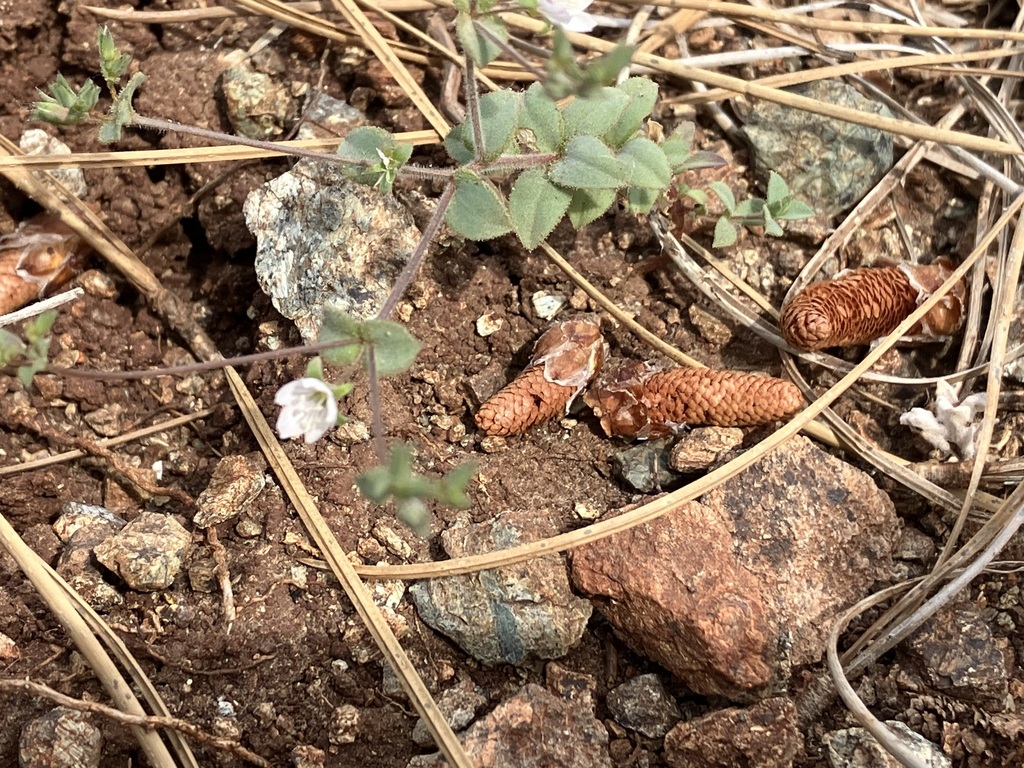
Hesperolinon drymarioides (Drymaria-like western flax) is a native California herb in the Linaceae family, recognized by unique whorled ovate leaves distinguish it clearly.
Drymaria-like western flax is a rare (CNPS 1B.2) California native annual found in central North Coast Ranges Interior and North Coast Ranges Humid regions in serpentine areas, chaparral, and woodland at elevations of 100 to 1,000 meters. Flowering from May to July, this plant produces delicate white to pink flowers with darker veins, approximately 3 to 6 millimeters long that are reflexed. Growing with slender stems 5 to 25 centimeters tall, it has distinctive whorled leaves in groups of four near the base and alternate leaves higher on the plant. Its leaves are ovate and flat with stalked glandular surfaces, creating a subtle textural appearance. The plant's small white stamens and three styles contribute to its delicate botanical structure.
Identification and appearance
Key characters: 7 sympatric species; unique whorled ovate leaves distinguish it clearly
Habitat and range
Habitat: Serpentine, chaparral or woodland
Elevation: 100-1000 m
California counties: Lake, Glenn, Colusa, Napa
Bloom period
Hesperolinon drymarioides blooms May-Jul.
Conservation status
CNPS 1B.2
How to tell it apart
vs Linum: Hesperolinon has 2-3 styles and whorled basal leaves; Linum has 5 styles and alternate leaves.; vs Gayophytum: Hesperolinon has whorled leaves and 2-3 styles; Gayophytum has alternate leaves and 4-parted flowers.; vs Eremogone: Hesperolinon has 2-3 styles; Eremogone has 3 styles and opposite leaves throughout.; vs Nemacladus: Hesperolinon has regular radial flowers; Nemacladus has strongly bilateral flowers.; vs Sclerolinon: Hesperolinon has 3 styles and stipule glands present; Sclerolinon has 2 club-shaped styles and no glands.
Frequently asked questions
Is Hesperolinon drymarioides native to California?
Yes. Hesperolinon drymarioides is native to California (recorded as native).
When does Hesperolinon drymarioides bloom?
Hesperolinon drymarioides blooms May-Jul.
Where in California does Hesperolinon drymarioides grow?
Hesperolinon drymarioides occurs in Lake, Glenn, Colusa, Napa, at elevations of 100-1000 m.
What plant family does Hesperolinon drymarioides belong to?
Hesperolinon drymarioides is in the Linaceae family, genus Hesperolinon.
Is Hesperolinon drymarioides rare or endangered?
Hesperolinon drymarioides carries California Rare Plant Rank 1B.2, state rank S2.
Related species
Other California species in the same genus, family, or bioregion.
Sources: Jepson eFlora · CNPS Rare Plant Inventory · Index of California Plant Names · CalPhotos · CDFW CNDDB
Last updated 2026-10-07
Data from The California Species Project — 14,000+ California species with verified data from CNPS, CDFW, USFWS, Cal-IPC, and more.