Hesperoyucca whipplei
Chaparral yucca
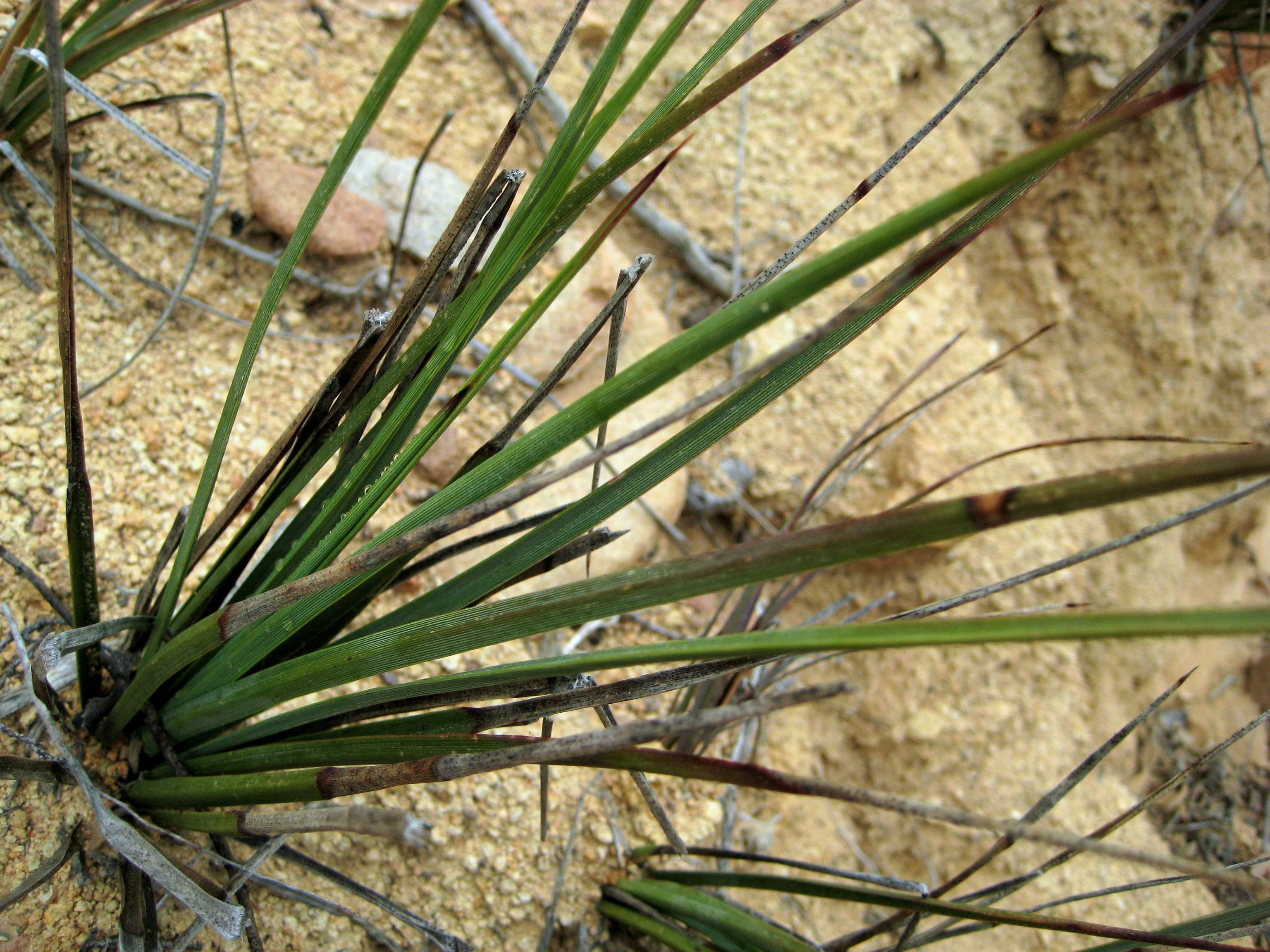
Photo by Chez Brungraber
Family: Agavaceae · Type: Shrub · Native
Hesperoyucca whipplei (Chaparral yucca) is a native California shrub in the Agavaceae family, recognized by Monotypic genus endemic to southern California and Baja California, representing a distinct evolutionary lineage adapted to chaparral….
Chaparral yucca is a native shrub found in southern Sierra Nevada (especially eastern slope), southern Coast Ranges, southwestern California, and the eastern Sierra Nevada, particularly in chaparral, coastal, and desert scrub habitats at elevations below 2,500 meters. Flowering from April to May, this plant produces white to cream-colored flowers with purple-tinged tips in dense clusters on tall inflorescences reaching up to 40 decimeters high. Growing with a dramatic rosette of stiff, grayish-green leaves 40 to 100 centimeters long and 0.7 to 2 centimeters wide, it forms an impressive architectural plant with a substantial leaf base. Its leaves emerge from a wide, white to green expanded base measuring 4 to 7 centimeters, creating a striking visual structure in its native habitats. The fruit is an impressive 3 to 5 centimeters long, adding to the plant's distinctive and dramatic appearance.
Identification and appearance
Key characters: Monotypic genus endemic to southern California and Baja California, representing a distinct evolutionary lineage adapted to chaparral and montane environments
Habitat and range
Habitat: Chaparral, coastal, desert scrub
Elevation: < 2500 m
California counties: Los Angeles, Ventura, Riverside, San Diego, San Bernardino, Monterey, San Luis Obispo, Santa Barbara, Fresno, Kern, San Benito, Tulare
Outside California: northern Baja California
Bloom period
Hesperoyucca whipplei blooms Apr-May.
How to tell it apart
vs Yucca: Hesperoyucca has thick flower stalks (>1 inch) with backward-bent bracts; Yucca has thinner stalks (<1 inch) with upward bracts.; vs Nolina: Hesperoyucca has bell-shaped flowers in upright clusters; Nolina has tiny flowers in spreading, feathery plumes.; vs Agave: Hesperoyucca has white flowers with superior ovary; Agave has yellow-green flowers with inferior ovary.; vs Dasylirion: Hesperoyucca has sword-like leaves and bell-shaped flowers; Dasylirion has narrow grass-like leaves and tiny clustered flowers.; vs Echinoagave: Hesperoyucca leaves lack marginal teeth; Echinoagave has prominent teeth along leaf edges like Agave.
Frequently asked questions
Is Hesperoyucca whipplei native to California?
Yes. Hesperoyucca whipplei is native to California (recorded as native).
When does Hesperoyucca whipplei bloom?
Hesperoyucca whipplei blooms Apr-May.
Where in California does Hesperoyucca whipplei grow?
Hesperoyucca whipplei occurs in Los Angeles, Ventura, Riverside, San Diego, San Bernardino, Monterey, San Luis Obispo, Santa Barbara and other counties, at elevations of < 2500 m.
What plant family does Hesperoyucca whipplei belong to?
Hesperoyucca whipplei is in the Agavaceae family, genus Hesperoyucca.
What habitat does Hesperoyucca whipplei grow in?
Hesperoyucca whipplei grows in Chaparral, coastal, desert scrub.
Related species
Other California species in the same genus, family, or bioregion.
Sources: Jepson eFlora · Index of California Plant Names · CalPhotos
Last updated 2026-10-08
Data from The California Species Project — 14,000+ California species with verified data from CNPS, CDFW, USFWS, Cal-IPC, and more.