Heterocodon rariflorum
Few flowered heterocodon
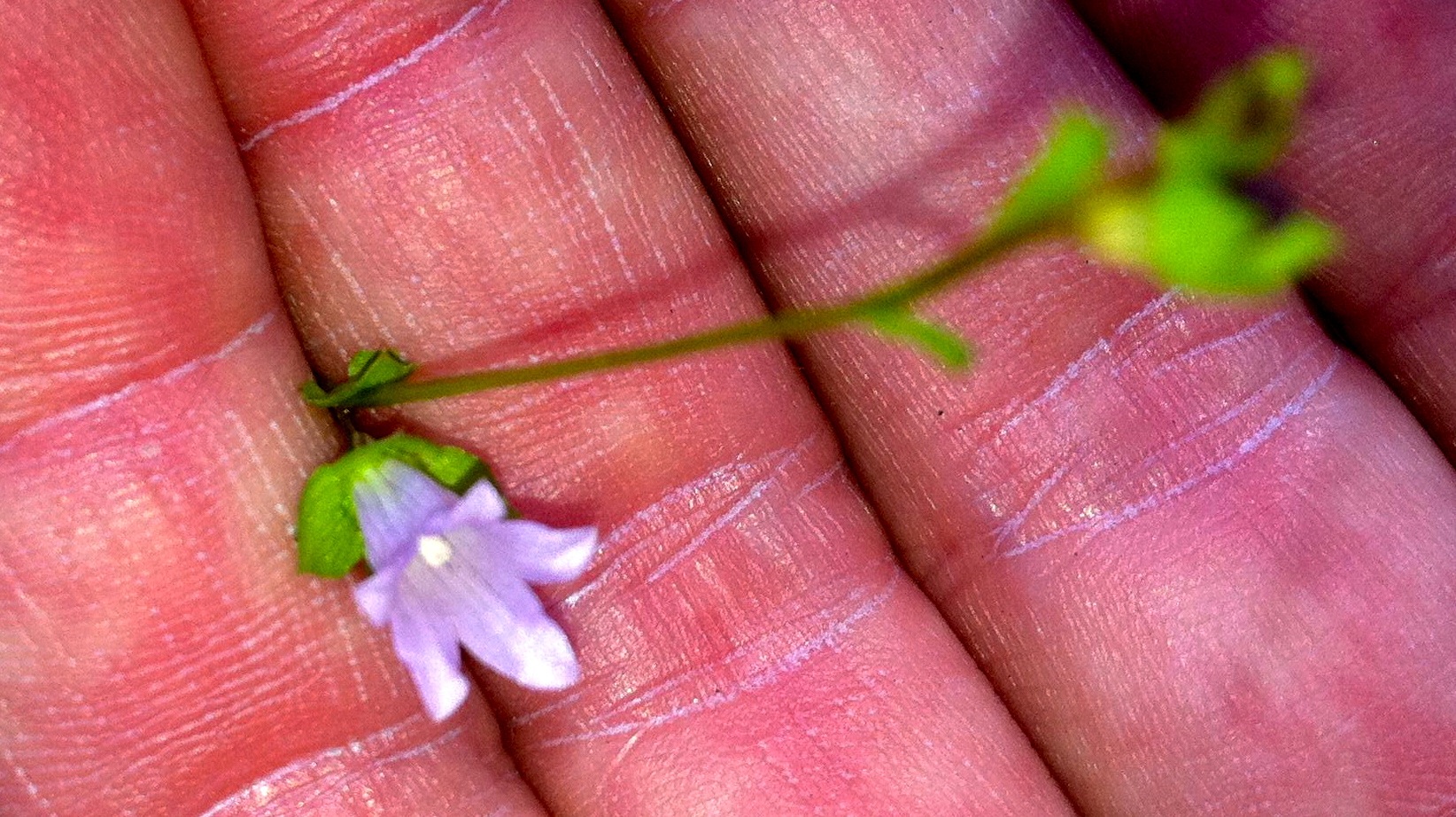
Photo by Chez Brungraber
Family: Campanulaceae · Type: Herb · Native
Heterocodon rariflorum (Few flowered heterocodon) is a native California herb in the Campanulaceae family, recognized by Monotypic genus distributed across western North America, representing a specialized lineage adapted to vernal wetland habitats.
Few flowered heterocodon is a California native annual found in the California Floristic Province in vernally wet places at elevations below 2,500 meters. Flowering from April to July, this delicate plant produces deep blue flowers about 3 to 5 millimeters long with white to pale blue tube and triangular lobes. Growing with thin, 4-angled stems 5 to 30 centimeters tall that are simple or branched from the base and sparsely hairy, it forms an elegant slender structure. Its cauline leaves are small, round to heart-shaped, 2 to 10 millimeters long with thin serrated edges, sessile along the stem. Flowers emerge individually at stem terminals and nodes, with an unusual fruit that opens by lateral pores near its base.
Identification and appearance
Key characters: Monotypic genus distributed across western North America, representing a specialized lineage adapted to vernal wetland habitats
Habitat and range
Habitat: Vernally wet places
Elevation: < 2500 m
California counties: Plumas, Tehama, Tuolumne, Nevada, Yuba, Trinity, Sonoma, Butte, El Dorado, Mendocino, Mariposa, Riverside, Fresno, Tulare, San Diego, San Bernardino, Solano, Lake, Shasta, Santa Barbara, Lassen, Calaveras, Siskiyou, Los Angeles, Humboldt, Amador, Modoc, Monterey, Madera, Kern, Stanislaus, Sierra, Placer, Sutter, Glenn, Colusa, Napa, San Luis Obispo, San Joaquin, Contra Costa, Alameda, Alpine, Marin, Santa Clara, San Mateo, Ventura, Sacramento, Santa Cruz, San Benito
Outside California: to British Columbia, Montana, Nevada
Bloom period
Heterocodon rariflorum blooms Apr-Jul.
How to tell it apart
vs Campanula: Campanula has stalked bells and is perennial; Heterocodon has tiny 3-5mm tubes pressed to stem, annual.; vs Asyneuma: Asyneuma has multiple star flowers per node; Heterocodon has single tiny tubes with oversized leafy sepals.; vs Triodanis: Triodanis has 5-10mm flat wheels; Heterocodon has 3-5mm tubes with broad leaf-like sepals.; vs Githopsis: Githopsis flowers sit at stem tips; Heterocodon flowers press to stem in leaf joints with huge sepals.
Frequently asked questions
Is Heterocodon rariflorum native to California?
Yes. Heterocodon rariflorum is native to California (recorded as native).
When does Heterocodon rariflorum bloom?
Heterocodon rariflorum blooms Apr-Jul.
Where in California does Heterocodon rariflorum grow?
Heterocodon rariflorum occurs in Plumas, Tehama, Tuolumne, Nevada, Yuba, Trinity, Sonoma, Butte and other counties, at elevations of < 2500 m.
What plant family does Heterocodon rariflorum belong to?
Heterocodon rariflorum is in the Campanulaceae family, genus Heterocodon.
What habitat does Heterocodon rariflorum grow in?
Heterocodon rariflorum grows in Vernally wet places.
Related species
Other California species in the same genus, family, or bioregion.
Sources: Jepson eFlora · Index of California Plant Names · CalPhotos
Last updated 2026-10-07
Data from The California Species Project — 14,000+ California species with verified data from CNPS, CDFW, USFWS, Cal-IPC, and more.