Heteromeles arbutifolia
Christmas berry
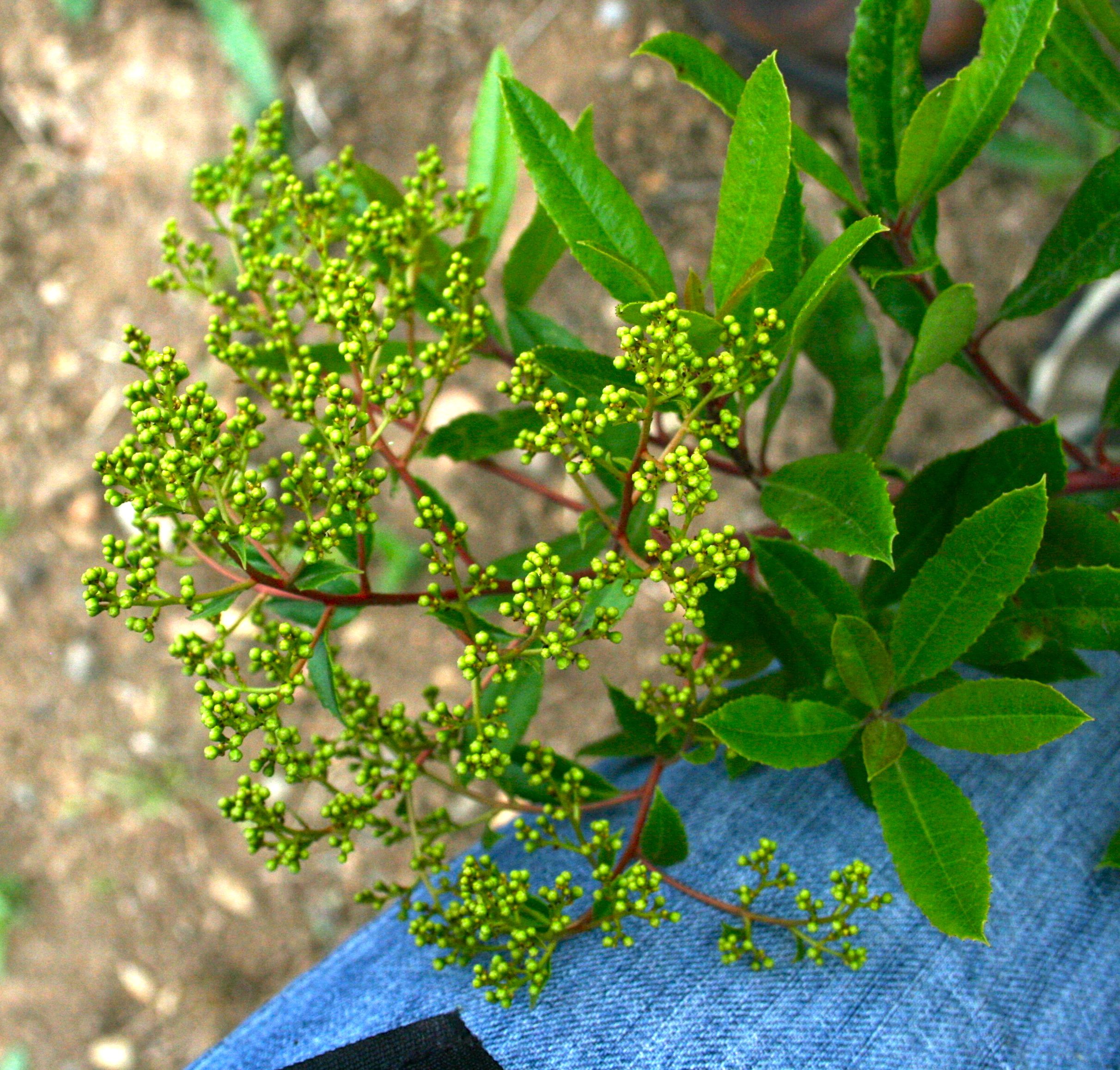
Photo by Chez Brungraber
Family: Rosaceae · Type: Shrub / Tree · Native
Heteromeles arbutifolia (Christmas berry) is a native California shrub / tree in the Rosaceae family, recognized by Monotypic genus endemic to the California floristic province, representing a unique lineage in the rose family adapted to Mediterranean….
Christmas berry is a California native shrub found in northwestern California, Sierra Nevada foothills, central and northern Sierra Nevada, Central Valley, central western, and southwestern regions in chaparral, oak woodland, and mixed-evergreen forest at elevations below 1,300 meters. Flowering from June to August, this plant produces small white flowers in domed clusters with branches covered in white woolly hair. Growing as a shrub or small tree up to 10 meters tall with grayish trunk bark and puberulent twigs, it develops a distinctive branching structure. Its evergreen leaves are leathery, elliptic, 5 to 10 centimeters long with fine teeth along the edges, creating a dense and glossy canopy. The fruit is a bright red pome 5 to 10 millimeters in diameter, with a mealy pulp that attracts birds and provides winter visual interest.
Identification and appearance
Key characters: Monotypic genus endemic to the California floristic province, representing a unique lineage in the rose family adapted to Mediterranean climate conditions
Habitat and range
Habitat: Chaparral, oak woodland, mixed-evergreen forest
Elevation: < 1300 m
California counties: Humboldt, San Diego, Los Angeles, Ventura, Orange, Riverside, Butte, Lake, San Luis Obispo, Tuolumne, San Bernardino, Shasta, Calaveras, Trinity, Colusa, Nevada, Santa Barbara, San Mateo, Fresno, Sonoma, Santa Clara, San Francisco, Monterey, Placer, Mendocino, Yolo, Kern, Mariposa, El Dorado, Tehama, Santa Cruz, Marin, Amador, Sacramento, Del Norte, Glenn, Plumas, Siskiyou, Solano, Tulare, Alameda, Contra Costa, Napa, San Benito, Sutter, Merced, Yuba, Stanislaus
Outside California: British Columbia, Mexico
Bloom period
Heteromeles arbutifolia blooms (May)Jun-Aug.
How to tell it apart
vs Pyracantha: Pyracantha has thorns and narrow leaves; Heteromeles is thornless with broader, coarsely toothed leaves.; vs Arbutus: Arbutus has peeling reddish bark and warty round fruits; Heteromeles has smooth bark and smooth red berries.; vs Frangula: Frangula has smooth leaf edges and parallel veins; Heteromeles has sharply toothed leaves and standard venation.; vs Photinia: Photinia has new leaves bright red; Heteromeles new growth is green.; vs Rhus: Rhus has compound leaves with multiple leaflets; Heteromeles has simple leaves.
Frequently asked questions
Is Heteromeles arbutifolia native to California?
Yes. Heteromeles arbutifolia is native to California (recorded as native).
When does Heteromeles arbutifolia bloom?
Heteromeles arbutifolia blooms (May)Jun-Aug.
Where in California does Heteromeles arbutifolia grow?
Heteromeles arbutifolia occurs in Humboldt, San Diego, Los Angeles, Ventura, Orange, Riverside, Butte, Lake and other counties, at elevations of < 1300 m.
What plant family does Heteromeles arbutifolia belong to?
Heteromeles arbutifolia is in the Rosaceae family, genus Heteromeles.
What habitat does Heteromeles arbutifolia grow in?
Heteromeles arbutifolia grows in Chaparral, oak woodland, mixed-evergreen forest.
Related species
Other California species in the same genus, family, or bioregion.
Sources: Jepson eFlora · Index of California Plant Names · CalPhotos
Last updated 2026-10-07
Data from The California Species Project — 14,000+ California species with verified data from CNPS, CDFW, USFWS, Cal-IPC, and more.