Hirschfeldia incana
Mediterranean hoary mustard
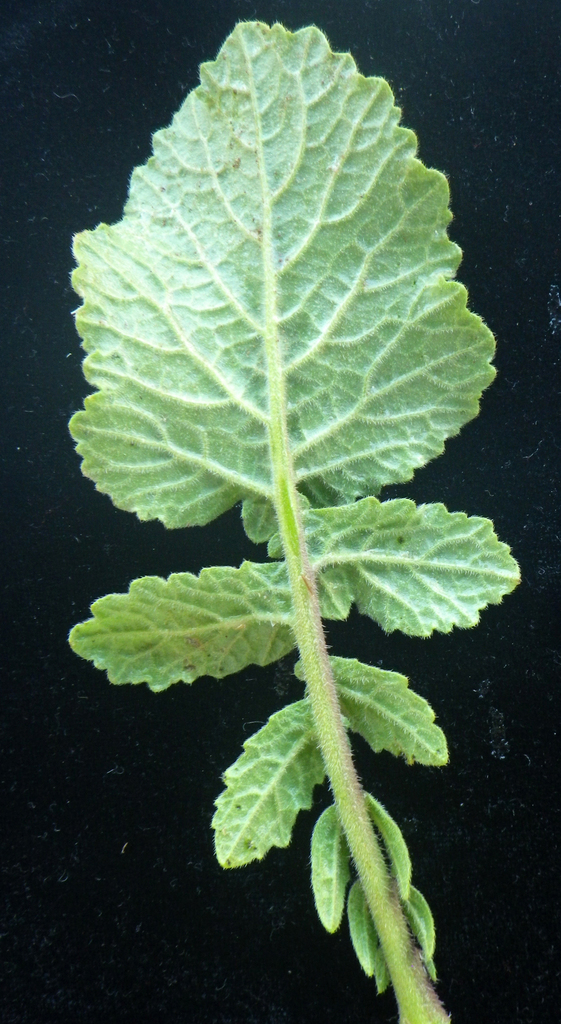
(c) Liliane Roubaudi, some rights reserved (CC BY-SA) · licence
Family: Brassicaceae · Type: Herb · Not Native
Conservation status: Cal-IPC Yes
Hirschfeldia incana (Mediterranean hoary mustard) is a non-native California herb in the Brassicaceae family, recognized by Mediterranean introduction that has become widely naturalized, representing the only species of this genus established in California.
Mediterranean hoary mustard is a naturalized perennial herb found in coastal and interior regions of California, including the North Coast, Klamath Ranges, Central California Valley, and southern California desert mountains, in disturbed areas at elevations below 2,000 meters. Flowering from April to October, this plant produces bright yellow flowers with obovate petals on much-elongated inflorescences. Growing with robust stems 40 to 150 centimeters tall covered in reflexed hairs, it develops pinnately lobed leaves that range from 5 to 25 centimeters long with multiple lateral leaf lobes. Its leaves vary from basal rosettes to cauline leaves, which are dentate or pinnately lobed and can be either petioled or sessile. The fruit develops as a slender, erect silique 7 to 15 millimeters long, typically containing 10 to 22 small ovoid seeds in a single row.
Identification and appearance
Key characters: Mediterranean introduction that has become widely naturalized, representing the only species of this genus established in California
Habitat and range
Habitat: Disturbed areas
Elevation: < 2000 m
California counties: Kern, Los Angeles, San Bernardino, Amador, Ventura, Butte, Lake, Orange, Placer, Riverside, San Diego, San Luis Obispo, Santa Clara, Monterey, Colusa, Fresno, Merced, Inyo, San Francisco, Alameda, San Benito, Santa Barbara, Plumas, Napa, San Mateo, Mendocino, Sonoma, Yuba, Tuolumne, Mariposa, Nevada, Tulare, Contra Costa, El Dorado, Marin, Sacramento, Solano, San Joaquin, Stanislaus, Sutter, Santa Cruz, Yolo, Siskiyou, Tehama, Glenn, Humboldt, Calaveras
Outside California: Oregon, Nevada, native to Mediterranean
Bloom period
Hirschfeldia incana blooms Apr-Oct.
Conservation status
Cal-IPC Yes
How to tell it apart
vs Brassica: Hirschfeldia pods hug the stem tightly; Brassica pods spread outward at angles.; vs Rapistrum: Hirschfeldia pods appressed with single seed tip; Rapistrum pods spreading with round beaded segments.; vs Sisymbrium: Hirschfeldia pods thick and pressed to stem; Sisymbrium pods thin and spreading like spokes.
Frequently asked questions
Is Hirschfeldia incana native to California?
No. Hirschfeldia incana is not native to California (recorded as not native).
When does Hirschfeldia incana bloom?
Hirschfeldia incana blooms Apr-Oct.
Where in California does Hirschfeldia incana grow?
Hirschfeldia incana occurs in Kern, Los Angeles, San Bernardino, Amador, Ventura, Butte, Lake, Orange and other counties, at elevations of < 2000 m.
What plant family does Hirschfeldia incana belong to?
Hirschfeldia incana is in the Brassicaceae family, genus Hirschfeldia.
Is Hirschfeldia incana invasive in California?
Hirschfeldia incana is listed by Cal-IPC with an invasiveness rating of Yes.
Related species
Other California species in the same genus, family, or bioregion.
Sources: Jepson eFlora · Index of California Plant Names · CalPhotos
Last updated 2026-10-07
Data from The California Species Project — 14,000+ California species with verified data from CNPS, CDFW, USFWS, Cal-IPC, and more.