Holcus mollis
Creeping velvet grass
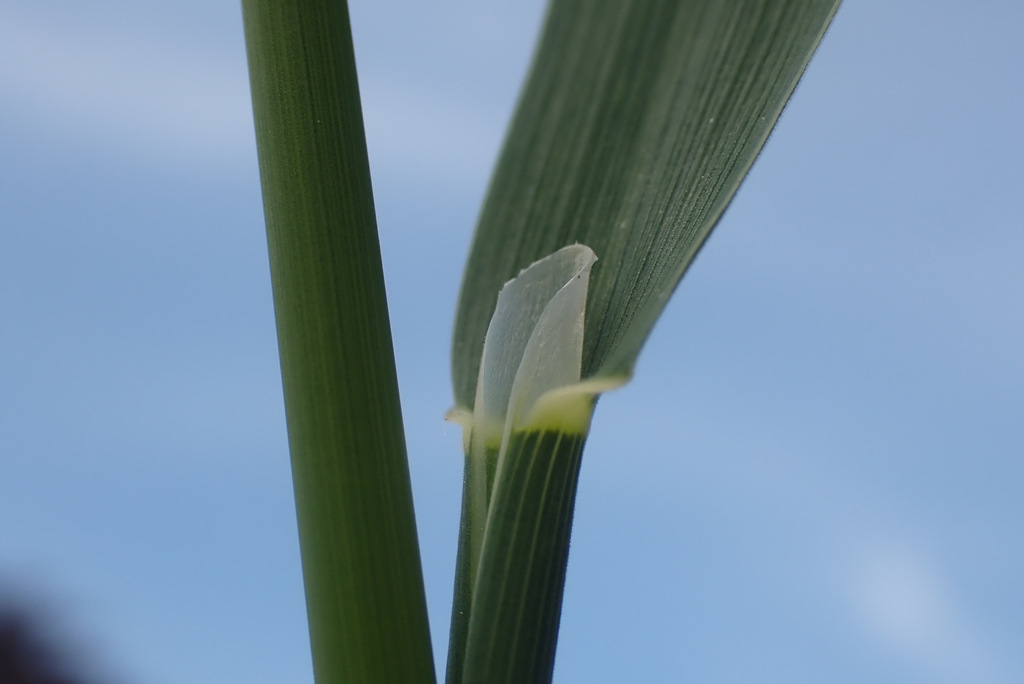
(c) Thomas Gyselinck, some rights reserved (CC BY), uploaded by Thomas Gyselinck · licence
Family: Poaceae · Type: Grass · Not Native
Holcus mollis (Creeping velvet grass) is a non-native California grass in the Poaceae family, recognized by . Key differences: growth habit, elevation range, glume color and surface texture.
Creeping velvet grass is a naturalized perennial found in northern California Coast Ranges, northern Sierra Nevada, and San Francisco Bay Area in moist sites at elevations below 700 meters. Flowering from June to August, this grass produces tan flowers with purple-tinged glumes 4 to 5 millimeters long. Growing with ascending to decumbent stems 30 to 80 centimeters tall, it forms dense spreading patches. Its leaves are 3 to 15 centimeters long with 4 to 9 millimeter wide blades and distinctive jagged, obtuse ligules 2 to 5 millimeters in length. The plant spreads readily in disturbed moist habitats, creating soft, velvety ground cover.
Identification and appearance
Key characters: 1 sympatric species. Key differences: growth habit, elevation range, glume color and surface texture
Habitat and range
Habitat: Moist sites
Elevation: < 700 m
California counties: Yuba, Nevada, Humboldt, Marin, Del Norte, San Mateo, Yolo, Alameda, Stanislaus, Sonoma, Contra Costa
Outside California: to Canada, scattered in eastern United States, native to temperate northern Europe
Bloom period
Holcus mollis blooms Jun-Aug.
How to tell it apart
vs Anthoxanthum: Holcus has whitish, soft velvety foliage and a two-flowered spikelet with a single short hooked awn; sweet vernal grass (Anthoxanthum) is sweetly hay-scented (coumarin) and has 2 sterile lemmas below the fertile floret.; vs Arrhenatherum: Holcus is uniformly soft-velvety with tiny (4-5 mm) purplish spikelets; tall oatgrass (Arrhenatherum) has larger spikelets with one long bent-and-twisted awn and a swollen bulbous stem base.; vs Avena: Holcus spikelets are small (4-5 mm) with a short, nearly hidden hooked awn; Avena (wild oats) has large drooping spikelets over 2 cm with a stout twisted geniculate awn.; vs Aira: Holcus is a perennial with soft velvety leaves and a dense pale panicle; Aira is a delicate glabrous annual with hair-fine branches and tiny glossy spikelets.; vs Agrostis: Holcus has 2-flowered spikelets with hairy-keeled glumes and velvety foliage; Agrostis (bentgrass) has 1-flowered spikelets in an open airy panicle and glabrous leaves.
Frequently asked questions
Is Holcus mollis native to California?
No. Holcus mollis is not native to California (recorded as not native).
When does Holcus mollis bloom?
Holcus mollis blooms Jun-Aug.
Where in California does Holcus mollis grow?
Holcus mollis occurs in Yuba, Nevada, Humboldt, Marin, Del Norte, San Mateo, Yolo, Alameda and other counties, at elevations of < 700 m.
What plant family does Holcus mollis belong to?
Holcus mollis is in the Poaceae family, genus Holcus.
What habitat does Holcus mollis grow in?
Holcus mollis grows in Moist sites.
Related species
Other California species in the same genus, family, or bioregion.
Sources: Jepson eFlora · Index of California Plant Names · CalPhotos
Last updated 2026-10-07
Data from The California Species Project — 14,000+ California species with verified data from CNPS, CDFW, USFWS, Cal-IPC, and more.