Hooveria purpurea var. purpurea
Santa lucia purple amole, Santa Lucia Purple Amole
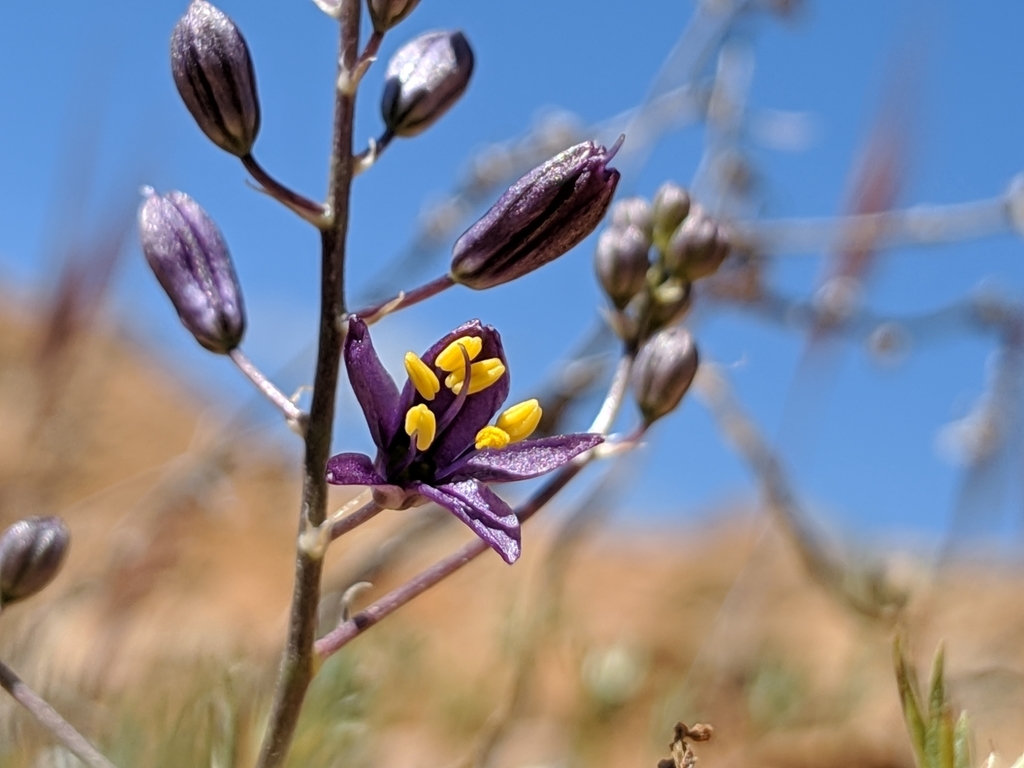
no rights reserved, uploaded by Alex Heyman · CC0
Family: Agavaceae · Type: Herb · Native
Conservation status: CNPS 1B.1 · Threatened
Hooveria purpurea var. purpurea (Santa lucia purple amole) is a native California herb in the Agavaceae family.
Santa lucia purple amole is a rare (CNPS 1B.1) California native perennial found in the eastern side of the Santa Lucia Range in Monterey County's northeastern section in open woodland at elevations around 300 meters. Flowering from May to June, this plant produces purple flowers in an inflorescence 25 to 40 centimeters tall. Growing with slender stems emerging from an underground bulb, it develops graceful clusters of blooms. Its leaves are narrow and elongated, typical of the amole species, emerging from the base of the plant. The plant's distinctive chromosome count of 30 suggests a complex genetic heritage unique to this variety of purple amole.
Identification and appearance
Key characters: 0 sympatric species - geographically isolated in ne SCoRO with distinctive purple flowers and recurved perianth parts
Habitat and range
Habitat: Open woodland
Elevation: +- 300 m.
California counties: Monterey, San Luis Obispo
Bloom period
Hooveria purpurea var. purpurea blooms May-Jun.
Conservation status
CNPS 1B.1 · Threatened
Frequently asked questions
Is Hooveria purpurea var. purpurea native to California?
Yes. Hooveria purpurea var. purpurea is native to California (recorded as native).
When does Hooveria purpurea var. purpurea bloom?
Hooveria purpurea var. purpurea blooms May-Jun.
Where in California does Hooveria purpurea var. purpurea grow?
Hooveria purpurea var. purpurea occurs in Monterey, San Luis Obispo, at elevations of +- 300 m..
What plant family does Hooveria purpurea var. purpurea belong to?
Hooveria purpurea var. purpurea is in the Agavaceae family, genus Hooveria.
Is Hooveria purpurea var. purpurea rare or endangered?
Hooveria purpurea var. purpurea carries California Rare Plant Rank 1B.1, state rank S2.
Related species
Other California species in the same genus, family, or bioregion.
Sources: Jepson eFlora · CalPhotos · CDFW CNDDB
Last updated 2026-10-07
Data from The California Species Project — 14,000+ California species with verified data from CNPS, CDFW, USFWS, Cal-IPC, and more.