Hordeum arizonicum
Arizona barley, Arizona Barley
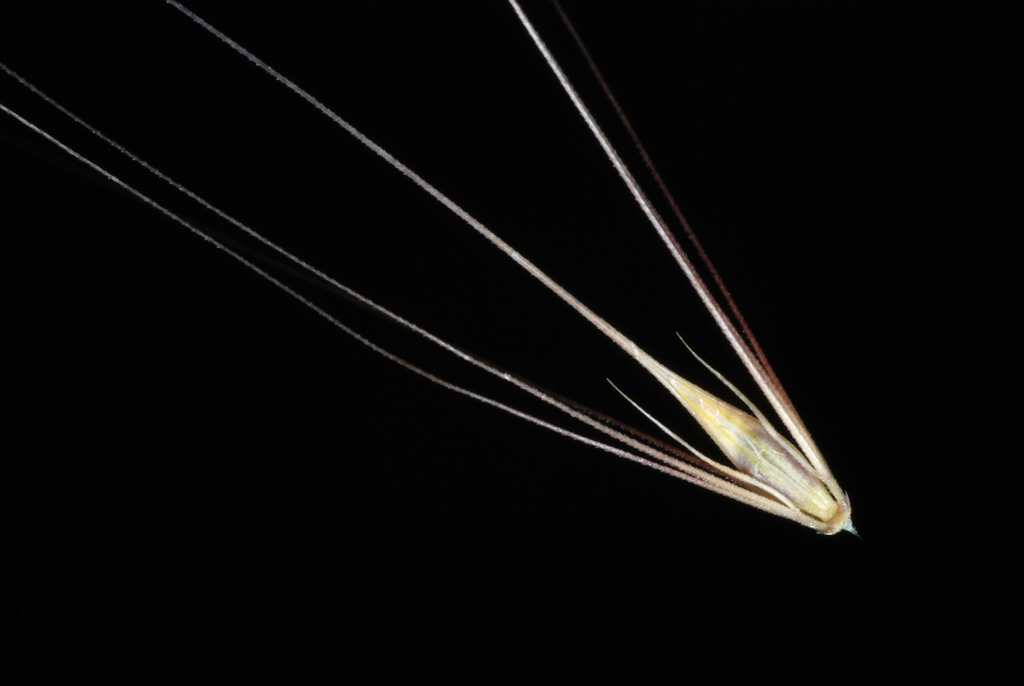
(c) Douglas Goldman, some rights reserved (CC BY-SA), uploaded by Douglas Goldman · licence
Family: Poaceae · Type: Grass · Native
Hordeum arizonicum (Arizona barley) is a native California grass in the Poaceae family, recognized by perennial habit, wet saline habitat, and enclosed inflorescence.
Arizona barley is a California native perennial found in the central Sierra Nevada, Sonoran Desert, Sacramento Valley, and California Ranges in wet, often saline places at elevations of 50 to 1,400 meters. Flowering from April to July, this plant produces pale green inflorescences 5 to 12 centimeters long with delicate, divergent spikelets. Growing in tufted clusters with erect stems 21 to 75 centimeters tall, the plant develops glabrous nodes and a distinctive growth pattern. Its narrow leaves are less than 4 millimeters wide, up to 13 centimeters long, with lower leaf sheaths notably hairy while upper sheaths remain smooth. The plant's central spikelets feature glumes 11 to 28 millimeters long with an awn 10 to 22 millimeters in length, creating a unique structural appearance.
Identification and appearance
Key characters: 9 sympatric species; key features are perennial habit, wet saline habitat, and enclosed inflorescence
Habitat and range
Habitat: Uncommon. Wet, often saline, places
Elevation: 50-1400 m
California counties: Solano, Lassen, Inyo, Riverside, Butte, Sacramento, Fresno, San Bernardino
Outside California: to Nevada, New Mexico, Mexico
Bloom period
Hordeum arizonicum blooms Apr-Jul.
How to tell it apart
vs Bromus: Hordeum has three spikelets per node in a spike; Bromus has separate spikelets in loose clusters.; vs Triticum: Hordeum has three spikelets per node; Triticum has one spikelet per node.; vs Taeniatherum: Hordeum has the central spikelet stalkless; check if side spikelets are stalked.; vs Setaria: Hordeum has three grouped spikelets per node; Setaria has dense bristly single spikelets.; vs Elymus: Hordeum has hollow stems; Elymus has solid stems between nodes.
Frequently asked questions
Is Hordeum arizonicum native to California?
Yes. Hordeum arizonicum is native to California (recorded as native).
When does Hordeum arizonicum bloom?
Hordeum arizonicum blooms Apr-Jul.
Where in California does Hordeum arizonicum grow?
Hordeum arizonicum occurs in Solano, Lassen, Inyo, Riverside, Butte, Sacramento, Fresno, San Bernardino, at elevations of 50-1400 m.
What plant family does Hordeum arizonicum belong to?
Hordeum arizonicum is in the Poaceae family, genus Hordeum.
What habitat does Hordeum arizonicum grow in?
Hordeum arizonicum grows in Uncommon. Wet, often saline, places.
Related species
Other California species in the same genus, family, or bioregion.
Sources: Jepson eFlora · Index of California Plant Names · CalPhotos
Last updated 2026-10-07
Data from The California Species Project — 14,000+ California species with verified data from CNPS, CDFW, USFWS, Cal-IPC, and more.