Horkelia cuneata var. sericea
Kellogg's horkelia
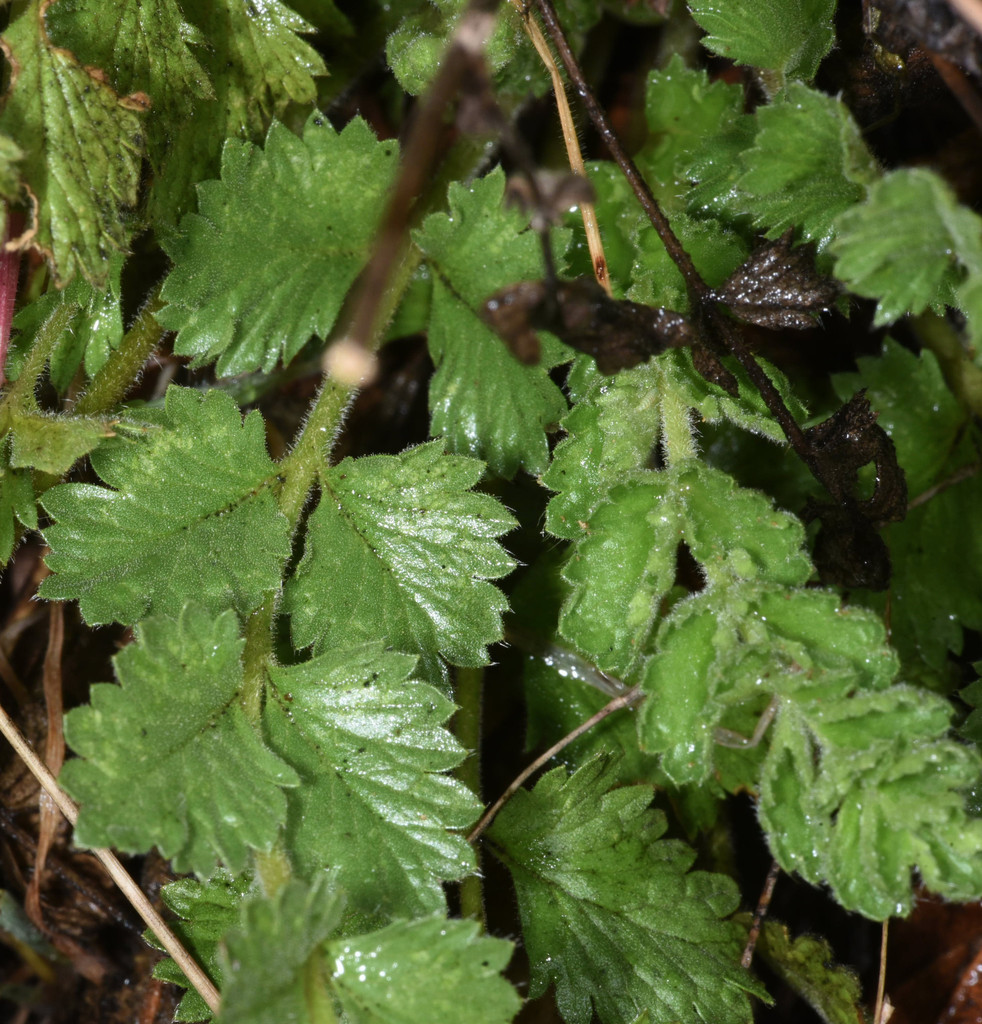
(c) Don Loarie, some rights reserved (CC BY), uploaded by Don Loarie · licence
Family: Rosaceae · Type: Herb · Native
Conservation status: CNPS 1B.1
Horkelia cuneata var. sericea (Kellogg's horkelia) is a native California herb in the Rosaceae family, recognized by dense silky non-glandular hairs and low coastal elevation.
Kellogg's horkelia is a rare (CNPS 1B.1) California native perennial found in the central Coast Ranges in coastal sandhills and old dune habitats at elevations generally below 200 meters. Flowering from April to August, this plant produces white flowers in dense to somewhat open clusters with several flowers per cluster. Growing with dense, ascending to appressed hairs and stems generally 15 to 30 centimeters tall, it forms a low, compact growth habit. Its leaves are compound with multiple leaflets, covered in fine, soft hairs that give the plant a silvery-sericea appearance. The flower's hypanthium has a distinctive inner rim with delicate hairs, adding to its intricate botanical character.
Identification and appearance
Key characters: 6 sympatric species; key features are dense silky non-glandular hairs and low coastal elevation
Habitat and range
Habitat: Old dunes, coastal sandhills
Elevation: generally < 200 m
California counties: Monterey, San Francisco, San Luis Obispo, San Mateo, Santa Cruz, Santa Barbara, Los Angeles
Bloom period
Horkelia cuneata var. sericea blooms Apr-Aug.
Conservation status
CNPS 1B.1
How to tell it apart
vs Drymocallis: Horkelia has exactly 10 stamens and white-pink flowers; Drymocallis has 20+ stamens and yellow-white flowers.; vs Erodium: Horkelia has pinnate leaves and rose-family flowers; Erodium has lobed/divided leaves and long-beaked fruits.; vs Phacelia: Horkelia has rose-family flowers with separate petals; Phacelia has bell-shaped fused corollas with protruding stamens.; vs Potentilla: Horkelia has exactly 10 stamens and flattened filaments; Potentilla has 20+ stamens and thread-like filaments.; vs Ivesia: Horkelia has flat leaves with 2-15 separated leaflets; Ivesia has cylindrical bottlebrush leaves with overlapping leaflets.
Frequently asked questions
Is Horkelia cuneata var. sericea native to California?
Yes. Horkelia cuneata var. sericea is native to California (recorded as native).
When does Horkelia cuneata var. sericea bloom?
Horkelia cuneata var. sericea blooms Apr-Aug.
Where in California does Horkelia cuneata var. sericea grow?
Horkelia cuneata var. sericea occurs in Monterey, San Francisco, San Luis Obispo, San Mateo, Santa Cruz, Santa Barbara, Los Angeles, at elevations of generally < 200 m.
What plant family does Horkelia cuneata var. sericea belong to?
Horkelia cuneata var. sericea is in the Rosaceae family, genus Horkelia.
Is Horkelia cuneata var. sericea rare or endangered?
Horkelia cuneata var. sericea carries California Rare Plant Rank 1B.1, state rank S1?.
Related species
Other California species in the same genus, family, or bioregion.
Sources: Jepson eFlora · CNPS Rare Plant Inventory · Index of California Plant Names · CalPhotos · CDFW CNDDB
Last updated 2026-10-07
Data from The California Species Project — 14,000+ California species with verified data from CNPS, CDFW, USFWS, Cal-IPC, and more.