Horkelia tridentata var. tridentata
Three toothed horkelia
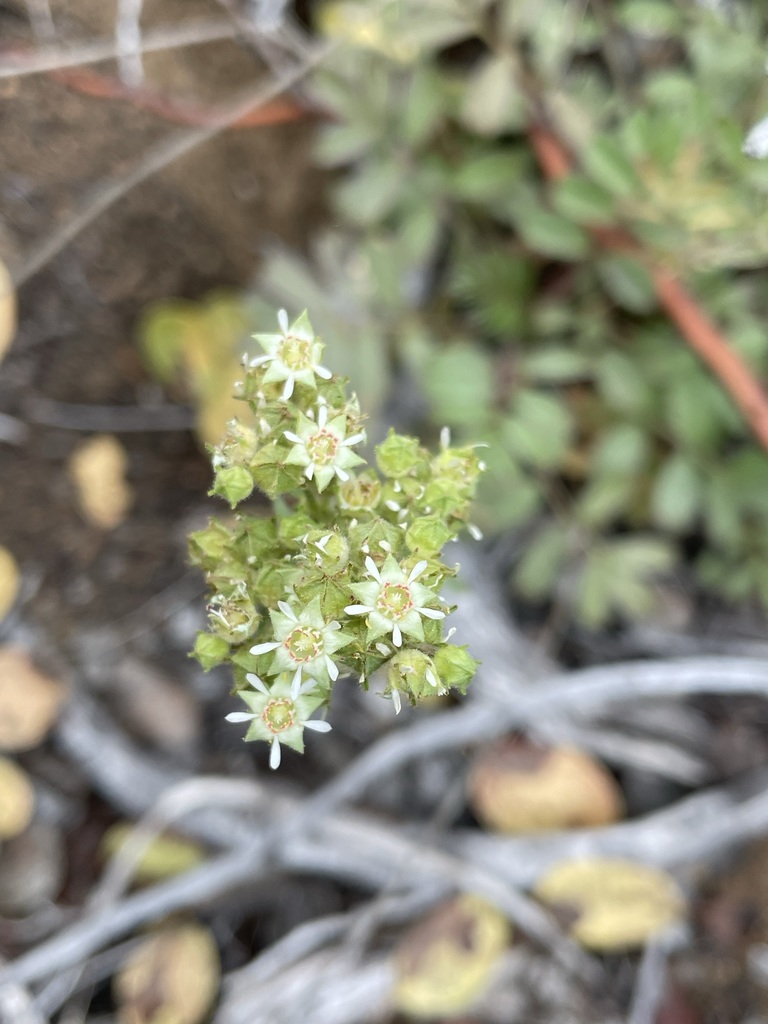
Photo: parent species Horkelia tridentata · (c) Matt Berger, some rights reserved (CC BY) · licence
Family: Rosaceae · Type: Herb · Native
Horkelia tridentata var. tridentata (Three toothed horkelia) is a native California herb in the Rosaceae family, recognized by Co-occurs with 9 other horkelia species; multiple flower clusters and flower size distinguish it.
Three toothed horkelia is a California native perennial found in eastern Klamath Ranges, Cascade Range, Sierra Nevada, and North Coast Ranges in granitic or volcanic soils at elevations of 300 to 2,500 meters. Flowering from April to August, this plant produces white flowers 4 to 7 millimeters wide with narrow-oblanceolate petals. Growing with decumbent to nearly erect stems in loose to dense clusters, it forms low-spreading mats across rocky mountain landscapes. Its leaves feature multiple toothed leaflets that create a delicate, finely textured appearance across the plant's form. The flowers emerge from small hypanthiums generally 2 to 3.5 millimeters wide, creating intricate botanical displays in high-elevation mountain habitats.
Identification and appearance
Key characters: Co-occurs with 9 other horkelia species; multiple flower clusters and flower size distinguish it
Habitat and range
Habitat: Granitic or volcanic soils
Elevation: 300-2500 m
California counties: Placer, Amador, Butte, El Dorado, Fresno, Plumas, Shasta, Siskiyou, Tuolumne, Mariposa, Nevada, Tehama, Trinity, Tulare, Yuba, Modoc, Alpine, Calaveras
Outside California: southern Oregon
Bloom period
Horkelia tridentata var. tridentata blooms Apr-Aug.
How to tell it apart
vs Drymocallis: Horkelia has exactly 10 stamens and white-pink flowers; Drymocallis has 20+ stamens and yellow-white flowers.; vs Erodium: Horkelia has pinnate leaves and rose-family flowers; Erodium has lobed/divided leaves and long-beaked fruits.; vs Phacelia: Horkelia has rose-family flowers with separate petals; Phacelia has bell-shaped fused corollas with protruding stamens.; vs Potentilla: Horkelia has exactly 10 stamens and flattened filaments; Potentilla has 20+ stamens and thread-like filaments.; vs Ivesia: Horkelia has flat leaves with 2-15 separated leaflets; Ivesia has cylindrical bottlebrush leaves with overlapping leaflets.
Frequently asked questions
Is Horkelia tridentata var. tridentata native to California?
Yes. Horkelia tridentata var. tridentata is native to California (recorded as native).
When does Horkelia tridentata var. tridentata bloom?
Horkelia tridentata var. tridentata blooms Apr-Aug.
Where in California does Horkelia tridentata var. tridentata grow?
Horkelia tridentata var. tridentata occurs in Placer, Amador, Butte, El Dorado, Fresno, Plumas, Shasta, Siskiyou and other counties, at elevations of 300-2500 m.
What plant family does Horkelia tridentata var. tridentata belong to?
Horkelia tridentata var. tridentata is in the Rosaceae family, genus Horkelia.
What habitat does Horkelia tridentata var. tridentata grow in?
Horkelia tridentata var. tridentata grows in Granitic or volcanic soils.
Related species
Other California species in the same genus, family, or bioregion.
Sources: Jepson eFlora · Index of California Plant Names · CalPhotos
Last updated 2026-10-07
Data from The California Species Project — 14,000+ California species with verified data from CNPS, CDFW, USFWS, Cal-IPC, and more.