Hulsea vestita
Pumice alpinegold
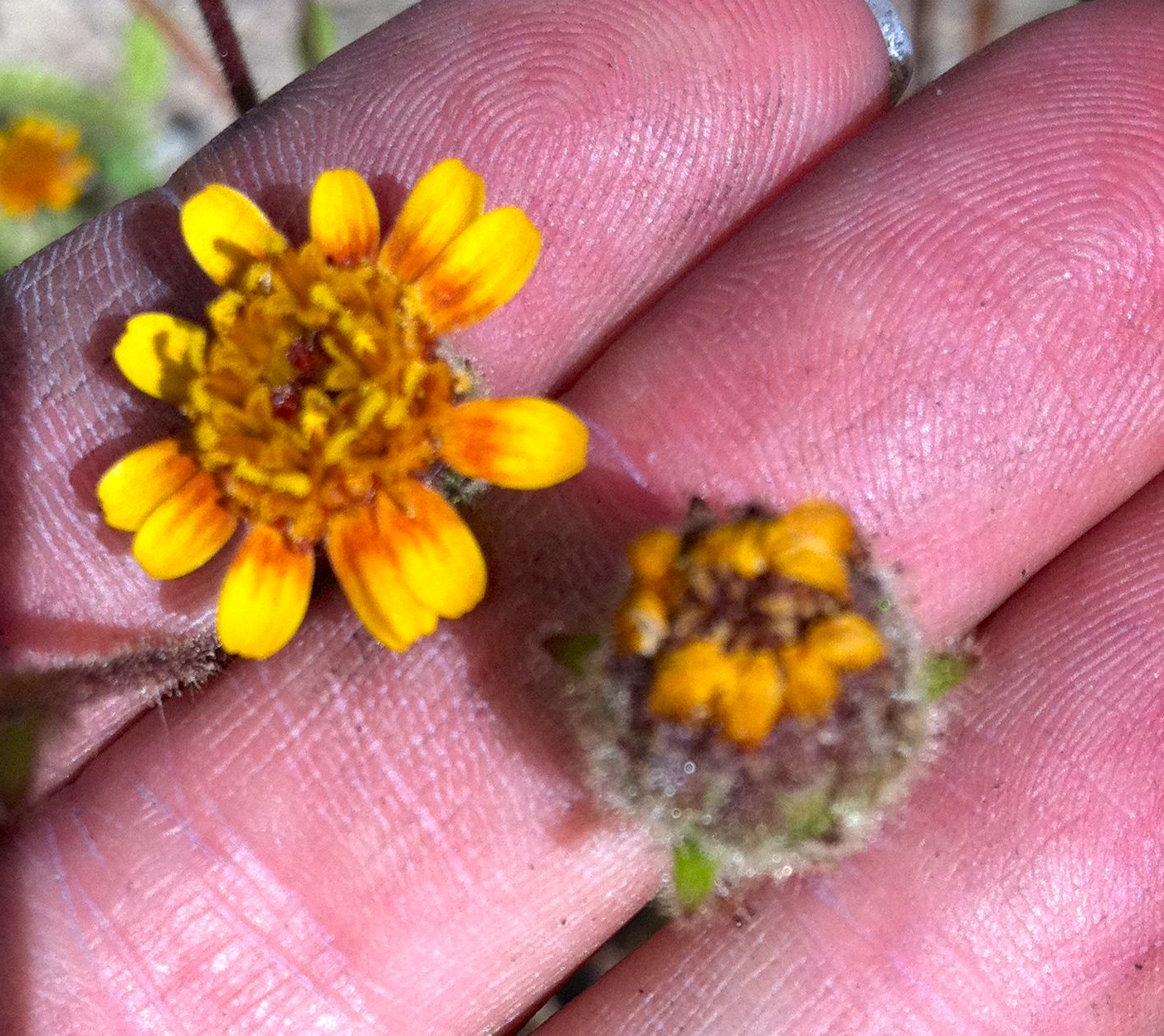
Photo by Chez Brungraber
Family: Asteraceae · Type: Herb · Native
Hulsea vestita (Pumice alpinegold) is a native California herb in the Asteraceae family.
Pumice alpinegold is a California native perennial herb found in alpine and subalpine habitats at elevations likely between 2,000 to 3,000 meters. Flowering from July to August, this plant produces yellow to red flowers in heads 10 to 20 millimeters wide with ray flowers 2 to 5 millimeters broad. Growing with woolly stems 10 to 100 centimeters tall, the plant is densely covered in soft white hairs that give it a distinctive fuzzy appearance. Its basal leaves are spoon-shaped, up to 8 centimeters long and 1 to 3 centimeters wide, with entire to slightly lobed edges and a densely woolly surface. The fruit is 5 to 7 millimeters long, moderately hairy, with a pappus 1 to 2 millimeters in length.
How to tell it apart
vs Bahiopsis: Hulsea leaves are never woody-based shrubs like Bahiopsis; check if plant is herbaceous and high-elevation.; vs Encelia: Hulsea is sticky-glandular throughout; Encelia has dry, often silvery leaves without glandular hairs.; vs Heterotheca: Hulsea has exactly 4 seed scales in unequal pairs; Heterotheca has numerous bristly pappus.; vs Gaillardia: Hulsea leaves are entire to shallowly lobed; Gaillardia has deeply divided, dissected leaves.; vs Hymenoxys: Hulsea leaves are entire to shallowly lobed; Hymenoxys has deeply dissected, feathery leaves.
Frequently asked questions
Is Hulsea vestita native to California?
Yes. Hulsea vestita is native to California (recorded as native).
What plant family does Hulsea vestita belong to?
Hulsea vestita is in the Asteraceae family, genus Hulsea.
Related species
Other California species in the same genus, family, or bioregion.
Sources: Jepson eFlora · Index of California Plant Names · CalPhotos
Last updated 2026-10-07
Data from The California Species Project — 14,000+ California species with verified data from CNPS, CDFW, USFWS, Cal-IPC, and more.