Iberis umbellata
Globe candytuft
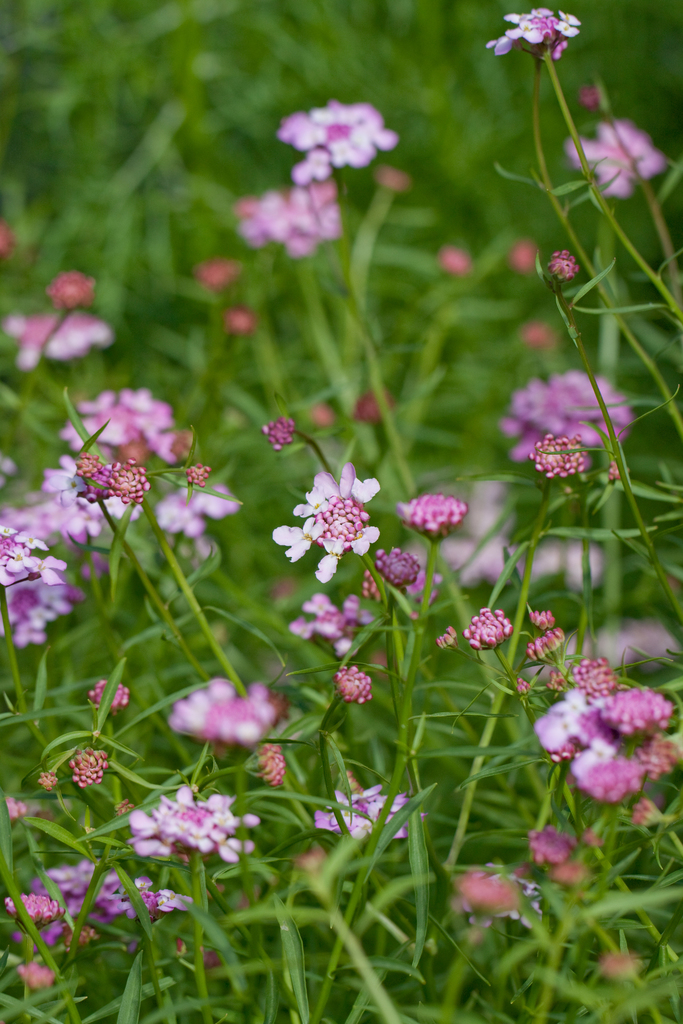
(c) Yoko Nekonomania, some rights reserved (CC BY) · licence
Family: Brassicaceae · Type: Herb · Not Native
Iberis umbellata (Globe candytuft) is a non-native California herb in the Brassicaceae family, recognized by Mediterranean genus; occasional garden escape with distinctive irregular flowers.
Globe candytuft is a naturalized perennial found in the Peninsular Ranges in disturbed areas and abandoned gardens. Flowering from June to September, this plant produces white to pink or purple flowers with distinctive outer petals up to 16 millimeters long and 7 millimeters wide. Growing with branched stems 10 to 55 centimeters tall, the plant is completely glabrous with a neat, upright form. Its leaves are linear-oblanceolate, measuring 2 to 5 centimeters long, positioned primarily on the lower and middle portions of the stem. The fruit is an ovate pod with distinctive acute wings, 8 to 10.5 millimeters long and 5 to 8 millimeters wide.
Identification and appearance
Key characters: Mediterranean genus; occasional garden escape with distinctive irregular flowers
Habitat and range
Habitat: Disturbed areas, abandoned gardens, occasionally persisting from cultivation
Outside California: native to southeastern Europe
Bloom period
Iberis umbellata blooms Jun-Sep.
How to tell it apart
vs Lobularia: Iberis has flat-topped clusters and heart-shaped pods; Lobularia has rounded pods and elongating clusters.; vs Streptanthus: Iberis has flat-topped symmetrical flower heads; Streptanthus has irregular tubular flowers on elongated spikes.
Frequently asked questions
Is Iberis umbellata native to California?
No. Iberis umbellata is not native to California (recorded as not native).
When does Iberis umbellata bloom?
Iberis umbellata blooms Jun-Sep.
What plant family does Iberis umbellata belong to?
Iberis umbellata is in the Brassicaceae family, genus Iberis.
What habitat does Iberis umbellata grow in?
Iberis umbellata grows in Disturbed areas, abandoned gardens, occasionally persisting from cultivation.
Related species
Other California species in the same genus, family, or bioregion.
Sources: Jepson eFlora · CalPhotos
Last updated 2026-10-07
Data from The California Species Project — 14,000+ California species with verified data from CNPS, CDFW, USFWS, Cal-IPC, and more.