Ipomoea indica
Oceanblue morning glory
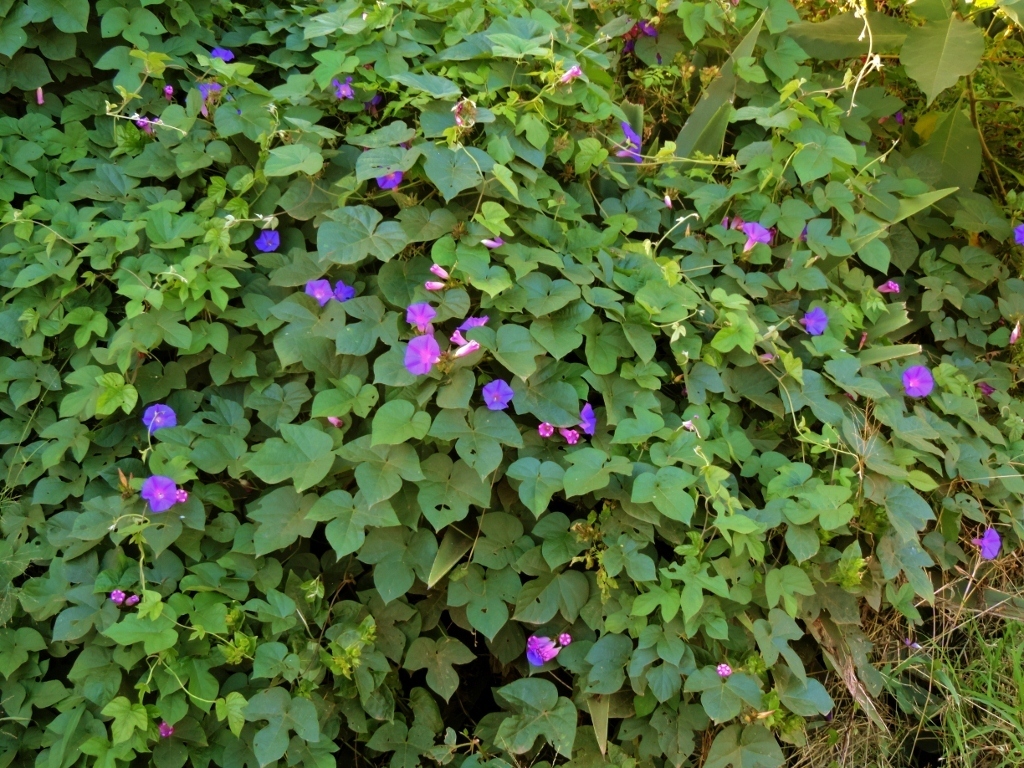
(c) i_c_riddell, some rights reserved (CC BY), uploaded by i_c_riddell · licence
Family: Convolvulaceae · Type: Vine · Not Native
Conservation status: Cal-IPC Yes
Ipomoea indica (Oceanblue morning glory) is a non-native California vine in the Convolvulaceae family, recognized by largest flowers and multi-flowered inflorescences.
Oceanblue morning glory is a naturalized perennial herb found in coastal California regions including Central Coast, San Francisco Bay, and Southern California coastal areas in disturbed places at elevations near 50 meters. Flowering from summer to fall, this plant produces vivid blue flowers that shift towards rose-colored as they age, with blossoms 5 to 7 centimeters long. Growing with sprawling vines that can cover significant ground, it develops distinctive leaves 10 to 15 centimeters wide that range from entire to deeply three-lobed. Its leaves are glabrous to slightly hairy, with a smooth to softly textured surface that can appear strigose or canescent. The plant's flower sepals are 14 to 20 millimeters long, gradually tapering to slender, leaf-like tips with minimal basal hairs.
Identification and appearance
Key characters: 2 sympatric species; largest flowers and multi-flowered inflorescences
Habitat and range
Habitat: Disturbed places
Elevation: +- 50 m.
California counties: San Bernardino, Los Angeles, Santa Cruz, San Luis Obispo, San Diego, San Mateo, Yolo
Outside California: probably native to southeastern United States, alien pantropical
Conservation status
Cal-IPC Yes
How to tell it apart
vs Calystegia: Calystegia stigma has two flattened lobes; Ipomoea stigma is a single rounded knob.; vs Convolvulus: Convolvulus stigma splits into two pointed lobes; Ipomoea stigma is unlobed and ball-shaped.; vs Pandorea: Pandorea has compound leaves; Ipomoea has simple leaves.; vs Alyogyne: Alyogyne has deeply lobed leaves; Ipomoea leaves are typically heart-shaped or entire.; vs Datura: Datura flowers are upright trumpets with pleated edges; Ipomoea flowers are smooth funnels.
Frequently asked questions
Is Ipomoea indica native to California?
No. Ipomoea indica is not native to California (recorded as not native).
Where in California does Ipomoea indica grow?
Ipomoea indica occurs in San Bernardino, Los Angeles, Santa Cruz, San Luis Obispo, San Diego, San Mateo, Yolo, at elevations of +- 50 m..
What plant family does Ipomoea indica belong to?
Ipomoea indica is in the Convolvulaceae family, genus Ipomoea.
Is Ipomoea indica invasive in California?
Ipomoea indica is listed by Cal-IPC with an invasiveness rating of Yes.
What habitat does Ipomoea indica grow in?
Ipomoea indica grows in Disturbed places.
Related species
Other California species in the same genus, family, or bioregion.
Sources: Jepson eFlora · Index of California Plant Names · CalPhotos
Last updated 2026-10-07
Data from The California Species Project — 14,000+ California species with verified data from CNPS, CDFW, USFWS, Cal-IPC, and more.