Ivesia longibracteata
Castle crags ivesia, Castle Crags Ivesia
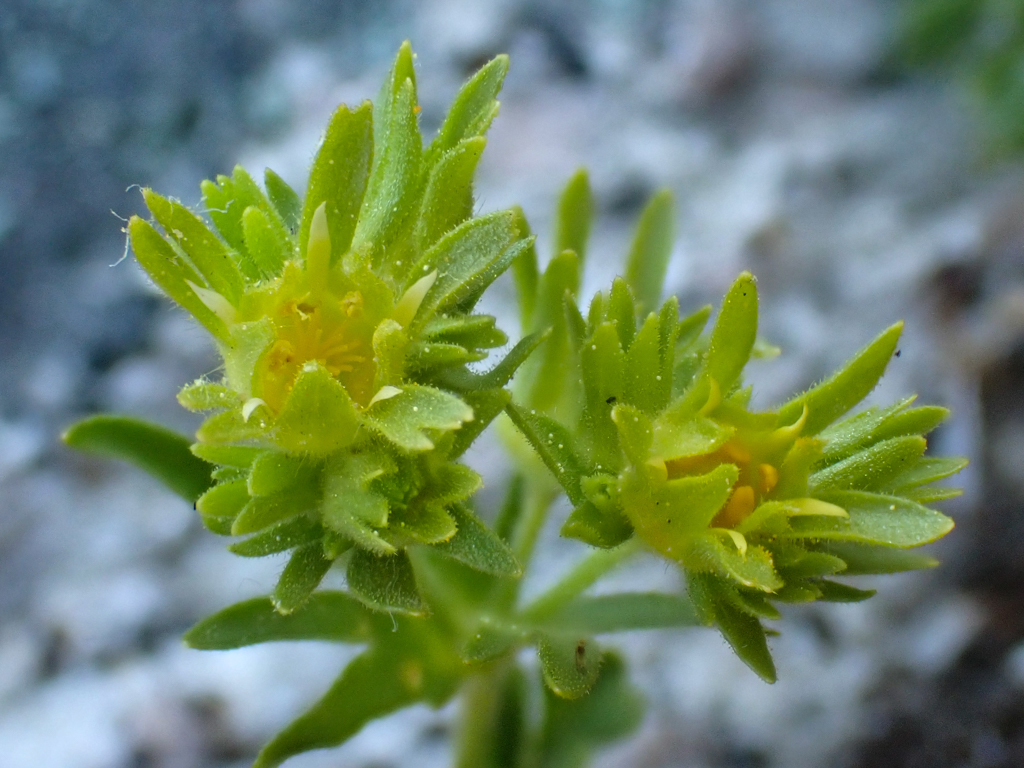
(c) Trevor Van Loon, some rights reserved (CC BY) · licence
Family: Rosaceae · Type: Herb · Native
Conservation status: CNPS 1B.3
Ivesia longibracteata (Castle crags ivesia) is a native California herb in the Rosaceae family, recognized by long bracts unique diagnostic feature.
Castle crags ivesia is a rare (CNPS 1B.3) California native perennial found in the eastern Klamath Ranges (Castle Crags) in granite crevices at elevations of 1,200 to 1,400 meters. Flowering from June to July, this plant produces white flowers in loosely clustered heads 10 to 20 millimeters wide. Growing with tufted green stems 3 to 12 centimeters tall, it forms a compact, ascending to erect plant with a short, slightly branched caudex. Its leaves are typically 2 to 4 centimeters long, with 4 to 6 leaflets on each side, each leaflet having 2 to 7 small oblanceolate lobes 2 to 6 millimeters long. The plant has distinctive ciliate leaf bases and produces small, pale fruits 1 to 1.5 millimeters long with slight venation.
Identification and appearance
Key characters: 4 sympatric species; long bracts unique diagnostic feature
Habitat and range
Habitat: Granite crevices
Elevation: 1200-1400 m
California counties: Shasta, Siskiyou
Bloom period
Ivesia longibracteata blooms Jun-Jul.
Conservation status
CNPS 1B.3
How to tell it apart
vs Achillea: Ivesia has rose-like flowers with separate petals; Achillea has composite flower heads with ray and disk flowers.; vs Potentilla: Ivesia has cylindrical bottlebrush leaves with 4-80 tiny leaflets per side; Potentilla has flat leaves with spread-out leaflets.; vs Horkelia: Ivesia has cylindrical leaves with overlapping leaflets; Horkelia has flat leaves with 2-15 distinct, separated leaflets.; vs Eremogone: Ivesia has compound bottlebrush leaves; Eremogone has simple, needle-like or thread-like leaves.; vs Cryptantha: Ivesia has rose-family flowers with separate petals; Cryptantha has fused tubular corollas typical of borages.
Frequently asked questions
Is Ivesia longibracteata native to California?
Yes. Ivesia longibracteata is native to California (recorded as native).
When does Ivesia longibracteata bloom?
Ivesia longibracteata blooms Jun-Jul.
Where in California does Ivesia longibracteata grow?
Ivesia longibracteata occurs in Shasta, Siskiyou, at elevations of 1200-1400 m.
What plant family does Ivesia longibracteata belong to?
Ivesia longibracteata is in the Rosaceae family, genus Ivesia.
Is Ivesia longibracteata rare or endangered?
Ivesia longibracteata carries California Rare Plant Rank 1B.3, state rank S1.
Related species
Other California species in the same genus, family, or bioregion.
Sources: Jepson eFlora · CNPS Rare Plant Inventory · Index of California Plant Names · CalPhotos · CDFW CNDDB
Last updated 2026-10-07
Data from The California Species Project — 14,000+ California species with verified data from CNPS, CDFW, USFWS, Cal-IPC, and more.