Ixia maculata
African cornlily, African Cornlily
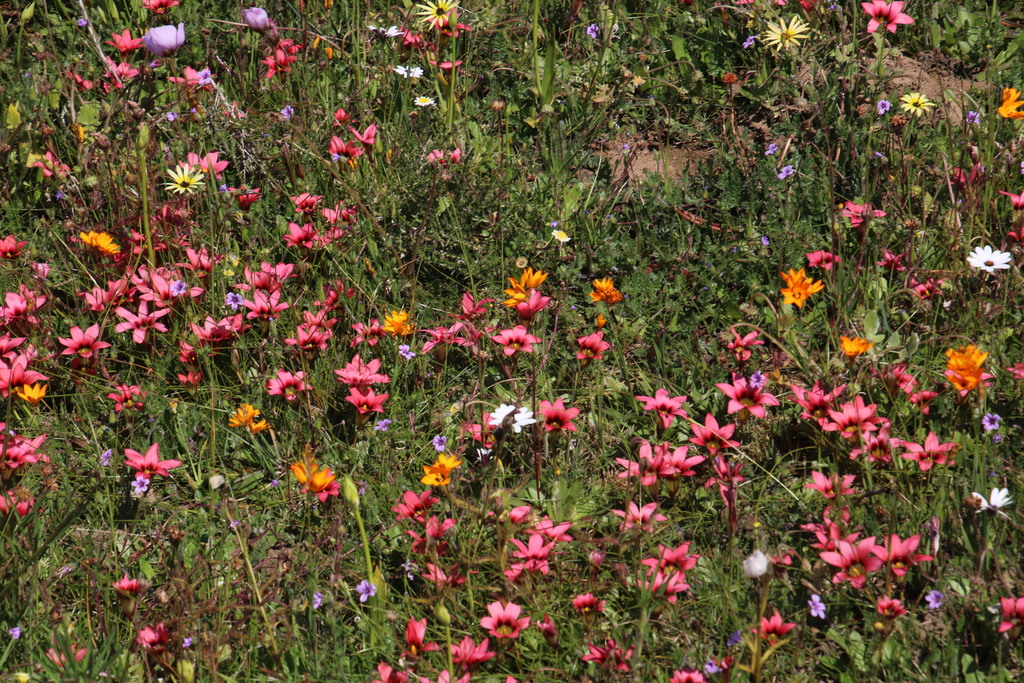
(c) Tony Rebelo, some rights reserved (CC BY-SA), uploaded by Tony Rebelo · licence
Family: Iridaceae · Type: Herb · Not Native
Ixia maculata (African cornlily) is a non-native California herb in the Iridaceae family, recognized by South African genus; rare naturalization from cultivation in coastal areas.
African cornlily is a naturalized perennial found in the San Francisco Bay Area in urban areas and disturbed coastal dunes at elevations below 50 meters. Flowering in April, this plant produces striking orange or yellow flowers with a dark brown center, creating a pale star-like pattern in blooms 15 to 20 millimeters wide. Growing 20 to 50 centimeters tall with generally unbranched stems, it develops distinctive basal leaves that are thin and often twisted, reaching 10 to 35 centimeters long. Its slender basal leaves measure less than 5 millimeters wide, creating a delicate, grass-like appearance. The plant's dense inflorescence typically contains 4 to 12 flowers, with filaments partially united and anthers measuring 7 to 9 millimeters long.
Identification and appearance
Key characters: South African genus; rare naturalization from cultivation in coastal areas
Habitat and range
Habitat: Uncommon. Urban areas, disturbed coastal dunes
Elevation: < 50 m
Outside California: native to southern Africa
Bloom period
Ixia maculata blooms Apr.
Frequently asked questions
Is Ixia maculata native to California?
No. Ixia maculata is not native to California (recorded as not native).
When does Ixia maculata bloom?
Ixia maculata blooms Apr.
What plant family does Ixia maculata belong to?
Ixia maculata is in the Iridaceae family, genus Ixia.
What habitat does Ixia maculata grow in?
Ixia maculata grows in Uncommon. Urban areas, disturbed coastal dunes.
Related species
Other California species in the same genus, family, or bioregion.
Sources: Jepson eFlora · CalPhotos
Last updated 2026-10-07
Data from The California Species Project — 14,000+ California species with verified data from CNPS, CDFW, USFWS, Cal-IPC, and more.