Juncus bufonius var. bufonius
Toad rush
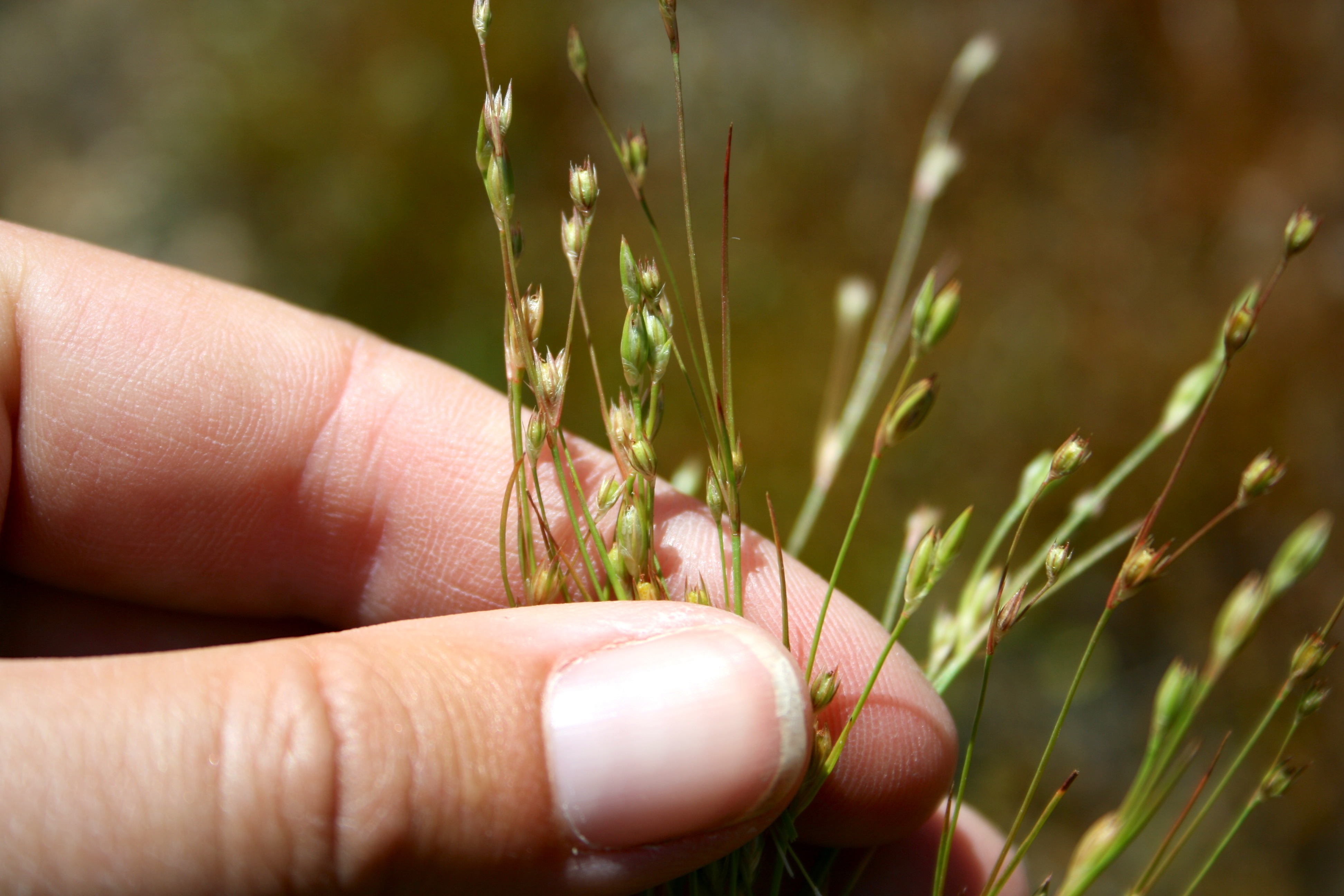
Photo: parent species Juncus bufonius · Photo by Chez Brungraber
Family: Juncaceae · Type: Grass · Native
Juncus bufonius var. bufonius (Toad rush) is a native California grass in the Juncaceae family, recognized by . Key features: flowers single at nodes, perianth 4-7.3mm, annual.
Toad rush is a California native annual found in damp, sunny ground, typically in disturbed areas across California at elevations below 3,200 meters. Flowering throughout the growing season, this plant produces small, inconspicuous green-white flowers with pointed petals. Growing with sprawling to erect stems that can spread widely, it forms relatively large and robust plants for a rush species. Its leaves are fine and grass-like, blending easily into disturbed ground environments. Plants typically produce multiple flowers at each stem node, creating dense clusters in favorable habitats.
Identification and appearance
Key characters: 76 sympatric species. Key features: flowers single at nodes, perianth 4-7.3mm, annual
Habitat and range
Habitat: Damp sunny ground, generally disturbed
Elevation: < 3200 m
California counties: San Bernardino, San Luis Obispo, Los Angeles, Riverside, San Diego, Fresno, Marin, Mendocino, Monterey, Plumas, Santa Clara, Siskiyou, Yuba, Butte, Mariposa, Modoc, Mono, Nevada, Orange, San Mateo, Santa Cruz, Shasta, Sierra, Sonoma, Sutter, Trinity, Tulare, Tuolumne, Yolo, Kern, Santa Barbara, Contra Costa, Inyo, Ventura, Madera, El Dorado, Calaveras, Imperial, Amador, Alameda, Sacramento, Humboldt, Tehama, Lassen, Glenn, Placer, Lake, Colusa, Merced, Napa, Solano
Outside California: +- worldwide.
How to tell it apart
vs Schoenoplectus: Juncus has leaf blades present; Schoenoplectus is leafless with only bladeless sheaths at base.; vs Carex: Juncus has round or flattened stems; Carex has triangular stems you can feel.; vs Luzula: Run finger along leaf edge - smooth = Juncus, hairy = Luzula.; vs Elegia: Juncus has small individual flowers; Elegia has showy papery bracts and branching structure.; vs Cyperus: Juncus has round stems and capsules; Cyperus has triangular stems and lens-shaped achenes.
Frequently asked questions
Is Juncus bufonius var. bufonius native to California?
Yes. Juncus bufonius var. bufonius is native to California (recorded as native).
Where in California does Juncus bufonius var. bufonius grow?
Juncus bufonius var. bufonius occurs in San Bernardino, San Luis Obispo, Los Angeles, Riverside, San Diego, Fresno, Marin, Mendocino and other counties, at elevations of < 3200 m.
What plant family does Juncus bufonius var. bufonius belong to?
Juncus bufonius var. bufonius is in the Juncaceae family, genus Juncus.
What habitat does Juncus bufonius var. bufonius grow in?
Juncus bufonius var. bufonius grows in Damp sunny ground, generally disturbed.
Related species
Other California species in the same genus, family, or bioregion.
Sources: Jepson eFlora · Index of California Plant Names · CalPhotos
Last updated 2026-10-07
Data from The California Species Project — 14,000+ California species with verified data from CNPS, CDFW, USFWS, Cal-IPC, and more.