Juncus cyperoides
Bolivian rush, Bolivian Rush
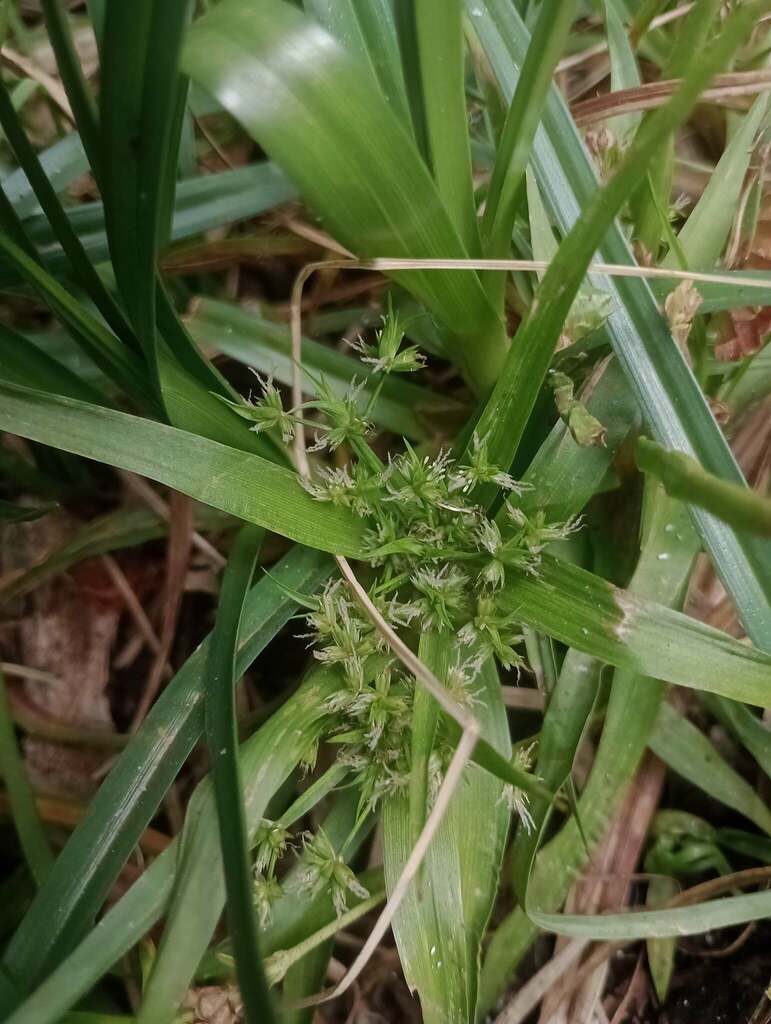
(c) Felipe Horton, some rights reserved (CC BY) · licence
Family: Juncaceae · Type: Grass · Not Native
Juncus cyperoides (Bolivian rush) is a non-native California grass in the Juncaceae family, recognized by . Key features: many evenly-spaced cauline leaves, wide flat-sided blades, diffuse inflorescence.
Bolivian rush is a naturalized perennial herb found in northern Sierra Nevada mountains in Butte and Yuba counties, occurring on creekbanks, damp meadows, and yellow-pine forest areas at elevations of 600 to 1,100 meters. This grass-like plant has leafy stems with conspicuous nodes, growing 5 to 50 centimeters tall with a long, nearly erect rhizome. Growing with spreading branches and multiple clusters, the plant produces green perianth parts 2.2 to 3.9 millimeters long with six stamens. Its leaves are evenly spaced along the stem, 4 to 20 centimeters long and 2 to 8.5 millimeters wide, with a flat side oriented toward the stem. The fruit extends beyond the perianth, gradually tapering to a small beak 0.5 to 1 millimeter long.
Identification and appearance
Key characters: 34 sympatric species. Key features: many evenly-spaced cauline leaves, wide flat-sided blades, diffuse inflorescence
Habitat and range
Habitat: Creekbanks, damp meadows, yellow-pine forest
Elevation: 600-1100 m
Outside California: native to South America
How to tell it apart
vs Schoenoplectus: Juncus has leaf blades present; Schoenoplectus is leafless with only bladeless sheaths at base.; vs Carex: Juncus has round or flattened stems; Carex has triangular stems you can feel.; vs Luzula: Run finger along leaf edge - smooth = Juncus, hairy = Luzula.; vs Elegia: Juncus has small individual flowers; Elegia has showy papery bracts and branching structure.; vs Cyperus: Juncus has round stems and capsules; Cyperus has triangular stems and lens-shaped achenes.
Frequently asked questions
Is Juncus cyperoides native to California?
No. Juncus cyperoides is not native to California (recorded as not native).
What plant family does Juncus cyperoides belong to?
Juncus cyperoides is in the Juncaceae family, genus Juncus.
What habitat does Juncus cyperoides grow in?
Juncus cyperoides grows in Creekbanks, damp meadows, yellow-pine forest.
Related species
Other California species in the same genus, family, or bioregion.
Sources: Jepson eFlora · CalPhotos
Last updated 2026-10-07
Data from The California Species Project — 14,000+ California species with verified data from CNPS, CDFW, USFWS, Cal-IPC, and more.