Juncus leiospermus var. ahartii
Ahart's dwarf rush
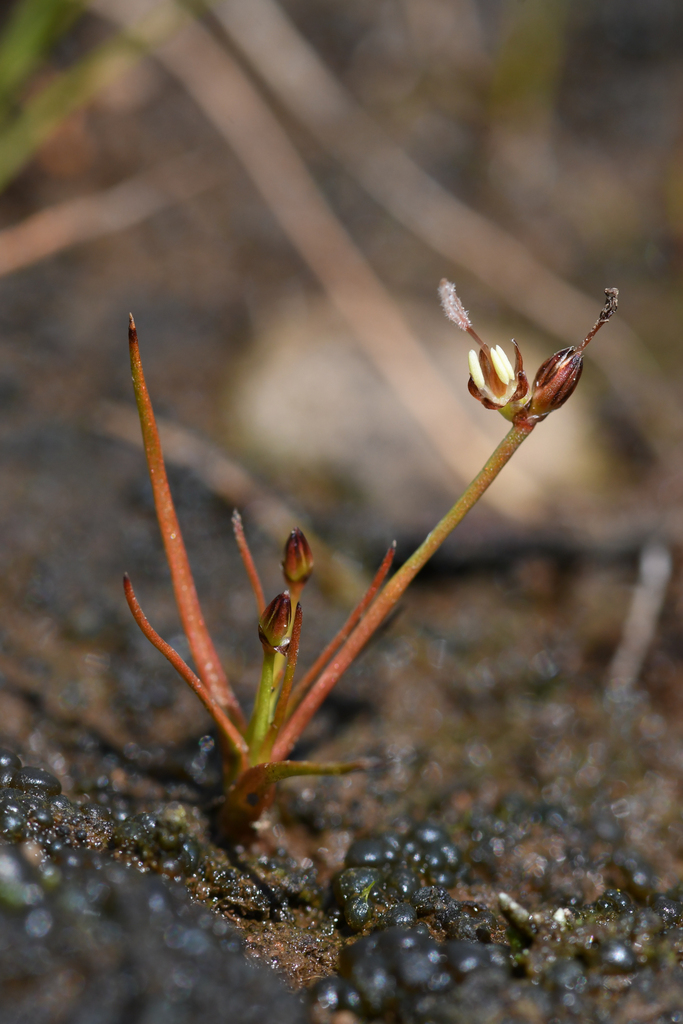
Photo: parent species Juncus leiospermus · (c) Trevor Van Loon, some rights reserved (CC BY) · licence
Family: Juncaceae · Type: Grass · Native
Conservation status: CNPS 1B.2
Juncus leiospermus var. ahartii (Ahart's dwarf rush) is a native California grass in the Juncaceae family, recognized by vernal pool habitat, single flower per stem, and large anthers/styles.
Ahart's dwarf rush is a rare (CNPS 1B.2) California native annual found in the eastern Great Valley in Butte, Placer, Sacramento, and Calaveras counties, inhabiting vernal pool margins, grassland swales, and gopher mounds at elevations of 30 to 90 meters. Flowering in the spring, this diminutive rush produces small, delicate flowers typically one to two per stem. Growing with exceptionally compact stems, it forms tiny clusters that blend subtly into its grassland habitat. Its leaves and overall structure are notably smaller and more compact compared to other rush species, creating a minimalist botanical profile. This rare plant represents a unique adaptation to ephemeral wetland environments, thriving in the transient microhabitats of California's seasonal grasslands.
Identification and appearance
Key characters: 24 sympatric species; key features are vernal pool habitat, single flower per stem, and large anthers/styles
Habitat and range
Habitat: Vernal pool margins; grassland swales, gopher mounds
Elevation: 30-90 m
California counties: Butte, Calaveras, Placer, Sacramento
Conservation status
CNPS 1B.2
How to tell it apart
vs Schoenoplectus: Juncus has leaf blades present; Schoenoplectus is leafless with only bladeless sheaths at base.; vs Carex: Juncus has round or flattened stems; Carex has triangular stems you can feel.; vs Luzula: Run finger along leaf edge - smooth = Juncus, hairy = Luzula.; vs Elegia: Juncus has small individual flowers; Elegia has showy papery bracts and branching structure.; vs Cyperus: Juncus has round stems and capsules; Cyperus has triangular stems and lens-shaped achenes.
Frequently asked questions
Is Juncus leiospermus var. ahartii native to California?
Yes. Juncus leiospermus var. ahartii is native to California (recorded as native).
Where in California does Juncus leiospermus var. ahartii grow?
Juncus leiospermus var. ahartii occurs in Butte, Calaveras, Placer, Sacramento, at elevations of 30-90 m.
What plant family does Juncus leiospermus var. ahartii belong to?
Juncus leiospermus var. ahartii is in the Juncaceae family, genus Juncus.
Is Juncus leiospermus var. ahartii rare or endangered?
Juncus leiospermus var. ahartii carries California Rare Plant Rank 1B.2, state rank S1.
What habitat does Juncus leiospermus var. ahartii grow in?
Juncus leiospermus var. ahartii grows in Vernal pool margins; grassland swales, gopher mounds.
Related species
Other California species in the same genus, family, or bioregion.
Sources: Jepson eFlora · CNPS Rare Plant Inventory · Index of California Plant Names · CalPhotos · CDFW CNDDB
Last updated 2026-10-07
Data from The California Species Project — 14,000+ California species with verified data from CNPS, CDFW, USFWS, Cal-IPC, and more.