Juncus supiniformis
Hair-leaved rush
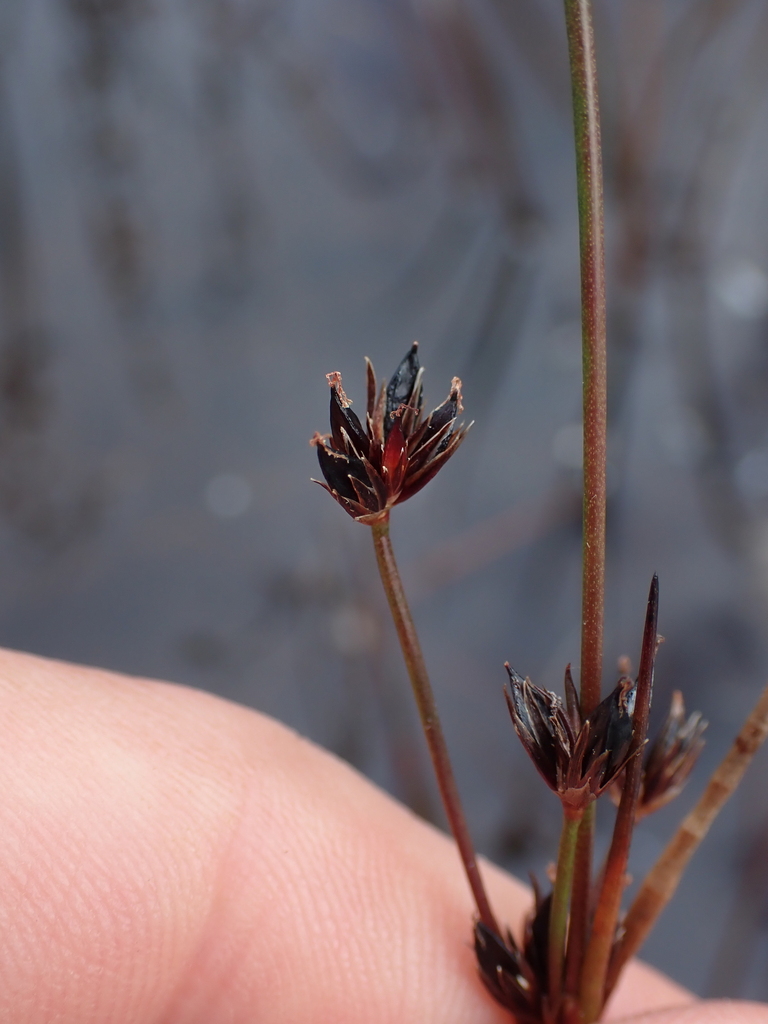
no rights reserved, uploaded by Julia Carr · CC0
Family: Juncaceae · Type: Grass · Native
Conservation status: CNPS 2B.2
Juncus supiniformis (Hair-leaved rush) is a native California grass in the Juncaceae family, recognized by unique hair-like submerged leaves and rooting nodes diagnostic.
Hair-leaved rush is a rare (CNPS 2B.2) California native perennial found in northern coastal California, specifically Mendocino County, in marshes and ponds at elevations generally below 100 meters. Flowering in spring and summer, this rush produces small flowers in compact clusters of 3 to 9 blossoms. Growing 8 to 40 centimeters tall, it forms matted clusters with slender, spreading rhizomes and stems that can root at nodes and generate new plantlets. Its distinctive leaves are hair-like when submerged, with cylindrical cauline blades that exceed the stem length and feature complete crosswalls. When water recedes, the rush produces erect flowering stems with narrow lanceolate perianth parts measuring 3.4 to 5.4 millimeters long.
Identification and appearance
Key characters: 26 sympatric species; unique hair-like submerged leaves and rooting nodes diagnostic
Habitat and range
Habitat: Marshes, ponds
Elevation: generally < 100 m
Outside California: to Alaska
Conservation status
CNPS 2B.2
How to tell it apart
vs Schoenoplectus: Juncus has leaf blades present; Schoenoplectus is leafless with only bladeless sheaths at base.; vs Carex: Juncus has round or flattened stems; Carex has triangular stems you can feel.; vs Luzula: Run finger along leaf edge - smooth = Juncus, hairy = Luzula.; vs Elegia: Juncus has small individual flowers; Elegia has showy papery bracts and branching structure.; vs Cyperus: Juncus has round stems and capsules; Cyperus has triangular stems and lens-shaped achenes.
Frequently asked questions
Is Juncus supiniformis native to California?
Yes. Juncus supiniformis is native to California (recorded as native).
What plant family does Juncus supiniformis belong to?
Juncus supiniformis is in the Juncaceae family, genus Juncus.
Is Juncus supiniformis rare or endangered?
Juncus supiniformis carries California Rare Plant Rank 2B.2, state rank S1.
What habitat does Juncus supiniformis grow in?
Juncus supiniformis grows in Marshes, ponds.
Related species
Other California species in the same genus, family, or bioregion.
Sources: Jepson eFlora · CalPhotos · CDFW CNDDB
Last updated 2026-10-07
Data from The California Species Project — 14,000+ California species with verified data from CNPS, CDFW, USFWS, Cal-IPC, and more.