Juncus torreyi
Torrey's rush
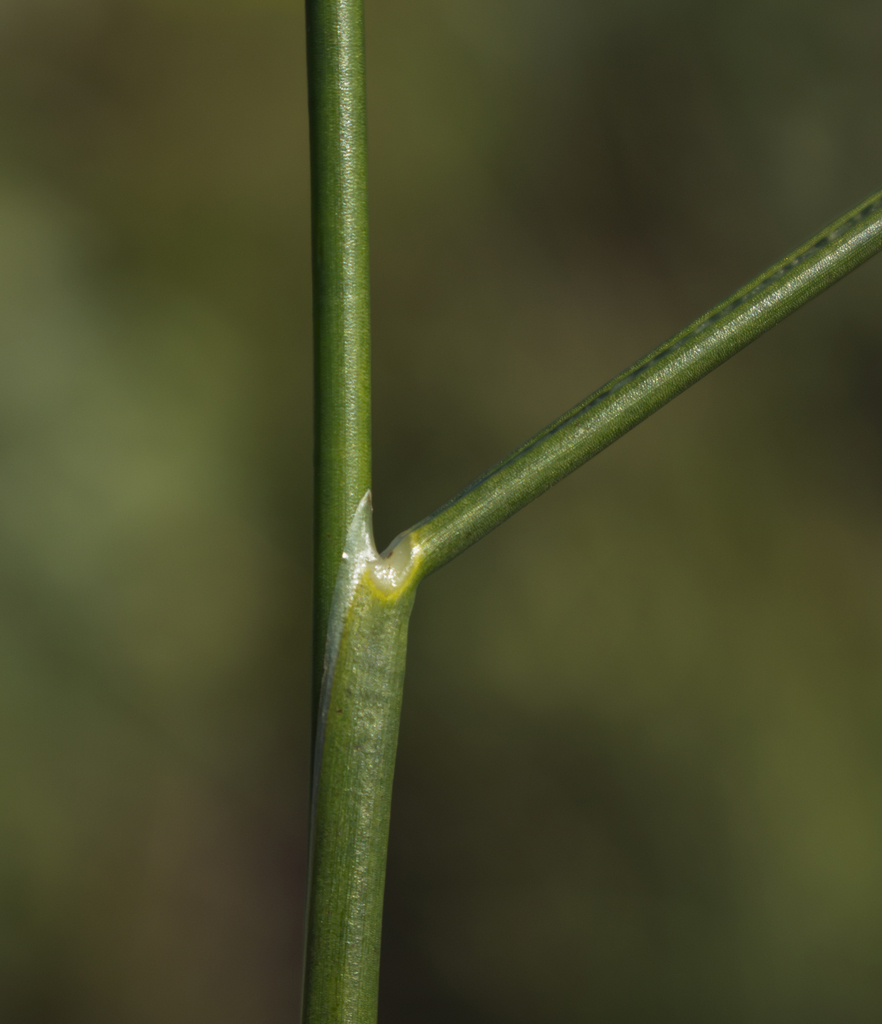
(c) aarongunnar, some rights reserved (CC BY), uploaded by aarongunnar · licence
Family: Juncaceae · Type: Grass · Native
Juncus torreyi (Torrey's rush) is a native California grass in the Juncaceae family, recognized by tubers, many-flowered dense clusters, and triangular fruits diagnostic.
Torrey's rush is a California native perennial found in the Tehama, San Joaquin Valley, Central Coast, Southern Coast, Western Transverse Ranges, San Gabriel Mountains, Peninsular Ranges, Great Basin, and desert regions in meadows and moist woodland at elevations below 1,800 meters. With slender flowers blooming during the summer months, this rush produces delicate pale greenish-white floral clusters. Growing robustly with stout stems 30 to 100 centimeters tall and a thin creeping rhizome, the plant forms dense clumps in wet areas. Its leaves feature prominent sheath appendages and cylindrical blades with complete crosswalls, creating a distinctive architectural structure. The plant produces thin, three-angled fruits with seeds positioned below the middle, typical of rushes in moist habitats.
Identification and appearance
Key characters: 59 sympatric species; tubers, many-flowered dense clusters, and triangular fruits diagnostic
Habitat and range
Habitat: Meadows, moist woodland
Elevation: < 1800 m
California counties: San Bernardino, Los Angeles, Riverside, Mendocino, Modoc, San Diego, Orange, Imperial, Inyo, Kern, Ventura, Monterey, Mono, Del Norte
Outside California: to British Columbia, eastern Canada, Georgia
How to tell it apart
vs Schoenoplectus: Juncus has leaf blades present; Schoenoplectus is leafless with only bladeless sheaths at base.; vs Carex: Juncus has round or flattened stems; Carex has triangular stems you can feel.; vs Luzula: Run finger along leaf edge - smooth = Juncus, hairy = Luzula.; vs Elegia: Juncus has small individual flowers; Elegia has showy papery bracts and branching structure.; vs Cyperus: Juncus has round stems and capsules; Cyperus has triangular stems and lens-shaped achenes.
Frequently asked questions
Is Juncus torreyi native to California?
Yes. Juncus torreyi is native to California (recorded as native).
Where in California does Juncus torreyi grow?
Juncus torreyi occurs in San Bernardino, Los Angeles, Riverside, Mendocino, Modoc, San Diego, Orange, Imperial and other counties, at elevations of < 1800 m.
What plant family does Juncus torreyi belong to?
Juncus torreyi is in the Juncaceae family, genus Juncus.
What habitat does Juncus torreyi grow in?
Juncus torreyi grows in Meadows, moist woodland.
Related species
Other California species in the same genus, family, or bioregion.
Sources: Jepson eFlora · Index of California Plant Names · CalPhotos
Last updated 2026-10-07
Data from The California Species Project — 14,000+ California species with verified data from CNPS, CDFW, USFWS, Cal-IPC, and more.