Juncus xiphioides
Iris-leaved rush
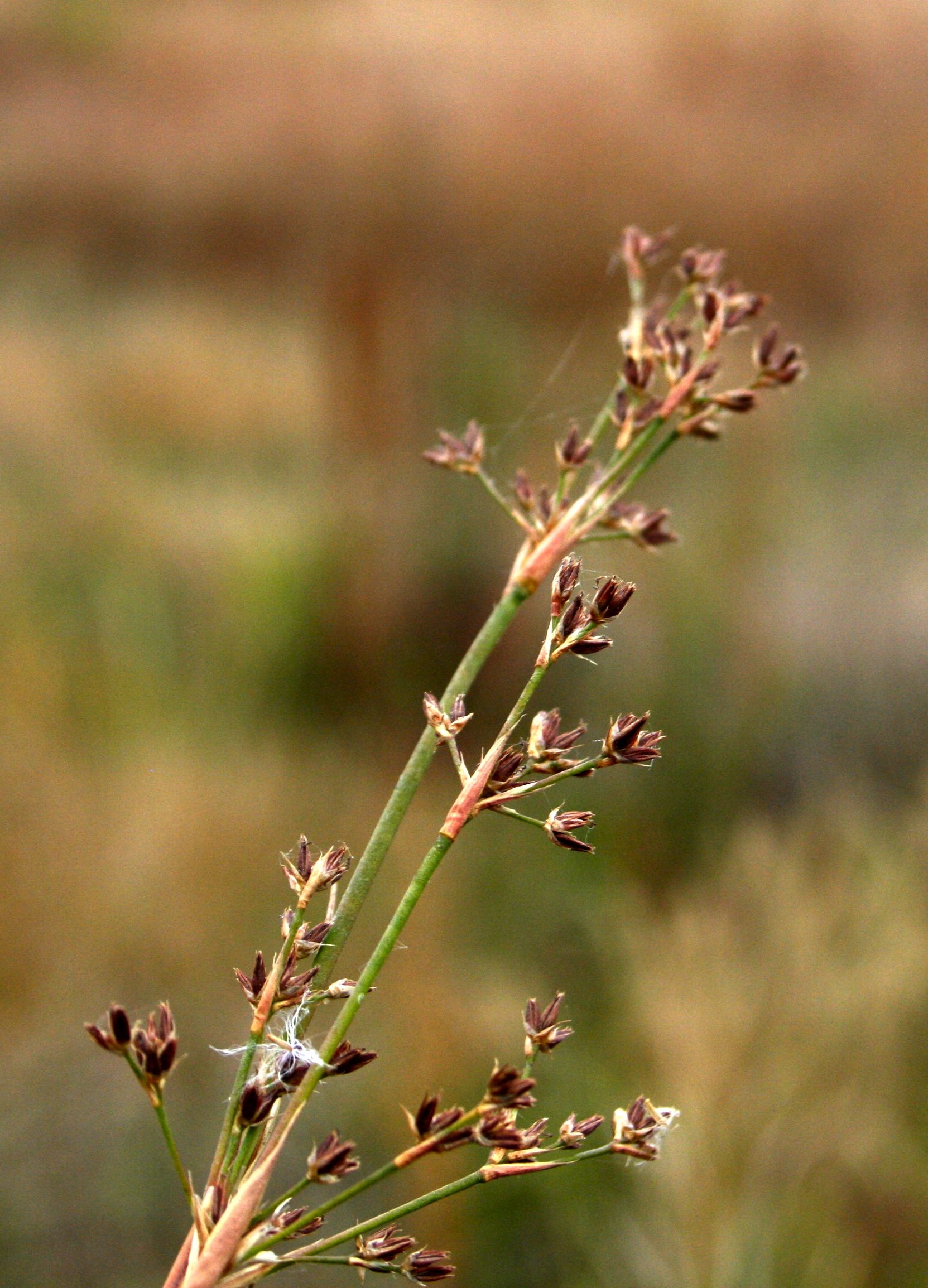
Photo by Chez Brungraber
Family: Juncaceae · Type: Grass · Native
Juncus xiphioides (Iris-leaved rush) is a native California grass in the Juncaceae family, recognized by wide flat iris-like leaves and robust habit diagnostic.
Iris-leaved rush is a California native perennial found in coastal, central, and desert regions including the North Coast, North Coast Ranges, Sierra Nevada, Central Valley, Central Western, Southwestern, White and Inyo Mountains, and Desert regions in wet places at elevations up to 2,100 meters. Flowering in the summer months, this rush produces green to reddish perianth parts creating delicate flower clusters. Growing 40 to 80 centimeters tall with a stout, creeping rhizome, it develops flat leaves 5 to 14 millimeters wide that curve gently towards the stem. Its leaves have distinctive crosswalls and long, curved tips that give the plant a graceful, grass-like appearance. The fruit is oblong with an abrupt or gradual beak, slightly longer than the surrounding perianth parts.
Identification and appearance
Key characters: 75 sympatric species; wide flat iris-like leaves and robust habit diagnostic
Habitat and range
Habitat: Wet places
Elevation: < 2100 m
California counties: San Bernardino, San Diego, Kern, Riverside, Los Angeles, Santa Barbara, Contra Costa, Fresno, Humboldt, Inyo, Mendocino, San Joaquin, San Luis Obispo, Santa Clara, Siskiyou, Alameda, Glenn, Marin, Mono, Monterey, Napa, Sacramento, San Mateo, Santa Cruz, Sonoma, Tehama, Trinity, Tulare, Tuolumne, Orange, Imperial, Ventura, Madera, El Dorado, Stanislaus, Colusa, Lassen, Butte, Yuba, Lake, Sutter, San Benito, Merced, Solano, Mariposa, Del Norte, Placer, Nevada, Yolo, Shasta
Outside California: to Nevada, New Mexico, Baja California
How to tell it apart
vs Schoenoplectus: Juncus has leaf blades present; Schoenoplectus is leafless with only bladeless sheaths at base.; vs Carex: Juncus has round or flattened stems; Carex has triangular stems you can feel.; vs Luzula: Run finger along leaf edge - smooth = Juncus, hairy = Luzula.; vs Elegia: Juncus has small individual flowers; Elegia has showy papery bracts and branching structure.; vs Cyperus: Juncus has round stems and capsules; Cyperus has triangular stems and lens-shaped achenes.
Frequently asked questions
Is Juncus xiphioides native to California?
Yes. Juncus xiphioides is native to California (recorded as native).
Where in California does Juncus xiphioides grow?
Juncus xiphioides occurs in San Bernardino, San Diego, Kern, Riverside, Los Angeles, Santa Barbara, Contra Costa, Fresno and other counties, at elevations of < 2100 m.
What plant family does Juncus xiphioides belong to?
Juncus xiphioides is in the Juncaceae family, genus Juncus.
What habitat does Juncus xiphioides grow in?
Juncus xiphioides grows in Wet places.
Related species
Other California species in the same genus, family, or bioregion.
- Juncus acuminatus — Tapered rush
- Juncus acutus subsp. leopoldii — Southwestern spiny rush
- Juncus ambiguus — Frog rush
- Juncus anthelatus — Kentucky or poverty rush
- Juncus articulatus subsp. articulatus — Jointed rush
- Juncus balticus subsp. ater — Baltic rush
- Luzula cascadensis
- Luzula comosa — Common wood rush
- Luzula comosa var. comosa — Hairy wood rush
- Luzula comosa var. laxa — Hairy wood rush
Sources: Jepson eFlora · Index of California Plant Names · CalPhotos
Last updated 2026-10-07
Data from The California Species Project — 14,000+ California species with verified data from CNPS, CDFW, USFWS, Cal-IPC, and more.