Keckiella antirrhinoides var. antirrhinoides
Chaparral beard tongue
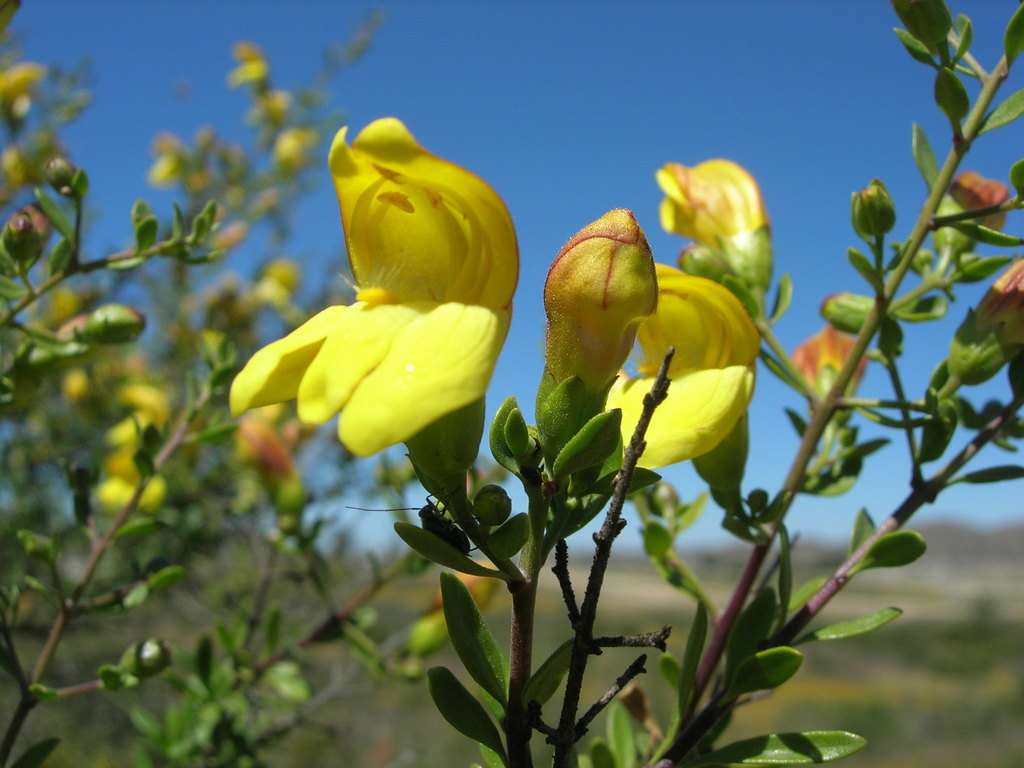
(c) Joe Decruyenaere, some rights reserved (CC BY-SA) · licence
Family: Plantaginaceae · Type: Shrub · Native
Keckiella antirrhinoides var. antirrhinoides (Chaparral beard tongue) is a native California shrub in the Plantaginaceae family.
Chaparral beard tongue is a California native shrub found in southern coastal, Transverse, and Peninsular Ranges in chaparral and oak forest at elevations of 100 to 1,100 meters. Flowering from April to May, this plant produces yellow to reddish flowers with widely ovate calyx lobes. Growing with finely hairy stems up to one meter tall, it forms a dense, compact shrub with intricate branching. Its leaves are small and narrow, typical of drought-adapted chaparral plants, creating a delicate texture against the landscape. The plant's distinctive flowers, with their bearded appearance and rich coloration, provide an important nectar source for local pollinators in California's Mediterranean ecosystems.
Identification and appearance
Key characters: 9 sympatric species. Key differentiators: flower size/color, leaf arrangement, habitat elevation
Habitat and range
Habitat: Chaparral, oak forest
Elevation: 100-1100 m
California counties: San Diego, Riverside, Los Angeles, San Bernardino, Imperial, Orange, San Mateo
Outside California: Mexico
Bloom period
Keckiella antirrhinoides var. antirrhinoides blooms Apr-May.
How to tell it apart
vs Penstemon: Keckiella has woody stems that persist year-round; Penstemon is herbaceous and dies back.; vs Epilobium: Keckiella has tubular two-lipped flowers with five stamens; Epilobium has four-petaled open flowers.; vs Tecomaria: Keckiella has small tubular flowers under 1 inch; Tecomaria has large showy orange-red trumpet flowers.; vs Larrea: Keckiella has tubular snapdragon-like flowers; Larrea has small yellow five-petaled flowers and resinous leaves.; vs Salvia: Keckiella has five stamens (one sterile); Salvia has only two fertile stamens and square stems.
Frequently asked questions
Is Keckiella antirrhinoides var. antirrhinoides native to California?
Yes. Keckiella antirrhinoides var. antirrhinoides is native to California (recorded as native).
When does Keckiella antirrhinoides var. antirrhinoides bloom?
Keckiella antirrhinoides var. antirrhinoides blooms Apr-May.
Where in California does Keckiella antirrhinoides var. antirrhinoides grow?
Keckiella antirrhinoides var. antirrhinoides occurs in San Diego, Riverside, Los Angeles, San Bernardino, Imperial, Orange, San Mateo, at elevations of 100-1100 m.
What plant family does Keckiella antirrhinoides var. antirrhinoides belong to?
Keckiella antirrhinoides var. antirrhinoides is in the Plantaginaceae family, genus Keckiella.
What habitat does Keckiella antirrhinoides var. antirrhinoides grow in?
Keckiella antirrhinoides var. antirrhinoides grows in Chaparral, oak forest.
Related species
Other California species in the same genus, family, or bioregion.
- Keckiella antirrhinoides var. microphylla — Chaparral beard tongue
- Keckiella breviflora — Bush beardtongue
- Keckiella breviflora var. breviflora — Gaping keckiella
- Keckiella breviflora var. glabrisepala — Hairless gaping keckiella
- Keckiella cordifolia — Climbing penstemon
- Keckiella corymbosa — Red beardtongue
Sources: Jepson eFlora · Index of California Plant Names · CalPhotos
Last updated 2026-10-07
Data from The California Species Project — 14,000+ California species with verified data from CNPS, CDFW, USFWS, Cal-IPC, and more.