Krascheninnikovia lanata
Winter fat
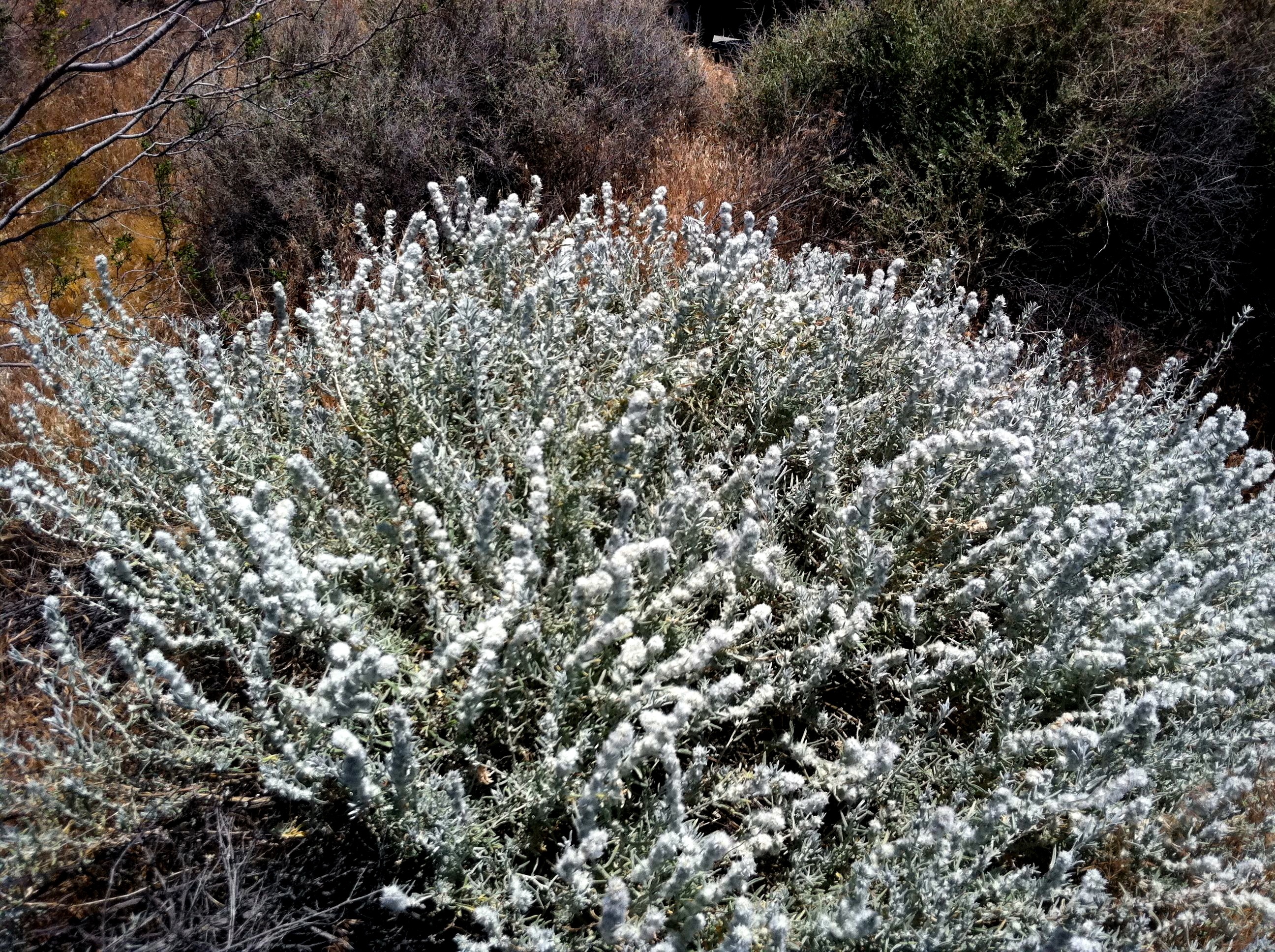
Photo by Chez Brungraber
Family: Chenopodiaceae · Type: Shrub · Native
Krascheninnikovia lanata (Winter fat) is a native California shrub in the Chenopodiaceae family, recognized by Range edge species - western extension of a genus primarily distributed in interior western North America.
Winter fat is a California native shrub found in the Tehachapi Mountains, southern San Joaquin Valley, western Transverse Ranges, Great Basin, and Mojave Desert in rocky to clay soils at elevations of 100 to 2,700 meters. Flowering from May to July, this plant produces small, inconspicuous flowers with white to rust-colored hairs covering its branches and stems. Growing 50 to 100 centimeters tall with a distinctive woolly appearance, it forms a compact, rounded shrub with densely clustered branches. Its narrow leaves are 1 to 4 centimeters long with margins rolled inward, giving the plant a soft, grayish-white textural quality. The fruit is covered in white hairs, contributing to the plant's characteristic woolly appearance.
Identification and appearance
Key characters: Range edge species - western extension of a genus primarily distributed in interior western North America
Habitat and range
Habitat: Rocky to clay soils, flats, gentle slopes
Elevation: 100-2700 m
California counties: San Bernardino, Kern, Inyo, San Diego, Mono, Los Angeles, Ventura, San Luis Obispo, Santa Barbara, Lassen
Outside California: to Washington, north-central United States, New Mexico, northern Mexico
Bloom period
Krascheninnikovia lanata blooms May-Jul.
How to tell it apart
vs Artemisia: Krascheninnikovia has simple woolly leaves; Artemisia has finely divided aromatic leaves with gray hairs.; vs Pseudognaphalium: Krascheninnikovia is a shrub with simple leaves; Pseudognaphalium is herbaceous with papery flower heads.; vs Tetradymia: Krascheninnikovia has soft white wool; Tetradymia has stiff white felt and often spine-tipped branches.; vs Atriplex: Krascheninnikovia has thick soft white woolly hairs; Atriplex has thin bead-like scales or powder.; vs Lavandula: Krascheninnikovia has white woolly simple leaves; Lavandula has gray linear leaves and purple flower spikes.
Frequently asked questions
Is Krascheninnikovia lanata native to California?
Yes. Krascheninnikovia lanata is native to California (recorded as native).
When does Krascheninnikovia lanata bloom?
Krascheninnikovia lanata blooms May-Jul.
Where in California does Krascheninnikovia lanata grow?
Krascheninnikovia lanata occurs in San Bernardino, Kern, Inyo, San Diego, Mono, Los Angeles, Ventura, San Luis Obispo and other counties, at elevations of 100-2700 m.
What plant family does Krascheninnikovia lanata belong to?
Krascheninnikovia lanata is in the Chenopodiaceae family, genus Krascheninnikovia.
What habitat does Krascheninnikovia lanata grow in?
Krascheninnikovia lanata grows in Rocky to clay soils, flats, gentle slopes.
Related species
Other California species in the same genus, family, or bioregion.
Sources: Jepson eFlora · Index of California Plant Names · CalPhotos
Last updated 2026-10-07
Data from The California Species Project — 14,000+ California species with verified data from CNPS, CDFW, USFWS, Cal-IPC, and more.