Lathyrus latifolius
Perennial sweet pea, Perennial Sweet Pea
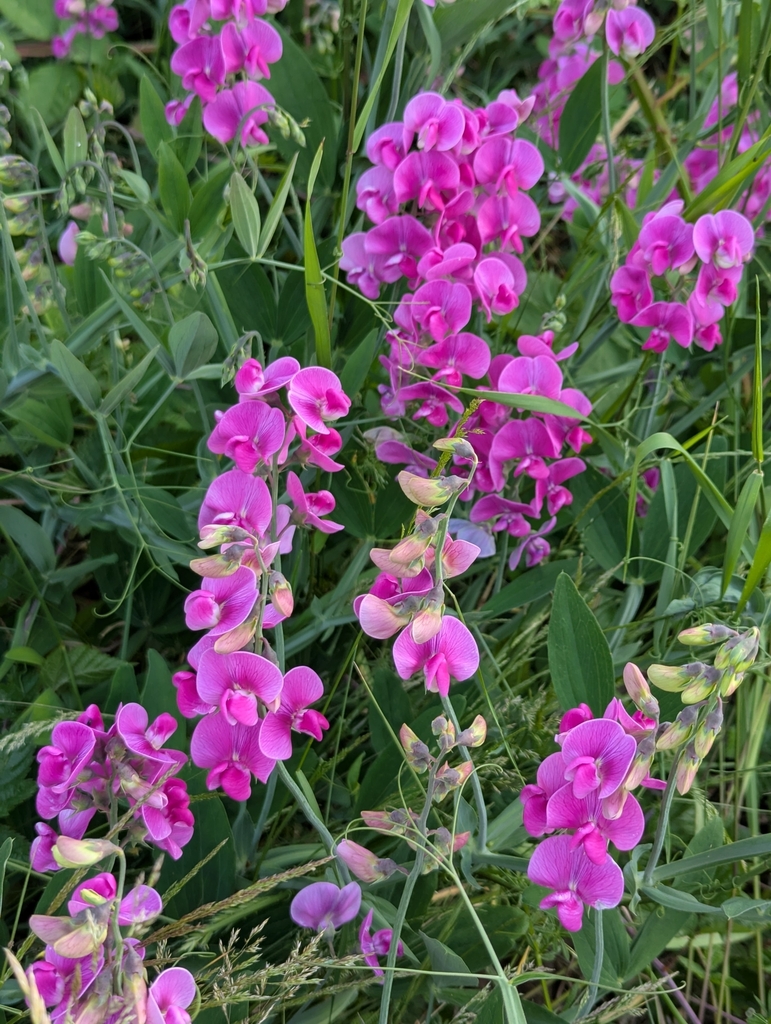
(c) John Brew, some rights reserved (CC BY), uploaded by John Brew · licence
Family: Fabaceae · Type: Vine · Not Native
Conservation status: Cal-IPC Yes
Lathyrus latifolius (Perennial sweet pea) is a non-native California vine in the Fabaceae family, recognized by largest flowers and most robust habit in genus.
Perennial sweet pea is a naturalized perennial found in California's Foothill and Peninsular Ranges in disturbed areas, especially roadsides, at elevations generally below 2,000 meters. Flowering from April to May, this plant produces pink to pink-purple or red flowers 20 to 25 millimeters long in clusters of 4 to 15 blooms. Growing with robust, glabrous stems featuring distinctive wings often 2 millimeters or wider, it develops a climbing habit with branched, coiled tendrils. Its leaves have two lanceolate to ovate leaflets 5 to 14 centimeters long, supported by small to large stipules. The plant produces glabrous, elongated fruits that complete its distinctive growth cycle.
Identification and appearance
Key characters: 30 sympatric species; largest flowers and most robust habit in genus
Habitat and range
Habitat: Disturbed areas, especially roadsides
Elevation: generally < 2000 m
California counties: Inyo, Ventura, San Bernardino, Riverside, San Diego, Los Angeles, Humboldt, Santa Barbara, Kern, Orange, Butte, Nevada, Santa Cruz, Amador, Calaveras, Placer, Mendocino, San Mateo, Tulare, Madera, San Luis Obispo, Plumas, El Dorado, Sonoma, Alpine, Sierra, Marin, Alameda, Sacramento, Contra Costa, Siskiyou, Tehama, Yuba, Shasta, Mariposa, Napa, Tuolumne, Yolo, Trinity, Santa Clara, Monterey
Outside California: sporadic to eastern United States, native to Europe
Bloom period
Lathyrus latifolius blooms Apr-May.
Conservation status
Cal-IPC Yes
How to tell it apart
vs Vicia: Lathyrus style is flattened with hairs on top only; Vicia style is round and hairy all around.; vs Pickeringia: Lathyrus has tendrils and compound leaves; Pickeringia is a spiny shrub with simple leaves.; vs Pisum: Lathyrus has small normal stipules; Pisum has giant leafy stipules larger than leaflets.; vs Lupinus: Lathyrus has two leaflets and tendrils; Lupinus has palmate leaves with no tendrils.; vs Hosackia: Lathyrus has exactly two leaflets and tendrils; Hosackia has 3-9 leaflets with no tendrils.
Frequently asked questions
Is Lathyrus latifolius native to California?
No. Lathyrus latifolius is not native to California (recorded as not native).
When does Lathyrus latifolius bloom?
Lathyrus latifolius blooms Apr-May.
Where in California does Lathyrus latifolius grow?
Lathyrus latifolius occurs in Inyo, Ventura, San Bernardino, Riverside, San Diego, Los Angeles, Humboldt, Santa Barbara and other counties, at elevations of generally < 2000 m.
What plant family does Lathyrus latifolius belong to?
Lathyrus latifolius is in the Fabaceae family, genus Lathyrus.
Is Lathyrus latifolius invasive in California?
Lathyrus latifolius is listed by Cal-IPC with an invasiveness rating of Yes.
Related species
Other California species in the same genus, family, or bioregion.
Sources: Jepson eFlora · Index of California Plant Names · CalPhotos
Last updated 2026-10-07
Data from The California Species Project — 14,000+ California species with verified data from CNPS, CDFW, USFWS, Cal-IPC, and more.