Lathyrus palustris
Marsh pea
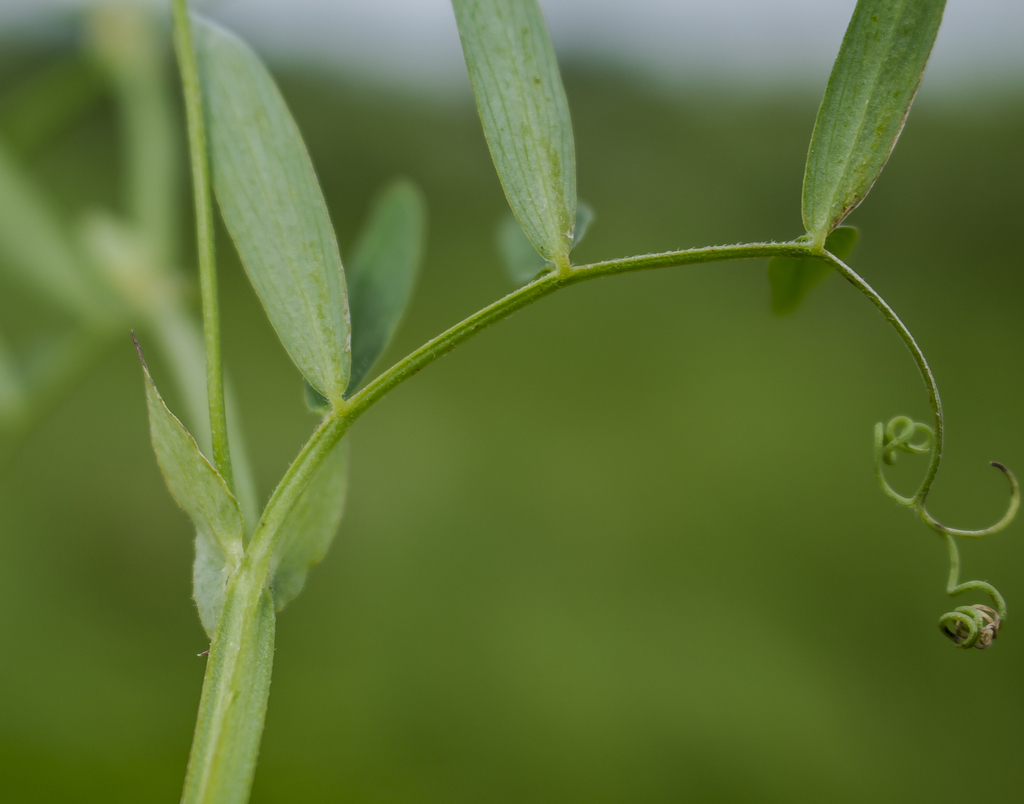
(c) aarongunnar, some rights reserved (CC BY), uploaded by aarongunnar · licence
Family: Fabaceae · Type: Vine · Native
Conservation status: CNPS 2B.2
Lathyrus palustris (Marsh pea) is a native California vine in the Fabaceae family, recognized by wet coastal habitat and distinctive stipules diagnostic.
Marsh pea is a rare (CNPS 2B.2) California native perennial found in northern Coast Ranges in moist or wet coastal areas at elevations generally below 100 meters. Flowering from May to August, this plant produces pink-purple or purple flowers (occasionally white) 15 to 20 millimeters long with a banner petal bent nearly 90 degrees. Growing with angled or winged stems that are generally glabrous or slightly hairy, it extends 2.5 to 5.5 centimeters tall with a distinctive branched, coiled tendril. Its compound leaves feature 4 to 8 opposite leaflets that are elliptic to lance-oblong, with conspicuous lanceolate stipules. The plant produces glabrous or initially glandular fruit pods that complete its distinctive coastal habitat profile.
Identification and appearance
Key characters: 15 sympatric species; wet coastal habitat and distinctive stipules diagnostic
Habitat and range
Habitat: Moist or wet coastal areas
Elevation: generally < 100 m
California counties: Del Norte, Humboldt, Trinity, Sonoma, Kern, Mendocino, Siskiyou
Outside California: to Alaska, northeastern United States, circumboreal
Bloom period
Lathyrus palustris blooms May-Aug.
Conservation status
CNPS 2B.2
How to tell it apart
vs Vicia: Lathyrus style is flattened with hairs on top only; Vicia style is round and hairy all around.; vs Pickeringia: Lathyrus has tendrils and compound leaves; Pickeringia is a spiny shrub with simple leaves.; vs Pisum: Lathyrus has small normal stipules; Pisum has giant leafy stipules larger than leaflets.; vs Lupinus: Lathyrus has two leaflets and tendrils; Lupinus has palmate leaves with no tendrils.; vs Hosackia: Lathyrus has exactly two leaflets and tendrils; Hosackia has 3-9 leaflets with no tendrils.
Frequently asked questions
Is Lathyrus palustris native to California?
Yes. Lathyrus palustris is native to California (recorded as native).
When does Lathyrus palustris bloom?
Lathyrus palustris blooms May-Aug.
Where in California does Lathyrus palustris grow?
Lathyrus palustris occurs in Del Norte, Humboldt, Trinity, Sonoma, Kern, Mendocino, Siskiyou, at elevations of generally < 100 m.
What plant family does Lathyrus palustris belong to?
Lathyrus palustris is in the Fabaceae family, genus Lathyrus.
Is Lathyrus palustris rare or endangered?
Lathyrus palustris carries California Rare Plant Rank 2B.2, state rank S2.
Related species
Other California species in the same genus, family, or bioregion.
Sources: Jepson eFlora · CNPS Rare Plant Inventory · Index of California Plant Names · CalPhotos · CDFW CNDDB
Last updated 2026-10-07
Data from The California Species Project — 14,000+ California species with verified data from CNPS, CDFW, USFWS, Cal-IPC, and more.