Lathyrus sulphureus
Brewer's pea
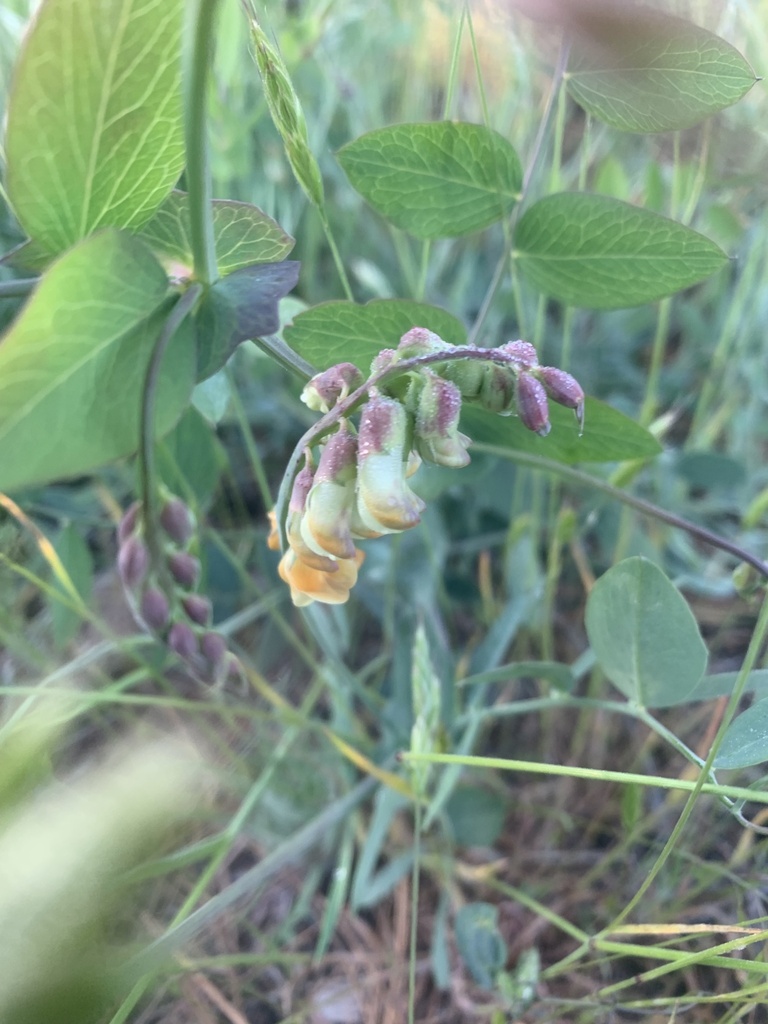
(c) Stevie Steele, some rights reserved (CC BY) · licence
Family: Fabaceae · Type: Vine · Native
Conservation status: CNPS 3
Lathyrus sulphureus (Brewer's pea) is a native California vine in the Fabaceae family, recognized by distinctive dense, blocky yellow-bronze flowers and mid-elevation forest habitat.
Brewer's pea is a California native perennial found in the Klamath Ranges, northern Coast Ranges, and Sierra Nevada in foothill woodland to fir forest at elevations of 600 to 2,500 meters. Flowering from April to July, this plant produces white-yellow to bronze-orange flowers 11 to 14 millimeters long with a distinctive banner that reflexes above the middle. Growing with slender angled or flanged stems, it features 6 to 12 alternate leaflets 1.5 to 4 centimeters long with a branched, coiled tendril. Its large stipules measure 1 to 2.5 centimeters wide, with leaflets ranging from elliptic to ovate in shape. The plant produces glabrous fruits that dry to a tan or dark color.
Identification and appearance
Key characters: 24 sympatric species; distinctive dense, blocky yellow-bronze flowers and mid-elevation forest habitat
Habitat and range
Habitat: Foothill woodland to fir forest
Elevation: 600-2500 m
California counties: El Dorado, Tuolumne, Tulare, Kern, Fresno, Amador, Placer, Butte, Madera, Yuba, Calaveras, Shasta, Plumas, Trinity, Nevada, Mariposa, Mendocino, Lassen, Del Norte, Napa, Sierra, Glenn, Lake, Tehama, Sutter, San Francisco, Alameda, Contra Costa, Humboldt, Sacramento, Riverside, Siskiyou, Santa Cruz, Los Angeles, Marin, Sonoma, San Mateo
Outside California: southwestern Oregon
Bloom period
Lathyrus sulphureus blooms Apr-Jul.
Conservation status
CNPS 3
How to tell it apart
vs Vicia: Lathyrus style is flattened with hairs on top only; Vicia style is round and hairy all around.; vs Pickeringia: Lathyrus has tendrils and compound leaves; Pickeringia is a spiny shrub with simple leaves.; vs Pisum: Lathyrus has small normal stipules; Pisum has giant leafy stipules larger than leaflets.; vs Lupinus: Lathyrus has two leaflets and tendrils; Lupinus has palmate leaves with no tendrils.; vs Hosackia: Lathyrus has exactly two leaflets and tendrils; Hosackia has 3-9 leaflets with no tendrils.
Frequently asked questions
Is Lathyrus sulphureus native to California?
Yes. Lathyrus sulphureus is native to California (recorded as native).
When does Lathyrus sulphureus bloom?
Lathyrus sulphureus blooms Apr-Jul.
Where in California does Lathyrus sulphureus grow?
Lathyrus sulphureus occurs in El Dorado, Tuolumne, Tulare, Kern, Fresno, Amador, Placer, Butte and other counties, at elevations of 600-2500 m.
What plant family does Lathyrus sulphureus belong to?
Lathyrus sulphureus is in the Fabaceae family, genus Lathyrus.
Is Lathyrus sulphureus rare or endangered?
Lathyrus sulphureus carries California Rare Plant Rank 3, state rank S1S2.
Related species
Other California species in the same genus, family, or bioregion.
Sources: Jepson eFlora · Index of California Plant Names · CalPhotos · CDFW CNDDB
Last updated 2026-10-07
Data from The California Species Project — 14,000+ California species with verified data from CNPS, CDFW, USFWS, Cal-IPC, and more.