Layia pentachaeta
Sierra tidy tips
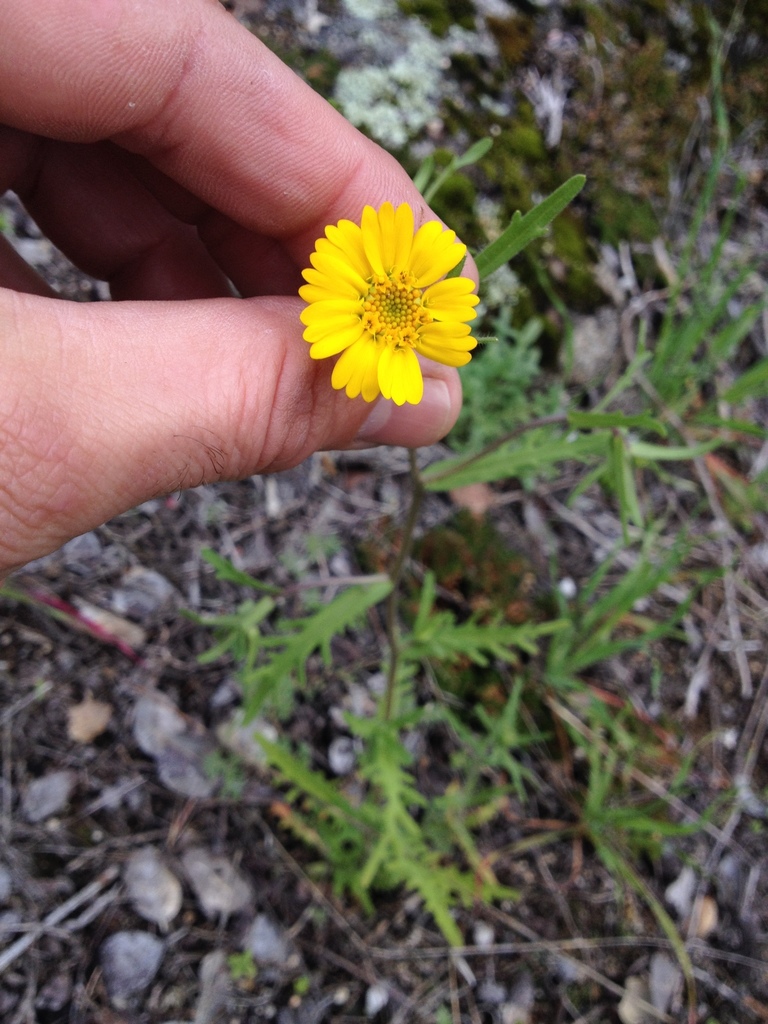
(c) Justin Johnsen, some rights reserved (CC BY) · licence
Family: Asteraceae · Type: Herb · Native
Layia pentachaeta (Sierra tidy tips) is a native California herb in the Asteraceae family.
Sierra tidy tips is a California native annual found in open grasslands and dry meadows at elevations of 500 to 1,500 meters. Flowering from March to May, this plant produces white and yellow daisy-like flowers with ray petals 3 to 26 millimeters long, creating bright, cheerful clusters. Growing with glandular stems 5 to 100 centimeters tall and having a distinctive lemon or acrid scent, it spreads in open landscapes with delicate branching. Its leaves are linear to lanceolate, with lower leaves often having 1 to 2 irregular lobes, creating a feathery, textured appearance. The plant produces distinctive ray fruits with white, plumose pappus bristles that aid in seed dispersal.
How to tell it apart
vs Madia: Layia has prominent feathery seed bristles 2-4mm; Madia has tiny or no seed bristles.; vs Glebionis: Layia has feathery white seed plumes; Glebionis has yellow-orange rays and no seed plumes.; vs Deinandra: Layia has fluffy feathery seed bristles; Deinandra has straight, non-feathery bristles.; vs Monoptilon: Layia has 2-4mm feathery bristles; Monoptilon has shorter non-feathery bristles.; vs Hemizonia: Layia has prominent feathery seed plumes; Hemizonia has short non-feathery bristles or scales.
Frequently asked questions
Is Layia pentachaeta native to California?
Yes. Layia pentachaeta is native to California (recorded as native).
What plant family does Layia pentachaeta belong to?
Layia pentachaeta is in the Asteraceae family, genus Layia.
Related species
Other California species in the same genus, family, or bioregion.
Sources: Jepson eFlora · Index of California Plant Names · CalPhotos
Last updated 2026-10-07
Data from The California Species Project — 14,000+ California species with verified data from CNPS, CDFW, USFWS, Cal-IPC, and more.