Lepidospartum squamatum
California broomsage
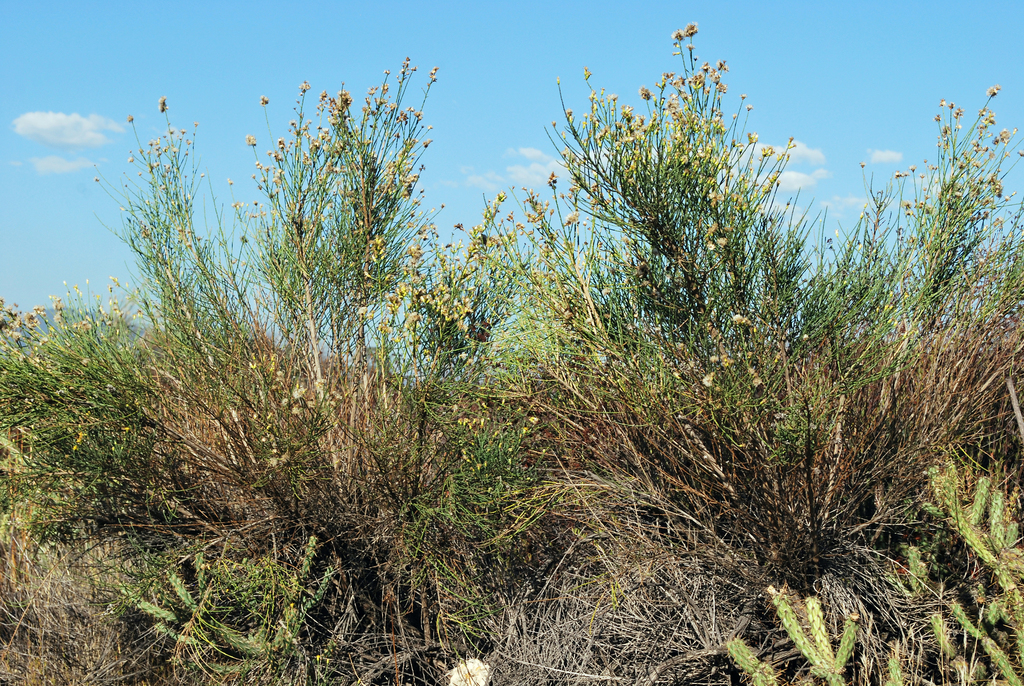
(c) Bri Weldon, some rights reserved (CC BY) · licence
Family: Asteraceae · Type: Shrub · Native
Lepidospartum squamatum (California broomsage) is a native California shrub in the Asteraceae family, recognized by elevation, habitat, and reproductive features clearly diagnostic.
California broomsage is a California native shrub found in the southern Sierra Nevada foothills, San Joaquin Valley, southern Central Coast, San Francisco Bay Area, southern Coastal Range, southwestern California, and desert regions at elevations below 1,900 meters in sandy or gravelly washes and creosote-bush scrub. Flowering from August to November, this plant produces distinctive yellow flowers in compact clusters. Growing as a spreading, round-topped shrub 30 to 100 centimeters tall, it develops a woolly appearance when young that becomes increasingly glabrous with age. Its leaves transition from soft, spreading linear to oblanceolate juvenile leaves that are whitish-gray to appressed, glabrous adult leaves, with woolly tufts often appearing in leaf axils. The fruit is 3.5 to 5 millimeters long with 10 to 15 prominent veins and white to brown pappus bristles.
Identification and appearance
Key characters: 1 sympatric species; elevation, habitat, and reproductive features clearly diagnostic
Habitat and range
Habitat: Sandy or gravelly washes, stream terraces, roadsides; creosote-bush scrub
Elevation: < 1900 m
Outside California: Baja California
Bloom period
Lepidospartum squamatum blooms Aug-Nov.
How to tell it apart
vs Ericameria: Ericameria (goldenbushes) keep narrow green leaves along the stems and cluster many small heads; Lepidospartum has broom-like, nearly leafless green twigs with only appressed scale leaves.; vs Ericameria nauseosa: rabbitbrush twigs stay covered in felt-like gray-white tomentum with slender leaves; Lepidospartum's twigs become green and glabrous with tiny scale leaves.; vs Gutierrezia: Gutierrezia (matchweed) is a low subshrub with tiny radiate heads and thread-like green leaves; Lepidospartum is a larger shrub with discoid (rayless) heads and scale leaves.; vs Spartium: broom shrubs (Spartium/Cytisus) also have green rush-like stems but bear pea-shaped flowers and pods; Lepidospartum bears composite yellow flower heads with pappus-bearing seeds.; vs Bebbia: Bebbia (sweetbush) is a green-twigged shrub with discoid heads but has opposite, often toothed leaves; Lepidospartum has alternate scale leaves appressed to the twigs.
Frequently asked questions
Is Lepidospartum squamatum native to California?
Yes. Lepidospartum squamatum is native to California (recorded as native).
When does Lepidospartum squamatum bloom?
Lepidospartum squamatum blooms Aug-Nov.
What plant family does Lepidospartum squamatum belong to?
Lepidospartum squamatum is in the Asteraceae family, genus Lepidospartum.
What habitat does Lepidospartum squamatum grow in?
Lepidospartum squamatum grows in Sandy or gravelly washes, stream terraces, roadsides; creosote-bush scrub.
Related species
Other California species in the same genus, family, or bioregion.
Sources: Jepson eFlora · Index of California Plant Names · CalPhotos
Last updated 2026-10-07
Data from The California Species Project — 14,000+ California species with verified data from CNPS, CDFW, USFWS, Cal-IPC, and more.