Leptochloa fusca subsp. uninervia
Mexican sprangletop, Mexican Sprangletop
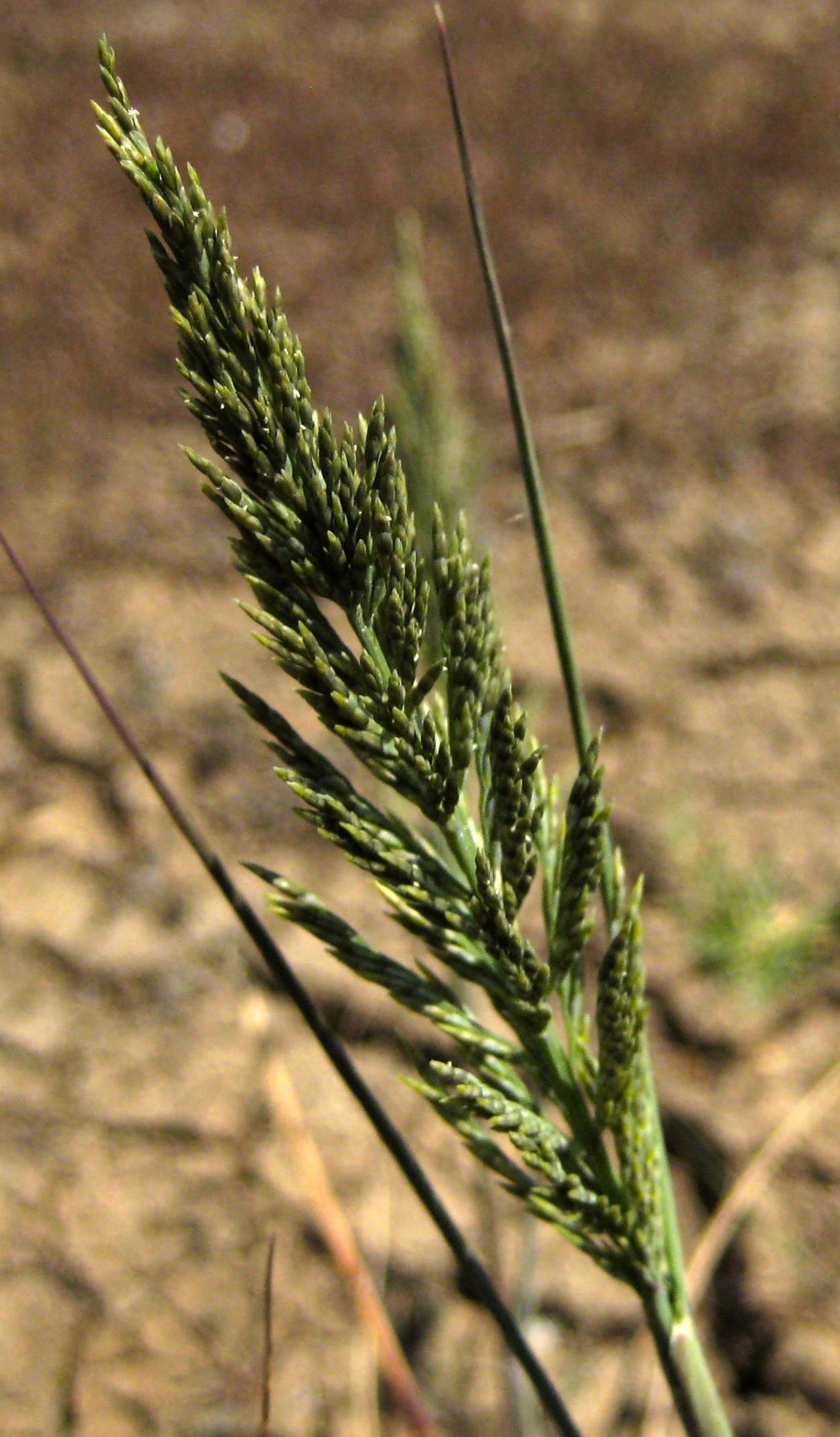
Photo by Chez Brungraber
Family: Poaceae · Type: Grass · Native
Leptochloa fusca subsp. uninervia (Mexican sprangletop) is a native California grass in the Poaceae family, recognized by awnless lemmas with obtuse/truncate tips and smaller spikelets.
Mexican sprangletop is a California native annual grass found in southern Sierra Nevada foothills, Great Valley, Central Western California, southwestern California, Great Basin, and desert regions in ditches, drying ponds, and disturbed wet areas at elevations generally below 1,000 meters. Flowering from March to December, this plant produces delicate pale green to light brown flower spikes in branching clusters up to 70 centimeters long. Growing with erect stems 30 to 100 centimeters tall that are occasionally few-branched, it spreads in dense, ascending clusters. Its leaf sheaths are glabrous or slightly rough, with ligules 2 to 6 millimeters long that become jagged with age. The spikelet is relatively small, measuring 5 to 7 millimeters long with 6 to 9 florets and obtuse lemma tips.
Identification and appearance
Key characters: 4 sympatric species; key features are awnless lemmas with obtuse/truncate tips and smaller spikelets
Habitat and range
Habitat: Ditches, drying ponds, disturbed wet areas
Elevation: generally < 1000 m
California counties: Los Angeles, Orange, Ventura, San Bernardino, Santa Barbara, Tulare, Riverside, Kern, San Diego, Sierra, San Luis Obispo, Imperial, Butte, Inyo, Merced, Sonoma, Marin, Contra Costa, Monterey, Solano, Glenn, San Joaquin, San Mateo, Santa Clara, Yolo, Fresno, Stanislaus, Kings
Outside California: to southern United States, Mexico, South America
Bloom period
Leptochloa fusca subsp. uninervia blooms Mar-Dec.
How to tell it apart
vs Diplachne: Leptochloa lemmas have three veins; Diplachne lemmas are prominently nerved with hairy margins.; vs Spartina: Sprangletop has multiple radiating branches; cordgrass has unbranched spike-like panicles.; vs Festuca: Sprangletop lemmas have three veins; fescue lemmas have five or more veins.; vs Sclerochloa: Sprangletop has loose, feathery branching spikes; hardgrass has dense, rigid tufted habit.; vs Echinochloa: Sprangletop has delicate three-veined lemmas; barnyard grass has coarse awned lemmas.
Frequently asked questions
Is Leptochloa fusca subsp. uninervia native to California?
Yes. Leptochloa fusca subsp. uninervia is native to California (recorded as native).
When does Leptochloa fusca subsp. uninervia bloom?
Leptochloa fusca subsp. uninervia blooms Mar-Dec.
Where in California does Leptochloa fusca subsp. uninervia grow?
Leptochloa fusca subsp. uninervia occurs in Los Angeles, Orange, Ventura, San Bernardino, Santa Barbara, Tulare, Riverside, Kern and other counties, at elevations of generally < 1000 m.
What plant family does Leptochloa fusca subsp. uninervia belong to?
Leptochloa fusca subsp. uninervia is in the Poaceae family, genus Leptochloa.
What habitat does Leptochloa fusca subsp. uninervia grow in?
Leptochloa fusca subsp. uninervia grows in Ditches, drying ponds, disturbed wet areas.
Related species
Other California species in the same genus, family, or bioregion.
Sources: Jepson eFlora · Index of California Plant Names · CalPhotos
Last updated 2026-10-07
Data from The California Species Project — 14,000+ California species with verified data from CNPS, CDFW, USFWS, Cal-IPC, and more.