Leptosiphon nuttallii subsp. howellii
Mount tedoc leptosiphon, Mount Tedoc Leptosiphon
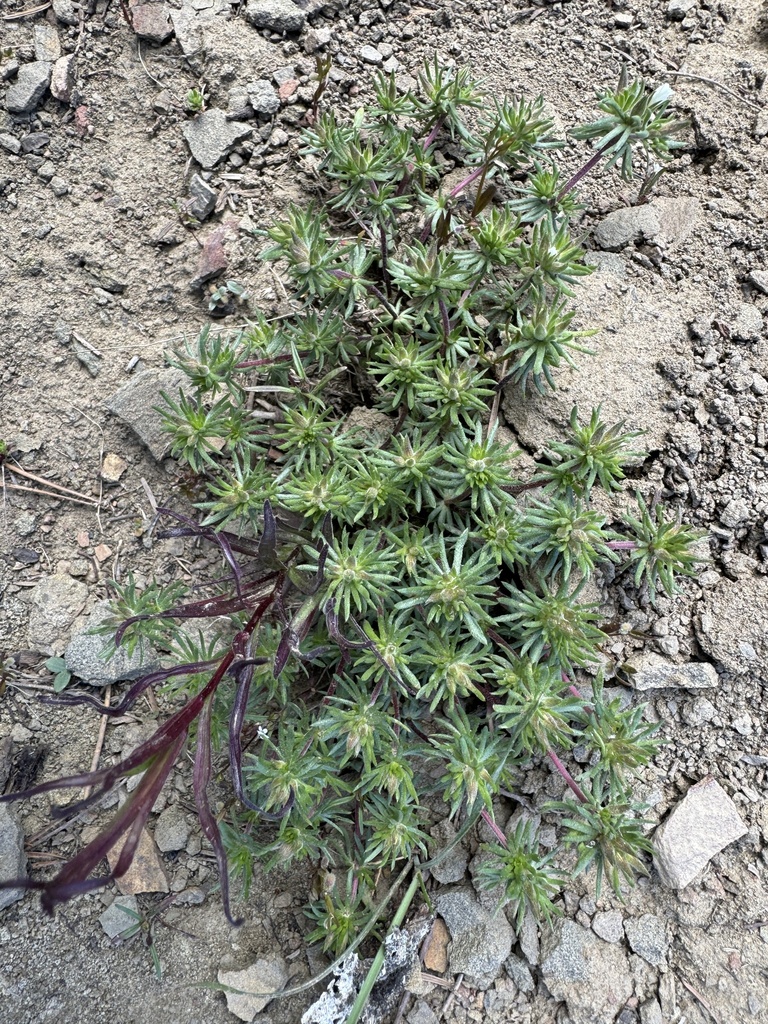
no rights reserved, uploaded by James H. Thomas · CC0
Family: Polemoniaceae · Type: Subshrub · Native
Conservation status: CNPS 1B.3
Leptosiphon nuttallii subsp. howellii (Mount tedoc leptosiphon) is a native California subshrub in the Polemoniaceae family, recognized by short gray densely hairy leaf lobes.
Mount tedoc leptosiphon is a rare (CNPS 1B.3) California native perennial found in the Klamath Ranges and northern Coast Ranges at elevations of 1,400 to 1,800 meters in open Jeffrey pine and mixed conifer forests. Flowering from June to July, this delicate plant produces pale flowers with soft, grayish-green foliage. Growing with slender stems up to 30 centimeters tall, it forms compact clusters in serpentine and non-serpentine habitats. Its leaves feature 3 to 7 millimeter lobes that are densely covered in soft gray hairs, giving the plant a subtle, fuzzy texture. In its preferred open forest environments, this leptosiphon creates small, intricate patches of pale botanical beauty.
Identification and appearance
Key characters: 15 sympatric species; key features are short gray densely hairy leaf lobes
Habitat and range
Habitat: Open Jeffrey pine forest, Douglas-fir/white-fir/ponderosa-pine forest, serpentine or not
Elevation: 1400-1800 m
California counties: Tehama, San Bernardino
Bloom period
Leptosiphon nuttallii subsp. howellii blooms Jun-Jul.
Conservation status
CNPS 1B.3
How to tell it apart
vs Linanthus: Leptosiphon flowers open in daytime on stalks >2mm; Linanthus flowers often open at dusk/night on very short stalks.; vs Phlox: Leptosiphon leaves are deeply divided into fingers; Phlox leaves are completely undivided.; vs Navarretia: Leptosiphon has soft, flexible leaf lobes; Navarretia has rigid, spine-tipped leaf lobes and bracts.; vs Gilia: Leptosiphon has opposite palmately-lobed leaves; Gilia has alternate pinnately-lobed leaves.; vs Sabulina: Leptosiphon has tubular 5-petaled flowers and lobed leaves; Sabulina has 5 separate petals and needle-like leaves.
Frequently asked questions
Is Leptosiphon nuttallii subsp. howellii native to California?
Yes. Leptosiphon nuttallii subsp. howellii is native to California (recorded as native).
When does Leptosiphon nuttallii subsp. howellii bloom?
Leptosiphon nuttallii subsp. howellii blooms Jun-Jul.
Where in California does Leptosiphon nuttallii subsp. howellii grow?
Leptosiphon nuttallii subsp. howellii occurs in Tehama, San Bernardino, at elevations of 1400-1800 m.
What plant family does Leptosiphon nuttallii subsp. howellii belong to?
Leptosiphon nuttallii subsp. howellii is in the Polemoniaceae family, genus Leptosiphon.
Is Leptosiphon nuttallii subsp. howellii rare or endangered?
Leptosiphon nuttallii subsp. howellii carries California Rare Plant Rank 1B.3, state rank S2.
Related species
Other California species in the same genus, family, or bioregion.
Sources: Jepson eFlora · CNPS Rare Plant Inventory · Index of California Plant Names · CalPhotos · CDFW CNDDB
Last updated 2026-10-07
Data from The California Species Project — 14,000+ California species with verified data from CNPS, CDFW, USFWS, Cal-IPC, and more.