Leptosiphon pygmaeus subsp. continentalis
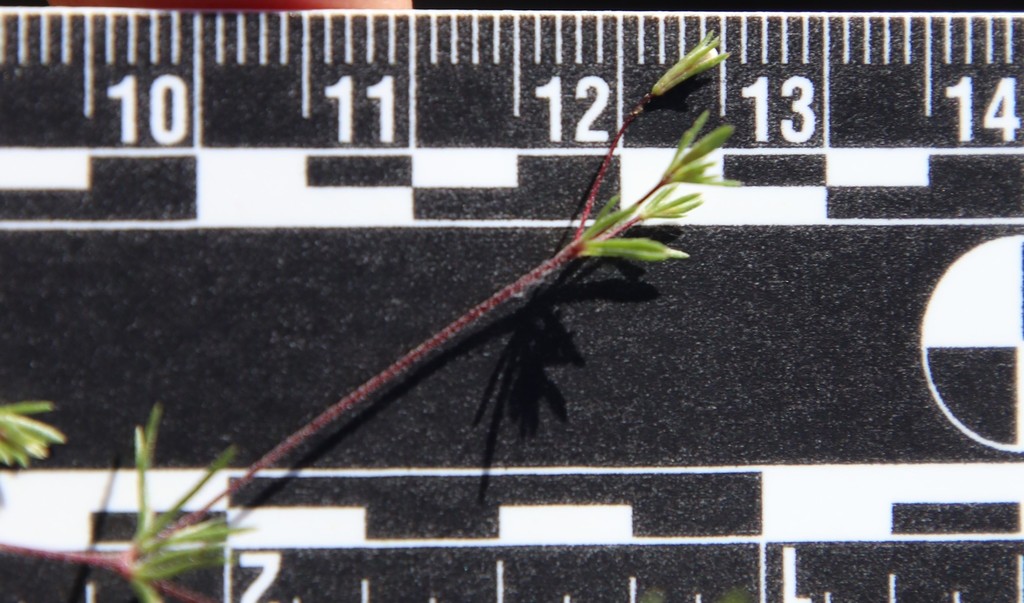
Photo: parent species Leptosiphon pygmaeus · (c) Millie Basden, some rights reserved (CC BY) · licence
Family: Polemoniaceae · Type: Herb · Native
Leptosiphon pygmaeus subsp. continentalis is a native California herb in the Polemoniaceae family, recognized by white flowers distinguish from blue-flowered island subspecies.
Leptosiphon pygmaeus subsp. continentalis is a California native annual found in the Sierra Nevada Foothills, Great Valley, central western, and southwestern California in dry openings at elevations below 1,700 meters. Flowering from March to June, this delicate plant produces pure white flowers with subtle, intricate petals. Growing with slender stems typically less than 15 centimeters tall, it forms small, compact clusters in open grassland environments. Its leaves are finely divided, creating a soft, feathery appearance that helps the plant blend into its dry, rocky habitats. This diminutive annual demonstrates remarkable adaptability to sparse, arid landscapes across multiple California bioregions.
Identification and appearance
Key characters: 25 sympatric species; white flowers distinguish from blue-flowered island subspecies
Habitat and range
Habitat: dry openings
Elevation: < 1700 m
California counties: San Luis Obispo, Kern, Riverside, San Diego, San Bernardino, Santa Barbara, Ventura, Monterey, Los Angeles, Colusa, Fresno, Glenn, Contra Costa, San Mateo, Plumas, Tehama, San Benito, Napa, Santa Cruz
Bloom period
Leptosiphon pygmaeus subsp. continentalis blooms Mar-Jun.
How to tell it apart
vs Linanthus: Leptosiphon flowers open in daytime on stalks >2mm; Linanthus flowers often open at dusk/night on very short stalks.; vs Phlox: Leptosiphon leaves are deeply divided into fingers; Phlox leaves are completely undivided.; vs Navarretia: Leptosiphon has soft, flexible leaf lobes; Navarretia has rigid, spine-tipped leaf lobes and bracts.; vs Gilia: Leptosiphon has opposite palmately-lobed leaves; Gilia has alternate pinnately-lobed leaves.; vs Sabulina: Leptosiphon has tubular 5-petaled flowers and lobed leaves; Sabulina has 5 separate petals and needle-like leaves.
Frequently asked questions
Is Leptosiphon pygmaeus subsp. continentalis native to California?
Yes. Leptosiphon pygmaeus subsp. continentalis is native to California (recorded as native).
When does Leptosiphon pygmaeus subsp. continentalis bloom?
Leptosiphon pygmaeus subsp. continentalis blooms Mar-Jun.
Where in California does Leptosiphon pygmaeus subsp. continentalis grow?
Leptosiphon pygmaeus subsp. continentalis occurs in San Luis Obispo, Kern, Riverside, San Diego, San Bernardino, Santa Barbara, Ventura, Monterey and other counties, at elevations of < 1700 m.
What plant family does Leptosiphon pygmaeus subsp. continentalis belong to?
Leptosiphon pygmaeus subsp. continentalis is in the Polemoniaceae family, genus Leptosiphon.
What habitat does Leptosiphon pygmaeus subsp. continentalis grow in?
Leptosiphon pygmaeus subsp. continentalis grows in dry openings.
Related species
Other California species in the same genus, family, or bioregion.
Sources: Jepson eFlora · Index of California Plant Names · CalPhotos
Last updated 2026-10-07
Data from The California Species Project — 14,000+ California species with verified data from CNPS, CDFW, USFWS, Cal-IPC, and more.