Lessingia glandulifera
Valley lessingia
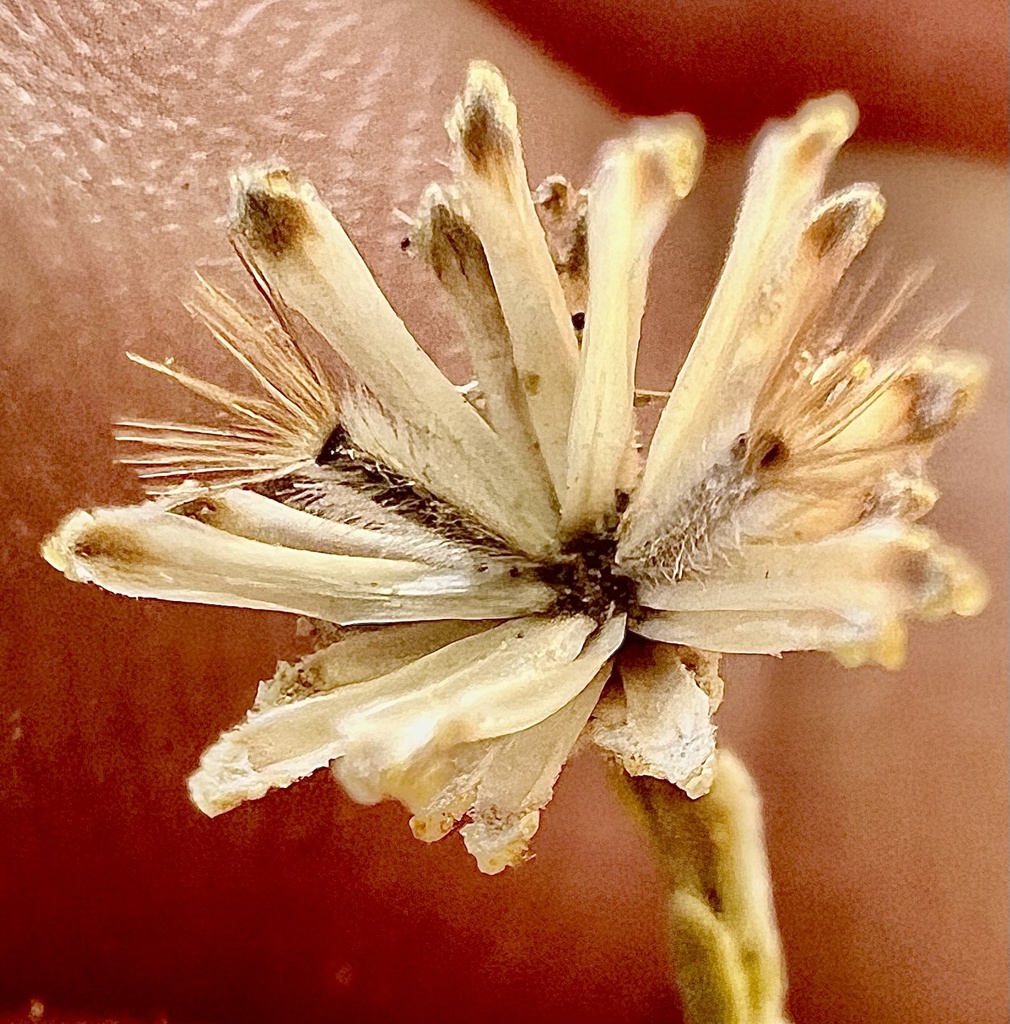
(c) Steve Matson, some rights reserved (CC BY) · licence
Family: Asteraceae · Type: Herb · Native
Lessingia glandulifera (Valley lessingia) is a native California herb in the Asteraceae family.
Valley lessingia is a California native annual found in grassland and open woodland habitats. Flowering from July to October, this plant produces yellow flowers in heads 4 to 7 millimeters long with green, glandular phyllaries. Growing with erect tan stems 5 to 40 centimeters tall that are puberulent and sometimes sparsely hairy, it develops distinctive leaves ranging from oblong to oblanceolate with margins featuring bead-like sessile glands. Its leaves vary from entire to occasionally toothed or pinnately lobed, becoming smaller and awl-shaped toward the stem's upper portions. The fruit is 1.5 to 3.5 millimeters long with a white to tan pappus.
How to tell it apart
vs Palafoxia: Lessingia fruits tiny (2-4mm); Palafoxia fruits massive (10-15mm) - check seed size first; vs Pectis: Pectis has opposite leaves with oil glands; Lessingia has alternate leaves without glands; vs Deinandra: Deinandra flower heads very gummy/sticky; Lessingia merely hairy or minutely glandular; vs Stephanomeria: Stephanomeria has milky sap and all ligulate flowers; Lessingia has clear sap and disk flowers; vs Epilobium: Epilobium has 4 petals in a cross pattern; Lessingia has typical composite flower heads
Frequently asked questions
Is Lessingia glandulifera native to California?
Yes. Lessingia glandulifera is native to California (recorded as native).
What plant family does Lessingia glandulifera belong to?
Lessingia glandulifera is in the Asteraceae family, genus Lessingia.
Related species
Other California species in the same genus, family, or bioregion.
- Lessingia glandulifera var. glandulifera — Sticky lessingia
- Lessingia glandulifera var. peirsonii — Peirson's lessingia
- Lessingia glandulifera var. tomentosa — Warner springs lessingia
- Lessingia hololeuca — Woolly-headed lessingia
- Lessingia leptoclada — Sierra lessingia
- Lessingia micradenia — Little glandular lessingia
Sources: Jepson eFlora · Index of California Plant Names · CalPhotos
Last updated 2026-10-07
Data from The California Species Project — 14,000+ California species with verified data from CNPS, CDFW, USFWS, Cal-IPC, and more.