Lessingia pectinata var. tenuipes
Sticky lessingia
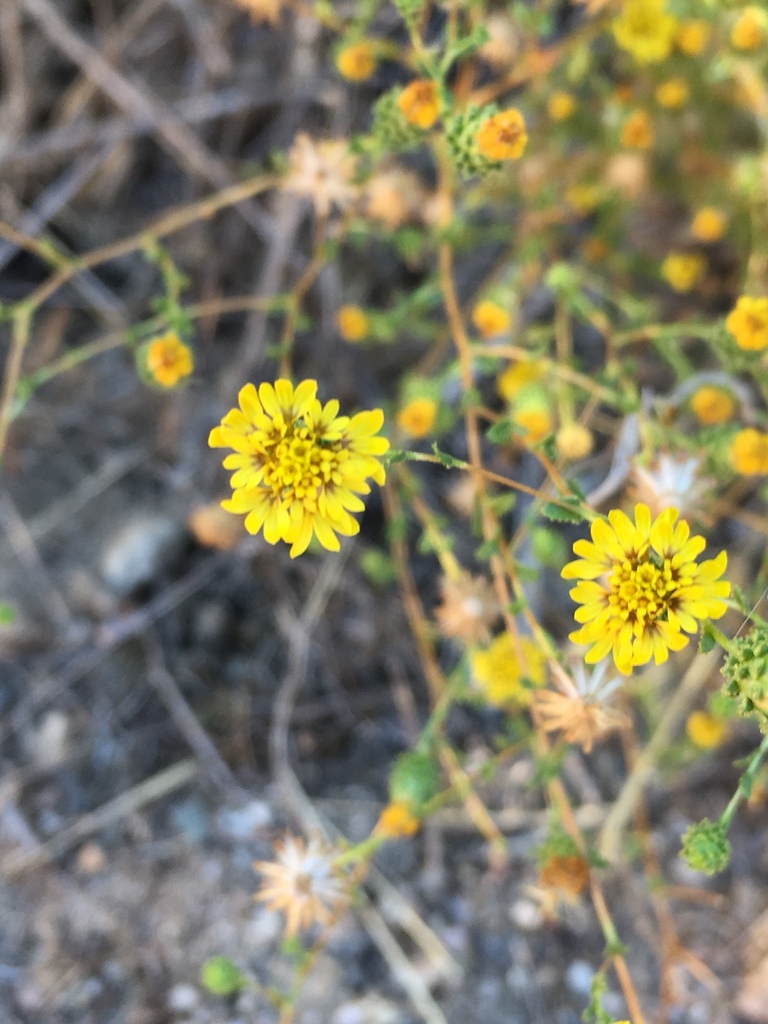
Photo: parent species Lessingia pectinata · (c) Pinnacles National Park, some rights reserved (CC BY), uploaded by Pinnacles National Park · licence
Family: Asteraceae · Type: Annual · Native
Lessingia pectinata var. tenuipes (Sticky lessingia) is a native California annual in the Asteraceae family, recognized by yellow flowers and less divided leaves distinguish from var. pectinata.
Sticky lessingia is a California native annual herb found in the Sierra Nevada Foothills, San Joaquin Valley, San Francisco Bay Area, and south Coast Ranges in coastal scrub, woodland, pine forest, and chaparral at elevations of 15 to 1,600 meters. Flowering from May to October, this plant produces white to yellow flowers in small, delicate clusters with distinctive glandular appearance. Growing with slender stems 10 to 30 centimeters tall, these plants are green or tan, becoming increasingly hairy and puberulent toward the upper portions. Its leaves are small, ranging from 2 to 30 millimeters long, with variable form—some entire while others may be lightly toothed or lobed along the edges. The plant's delicate, wispy structure and glandular surfaces make it a subtle but distinctive component of California's diverse annual wildflower communities.
Identification and appearance
Key characters: Co-occurs with 12 species; yellow flowers and less divided leaves distinguish from var. pectinata
Habitat and range
Habitat: Coastal scrub, woodland, pine forest, chaparral, occasionally sandy soil
Elevation: 15-1600 m
California counties: Kern, San Benito, San Joaquin, Monterey, Tulare, Contra Costa, Merced, Fresno, Madera, Tuolumne, San Luis Obispo, Kings, Sacramento, Stanislaus, Mariposa, San Bernardino, Santa Clara, Santa Barbara, El Dorado, San Mateo
Bloom period
Lessingia pectinata var. tenuipes blooms May-Oct.
How to tell it apart
vs Palafoxia: Lessingia fruits tiny (2-4mm); Palafoxia fruits massive (10-15mm) - check seed size first; vs Pectis: Pectis has opposite leaves with oil glands; Lessingia has alternate leaves without glands; vs Deinandra: Deinandra flower heads very gummy/sticky; Lessingia merely hairy or minutely glandular; vs Stephanomeria: Stephanomeria has milky sap and all ligulate flowers; Lessingia has clear sap and disk flowers; vs Epilobium: Epilobium has 4 petals in a cross pattern; Lessingia has typical composite flower heads
Frequently asked questions
Is Lessingia pectinata var. tenuipes native to California?
Yes. Lessingia pectinata var. tenuipes is native to California (recorded as native).
When does Lessingia pectinata var. tenuipes bloom?
Lessingia pectinata var. tenuipes blooms May-Oct.
Where in California does Lessingia pectinata var. tenuipes grow?
Lessingia pectinata var. tenuipes occurs in Kern, San Benito, San Joaquin, Monterey, Tulare, Contra Costa, Merced, Fresno and other counties, at elevations of 15-1600 m.
What plant family does Lessingia pectinata var. tenuipes belong to?
Lessingia pectinata var. tenuipes is in the Asteraceae family, genus Lessingia.
What habitat does Lessingia pectinata var. tenuipes grow in?
Lessingia pectinata var. tenuipes grows in Coastal scrub, woodland, pine forest, chaparral, occasionally sandy soil.
Related species
Other California species in the same genus, family, or bioregion.
Sources: Jepson eFlora · Index of California Plant Names · CalPhotos
Last updated 2026-09-30
Data from The California Species Project — 14,000+ California species with verified data from CNPS, CDFW, USFWS, Cal-IPC, and more.