Lilaeopsis masonii
Mason's lilaeopsis
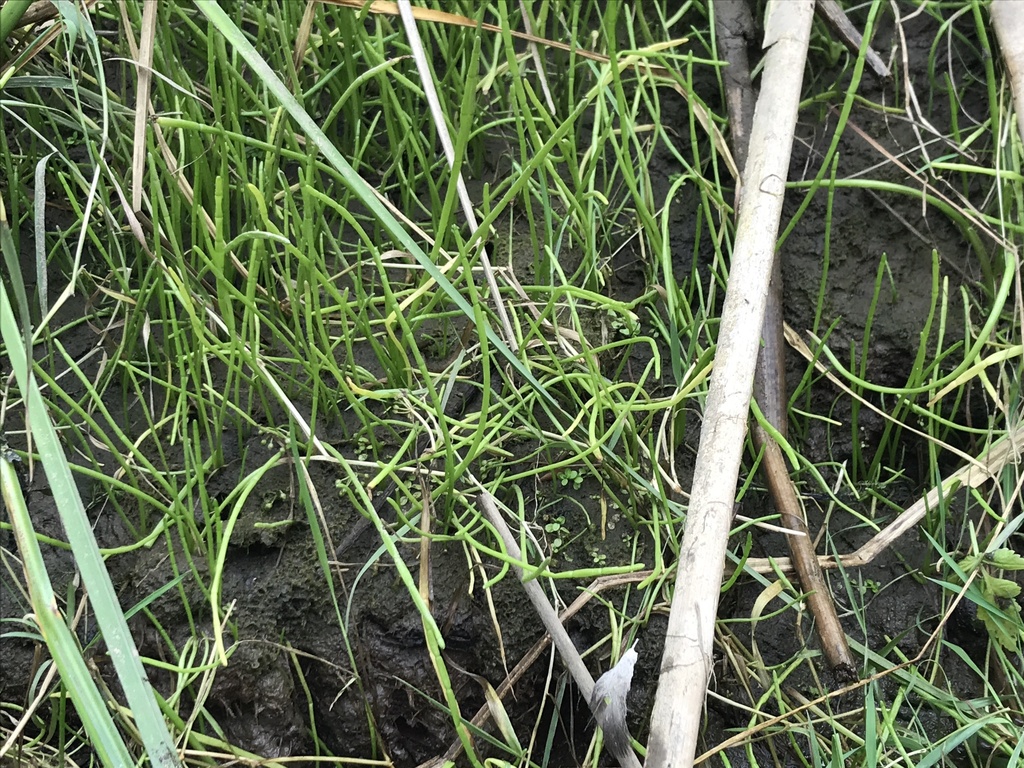
(c) Lee Cain, some rights reserved (CC BY) · licence
Family: Apiaceae · Type: Herb · Native
Conservation status: CNPS 1B.1
Lilaeopsis masonii (Mason's lilaeopsis) is a native California herb in the Apiaceae family, recognized by . Key differences include leaf length (1.5-7.5 cm vs 2.5-30 cm), peduncle length, and oil tube number.
Mason's lilaeopsis is a rare (CNPS 1B.1) California native perennial found in southern Sacramento Valley, northern San Joaquin Valley, central California Coast, and northeastern San Francisco Bay regions in intertidal marshes and streambanks at elevations below 36 meters. Flowering from June to August, this plant produces tiny white flowers on short peduncles with delicate, thread-like umbels. Growing in dense, compact tufts with vertical branching, it forms slender stems that spread in low, intricate patterns across wet habitats. Its leaves are linear and thread-like, typically clustered at branch tips and measuring 1.5 to 7.5 centimeters long, creating a fine, grass-like appearance. The fruit develops as small elliptic structures about 1.2 to 1.6 millimeters long, with distinctive marginal ribs and 5 to 6 internal oil tubes.
Identification and appearance
Key characters: 1 sympatric species. Key differences include leaf length (1.5-7.5 cm vs 2.5-30 cm), peduncle length, and oil tube number.
Habitat and range
Habitat: Intertidal marshes, streambanks
Elevation: < 36 m
California counties: Solano, San Joaquin, Contra Costa, Sacramento, Napa, Marin
Bloom period
Lilaeopsis masonii blooms Jun-Aug.
Conservation status
CNPS 1B.1
How to tell it apart
vs Bowlesia: Lilaeopsis has simple grass-like leaves; Bowlesia has rounded, lobed leaves covered in fuzzy hairs.; vs Sanicula: Lilaeopsis has simple hollow grass-like leaves; Sanicula has palmately divided compound leaves.; vs Eryngium: Lilaeopsis forms low mats with grass-like leaves; Eryngium has spiky thistle-like flower heads.; vs Juncus: Lilaeopsis leaves have visible cross-partitions as raised lines; rush leaves lack these external divisions.; vs Subularia: Lilaeopsis leaves are soft and squishy; awlwort leaves are firm and rigid.
Frequently asked questions
Is Lilaeopsis masonii native to California?
Yes. Lilaeopsis masonii is native to California (recorded as native).
When does Lilaeopsis masonii bloom?
Lilaeopsis masonii blooms Jun-Aug.
Where in California does Lilaeopsis masonii grow?
Lilaeopsis masonii occurs in Solano, San Joaquin, Contra Costa, Sacramento, Napa, Marin, at elevations of < 36 m.
What plant family does Lilaeopsis masonii belong to?
Lilaeopsis masonii is in the Apiaceae family, genus Lilaeopsis.
Is Lilaeopsis masonii rare or endangered?
Lilaeopsis masonii carries California Rare Plant Rank 1B.1, state rank S2.
Related species
Other California species in the same genus, family, or bioregion.
Sources: Jepson eFlora · CNPS Rare Plant Inventory · Index of California Plant Names · CalPhotos · CDFW CNDDB
Last updated 2026-10-07
Data from The California Species Project — 14,000+ California species with verified data from CNPS, CDFW, USFWS, Cal-IPC, and more.