Limnanthes douglasii subsp. rosea
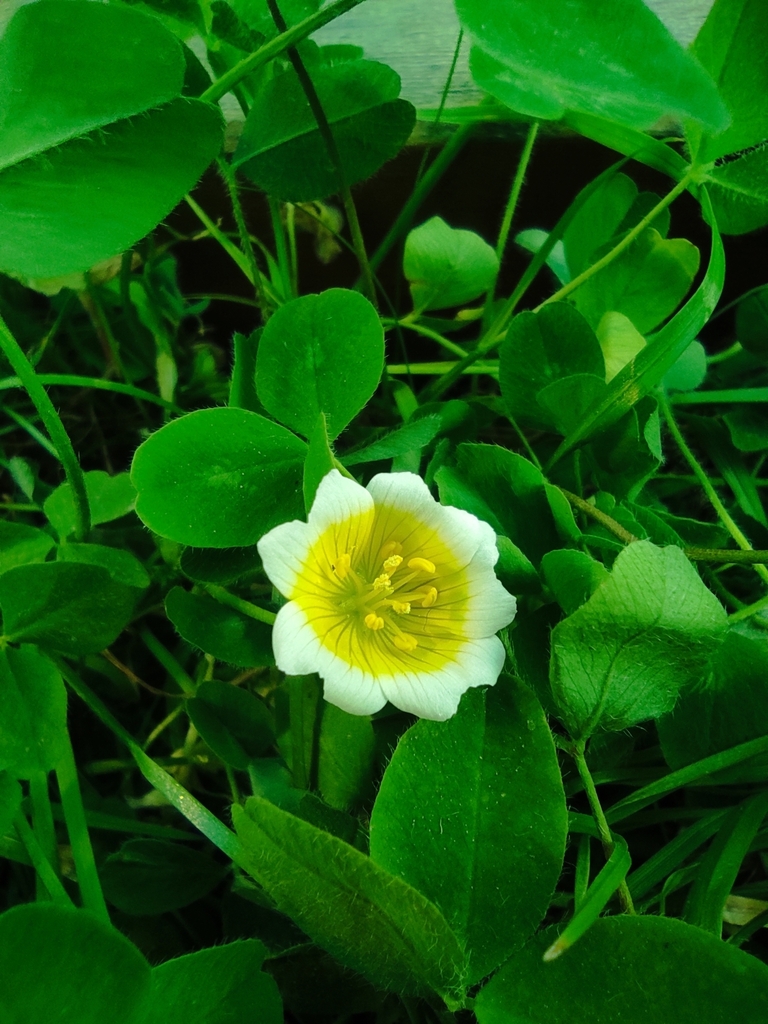
Photo: parent species Limnanthes douglasii · no rights reserved · CC0
Family: Limnanthaceae · Type: Herb · Native
Limnanthes douglasii subsp. rosea is a native California herb in the Limnanthaceae family, recognized by distinctive rose veins on white petals.
Douglas' meadowfoam is a California native annual found in northern California Interior, northeastern California, central Sierra Nevada Foothills, and the Central Valley in wet meadows and vernal pool edges at elevations below 800 meters. Flowering from March to May, this plant produces white flowers with rose-colored veins and occasional pale pink or yellow petals, accompanied by cream, dark-pink, orange-red, or nearly black anthers. Growing with delicate stems reaching low to the ground, it forms compact clusters in moist habitats. Its leaves feature distinctive leaflets ranging from linear to widely ovate, which can be entire or deeply and irregularly lobed. The fruits are characterized by prominent ridged tubercles, giving the plant a textured and intricate appearance.
Identification and appearance
Key characters: 9 sympatric species; distinctive rose veins on white petals
Habitat and range
Habitat: Wet meadows, edges of vernal pools
Elevation: < 800 m
California counties: Sacramento, Butte, Lake, Sonoma, Stanislaus, Fresno, Mendocino, Tuolumne, Tehama, San Joaquin, El Dorado, Solano, Contra Costa, Merced, Santa Cruz, Calaveras, Glenn, Placer, Mariposa, Colusa, Yuba, San Luis Obispo, Napa, Yolo, Santa Clara, Madera, Amador, Tulare
Bloom period
Limnanthes douglasii subsp. rosea blooms Mar-May.
How to tell it apart
vs Cerastium: Limnanthes has jagged petal tips and entire leaves; Cerastium has deeply notched petals.; vs Layia: Limnanthes has separate 4-5 petals in a simple flower; Layia is a composite with many ray flowers.; vs Sabulina: Limnanthes has pinnately divided fern-like leaves; Sabulina has simple narrow leaves.; vs Nemophila: Limnanthes has 4 petals with jagged tips; Nemophila has 5 petals with smooth edges.; vs Sidalcea: Limnanthes has 4-5 petals and pinnate leaves; Sidalcea has 5 petals and palmately lobed leaves.
Frequently asked questions
Is Limnanthes douglasii subsp. rosea native to California?
Yes. Limnanthes douglasii subsp. rosea is native to California (recorded as native).
When does Limnanthes douglasii subsp. rosea bloom?
Limnanthes douglasii subsp. rosea blooms Mar-May.
Where in California does Limnanthes douglasii subsp. rosea grow?
Limnanthes douglasii subsp. rosea occurs in Sacramento, Butte, Lake, Sonoma, Stanislaus, Fresno, Mendocino, Tuolumne and other counties, at elevations of < 800 m.
What plant family does Limnanthes douglasii subsp. rosea belong to?
Limnanthes douglasii subsp. rosea is in the Limnanthaceae family, genus Limnanthes.
What habitat does Limnanthes douglasii subsp. rosea grow in?
Limnanthes douglasii subsp. rosea grows in Wet meadows, edges of vernal pools.
Related species
Other California species in the same genus, family, or bioregion.
- Limnanthes douglasii subsp. striata
- Limnanthes douglasii subsp. sulphurea — Point reyes meadowfoam
- Limnanthes floccosa — Woolly meadowfoam
- Limnanthes floccosa subsp. bellingeriana — Bellinger's meadowfoam
- Limnanthes floccosa subsp. californica — Butte county meadowfoam
- Limnanthes floccosa subsp. floccosa — Woolly meadowfoam
Sources: Jepson eFlora · Index of California Plant Names · CalPhotos
Last updated 2026-10-07
Data from The California Species Project — 14,000+ California species with verified data from CNPS, CDFW, USFWS, Cal-IPC, and more.