Limonium californicum
Western marsh-rosemary, Western Marsh-Rosemary
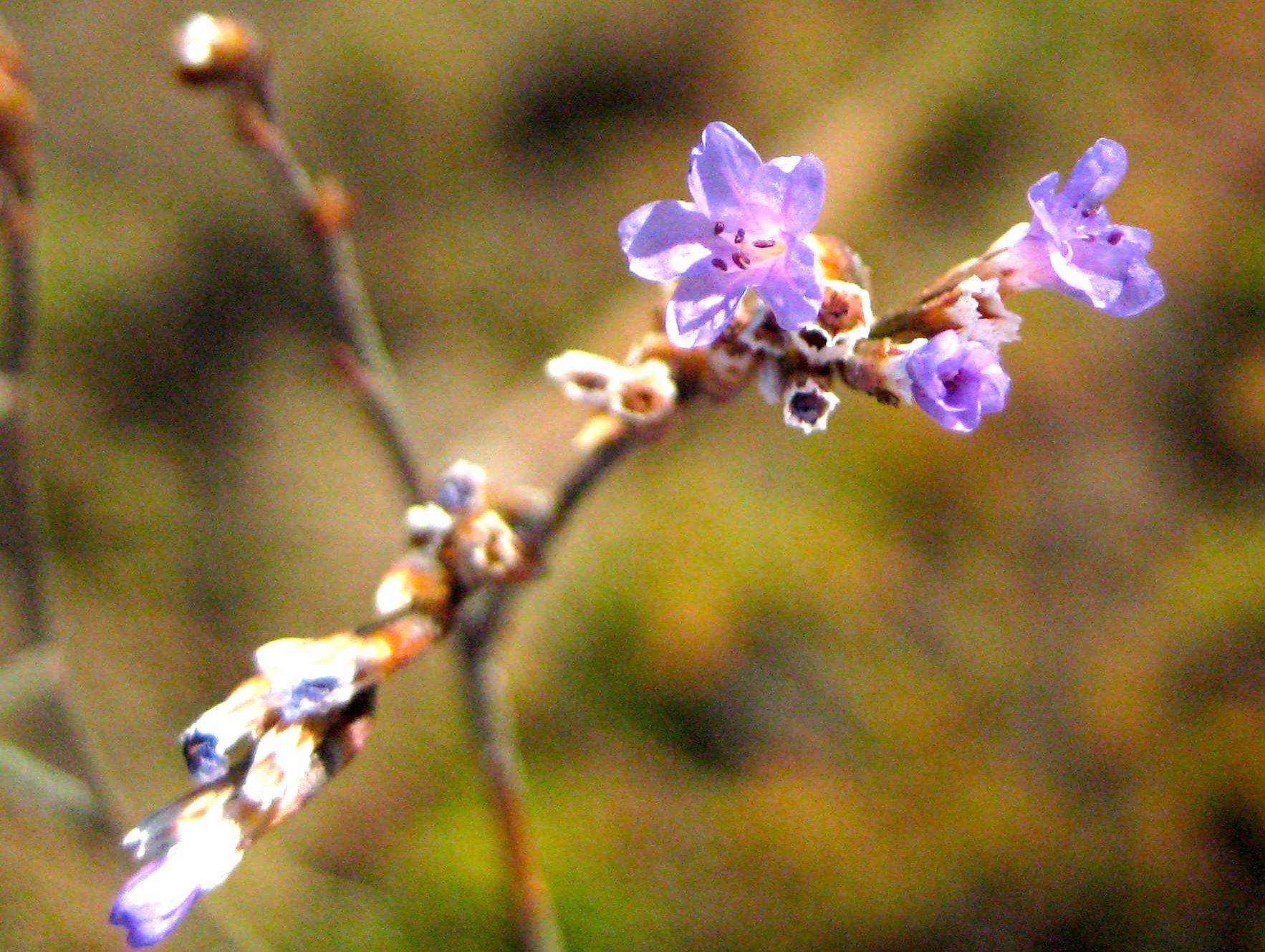
Photo by Chez Brungraber
Family: Plumbaginaceae · Type: Subshrub · Native
Limonium californicum (Western marsh-rosemary) is a native California subshrub in the Plumbaginaceae family, recognized by only native species, thick leathery leaves, no winged inflorescence.
Western marsh-rosemary is a California native perennial found in coastal bioregions including northern and central California coastal areas in salt marshes and coastal dunes at elevations below 50 meters. Flowering from July to December, this plant produces delicate blue flowers with white calyx lobes in small crowded clusters. Growing to less than 35 centimeters tall with erect, sturdy stems, it forms a compact herb with distinctive leathery leaves. Its leaves are thick and obovate to oblong, measuring 5 to 15 centimeters long with wavy margins and narrow-winged petioles. The plant has a compact growth habit with leaves that are thick and somewhat leathery, adapting well to harsh coastal environments.
Identification and appearance
Key characters: 6 sympatric species; only native species, thick leathery leaves, no winged inflorescence
Habitat and range
Habitat: Common; coastal dunes, salt marshes
Elevation: < 50 m
California counties: Humboldt, Orange, San Luis Obispo, Marin, Ventura, Los Angeles, Santa Clara, Santa Barbara, San Diego, San Mateo, Alameda, San Francisco, Solano, Contra Costa, Sonoma, Monterey
Outside California: Oregon, southern Nevada, northern Baja California
Bloom period
Limonium californicum blooms Jul-Dec.
How to tell it apart
vs Verbena: Limonium has spoon-shaped basal leaves; Verbena has toothed leaves on flowering stems.; vs Rumex: Limonium has showy pink/lavender flowers in sprays; Rumex has tiny green/brown flowers.; vs Eriogonum: Limonium has spoon-shaped leaves and papery flowers; Eriogonum often has woolly leaves.; vs Tournefortia: Limonium has branching sprays; Tournefortia has coiled, scorpion-tail flower clusters.; vs Anemopsis: Limonium has airy flower sprays; Anemopsis has cone-like spike with white bracts below.
Frequently asked questions
Is Limonium californicum native to California?
Yes. Limonium californicum is native to California (recorded as native).
When does Limonium californicum bloom?
Limonium californicum blooms Jul-Dec.
Where in California does Limonium californicum grow?
Limonium californicum occurs in Humboldt, Orange, San Luis Obispo, Marin, Ventura, Los Angeles, Santa Clara, Santa Barbara and other counties, at elevations of < 50 m.
What plant family does Limonium californicum belong to?
Limonium californicum is in the Plumbaginaceae family, genus Limonium.
What habitat does Limonium californicum grow in?
Limonium californicum grows in Common; coastal dunes, salt marshes.
Related species
Other California species in the same genus, family, or bioregion.
Sources: Jepson eFlora · Index of California Plant Names · CalPhotos
Last updated 2026-10-07
Data from The California Species Project — 14,000+ California species with verified data from CNPS, CDFW, USFWS, Cal-IPC, and more.