Limonium preauxii
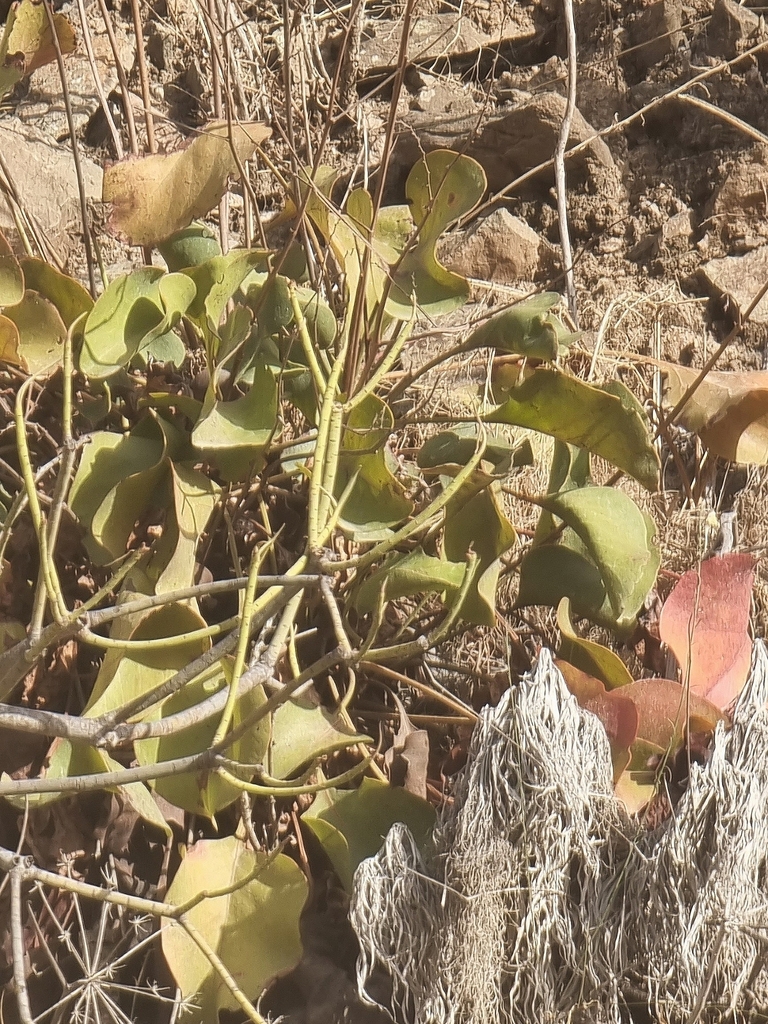
(c) Vítor Jorge, some rights reserved (CC BY) · licence
Family: Plumbaginaceae · Type: Perennial · Not Native
Limonium preauxii is a non-native California perennial in the Plumbaginaceae family, recognized by cordate leaf base, very long petioles, narrowly winged axes.
Sea lavender is a naturalized perennial found in the Peninsular Ranges in disturbed areas at an elevation of 225 meters. Flowering in February, this plant produces white flowers with blue-purple calyces. Growing to 50 centimeters tall with an erect habit, it has a distinctive branching structure. Its leaves are ovate, 3 to 10 centimeters wide, with a cordate base and an acuminate tip, attached to petioles 4 to 11 centimeters long. The plant's flower clusters are crowded at the branch tips, with small flower bracts 2 to 5 millimeters long.
Identification and appearance
Key characters: 4 sympatric species; cordate leaf base, very long petioles, narrowly winged axes
Habitat and range
Habitat: Disturbed areas
Elevation: 225 m
Outside California: native to the Canary Islands
Bloom period
Limonium preauxii blooms Feb.
How to tell it apart
vs Verbena: Limonium has spoon-shaped basal leaves; Verbena has toothed leaves on flowering stems.; vs Rumex: Limonium has showy pink/lavender flowers in sprays; Rumex has tiny green/brown flowers.; vs Eriogonum: Limonium has spoon-shaped leaves and papery flowers; Eriogonum often has woolly leaves.; vs Tournefortia: Limonium has branching sprays; Tournefortia has coiled, scorpion-tail flower clusters.; vs Anemopsis: Limonium has airy flower sprays; Anemopsis has cone-like spike with white bracts below.
Frequently asked questions
Is Limonium preauxii native to California?
No. Limonium preauxii is not native to California (recorded as not native).
When does Limonium preauxii bloom?
Limonium preauxii blooms Feb.
What plant family does Limonium preauxii belong to?
Limonium preauxii is in the Plumbaginaceae family, genus Limonium.
What habitat does Limonium preauxii grow in?
Limonium preauxii grows in Disturbed areas.
Related species
Other California species in the same genus, family, or bioregion.
Sources: Jepson eFlora · CalPhotos
Last updated 2026-09-30
Data from The California Species Project — 14,000+ California species with verified data from CNPS, CDFW, USFWS, Cal-IPC, and more.