Ludwigia peploides subsp. montevidensis
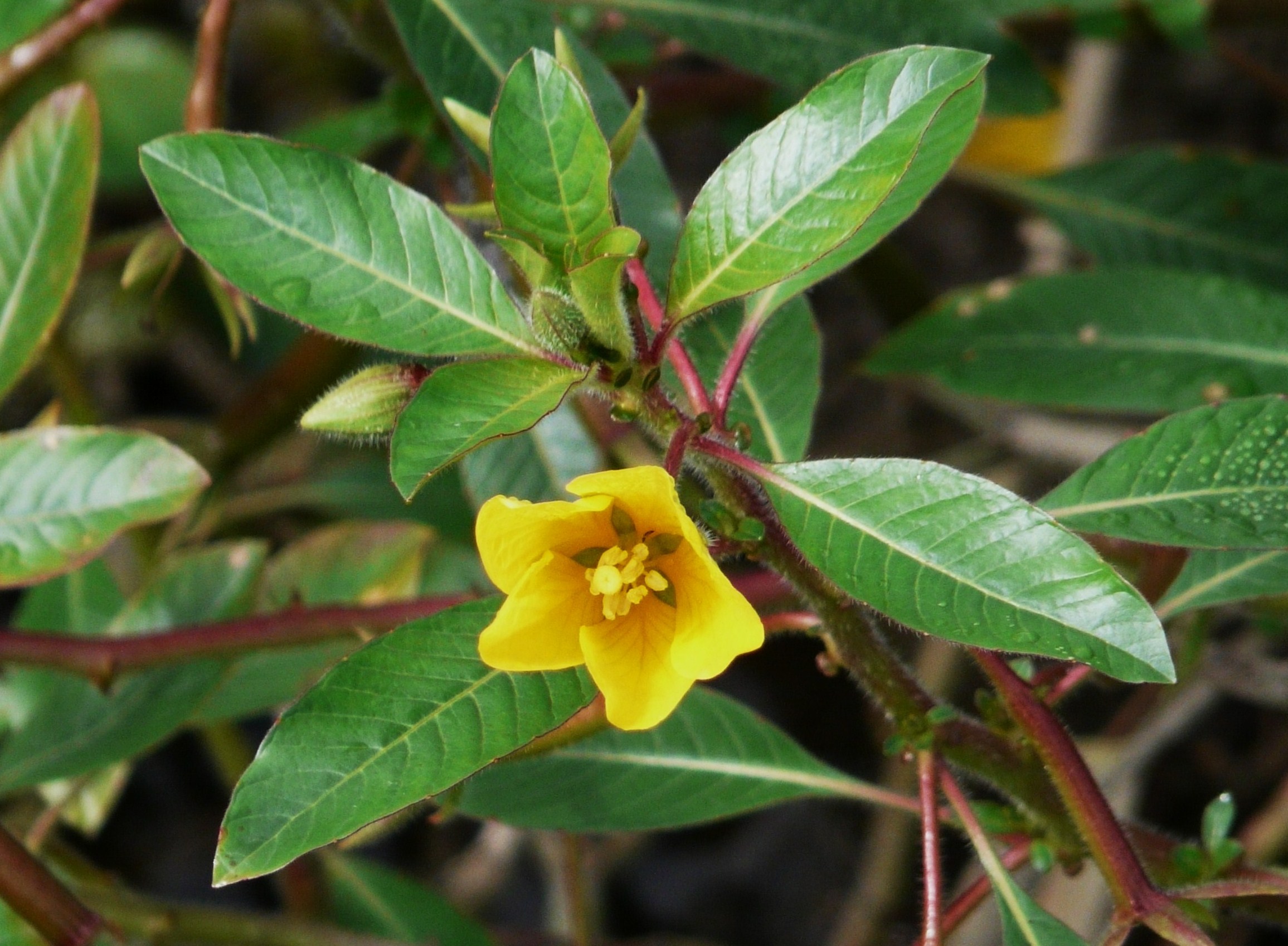
Photo: parent species Ludwigia peploides · Père Igor (via Wikimedia Commons) · CC BY-SA
Family: Onagraceae · Type: Herb · Native
Ludwigia peploides subsp. montevidensis is a native California herb in the Onagraceae family, recognized by . Sticky hairy texture, long fruits (24-32mm), mucronate leaves.
Water primrose is a naturalized perennial found in southern North Coast, northern and central Sierra Nevada Foothills, Central Valley, and southern Coast Ranges in lakeshores, streambanks, floodplains, and seasonal wetlands at elevations below 500 meters. Flowering from May to November, this plant produces yellow flowers 10 to 16 millimeters long with spreading-hairy sepals. Growing 50 to 230 centimeters tall with creeping, floating, or erect stems that are slightly sticky and spreading-hairy, it has distinctive mucronate leaf tips. Its leaves have petioles 5 to 32 millimeters long, arranged alternately along the stems. The fruit is a cylindric capsule 24 to 32 millimeters long, tapered at the base and carried on pedicels 7 to 38 millimeters long.
Identification and appearance
Key characters: 4 sympatric species. Sticky hairy texture, long fruits (24-32mm), mucronate leaves.
Habitat and range
Habitat: Lakeshores, streambanks, floodplains, seasonal wetlands
Elevation: < 500 m
California counties: Tuolumne, Sacramento, Stanislaus, Los Angeles, Amador, Contra Costa, El Dorado, Sutter, Shasta, Marin, Alameda, San Joaquin, Glenn, Butte, Tehama, Placer, Solano, Mendocino, Yolo, Napa
Outside California: southeastern United States (native?), Europe, Australia, native to southern South America
Bloom period
Ludwigia peploides subsp. montevidensis blooms May-Nov.
How to tell it apart
vs Veronica: Ludwigia flowers have 4-5 petals and persistent sepals; Veronica has 4 petals and sepals that fall off.; vs Pistia: Ludwigia has separate petals and normal leaves; Pistia is a free-floating rosette with a spathe-like flower.; vs Portulaca: Ludwigia grows in wet habitats with thin leaves; Portulaca has succulent, fleshy leaves in dry areas.; vs Alternanthera: Ludwigia has slender stems; Alternanthera stems are distinctly swollen at the nodes.; vs Epilobium: Ludwigia flowers have no floral tube; Epilobium has a distinct tubular hypanthium extending above the ovary.
Frequently asked questions
Is Ludwigia peploides subsp. montevidensis native to California?
Yes. Ludwigia peploides subsp. montevidensis is native to California (recorded as native).
When does Ludwigia peploides subsp. montevidensis bloom?
Ludwigia peploides subsp. montevidensis blooms May-Nov.
Where in California does Ludwigia peploides subsp. montevidensis grow?
Ludwigia peploides subsp. montevidensis occurs in Tuolumne, Sacramento, Stanislaus, Los Angeles, Amador, Contra Costa, El Dorado, Sutter and other counties, at elevations of < 500 m.
What plant family does Ludwigia peploides subsp. montevidensis belong to?
Ludwigia peploides subsp. montevidensis is in the Onagraceae family, genus Ludwigia.
What habitat does Ludwigia peploides subsp. montevidensis grow in?
Ludwigia peploides subsp. montevidensis grows in Lakeshores, streambanks, floodplains, seasonal wetlands.
Related species
Other California species in the same genus, family, or bioregion.
Sources: Jepson eFlora · Index of California Plant Names · CalPhotos
Last updated 2026-10-07
Data from The California Species Project — 14,000+ California species with verified data from CNPS, CDFW, USFWS, Cal-IPC, and more.