Lunaria annua
Annual honesty
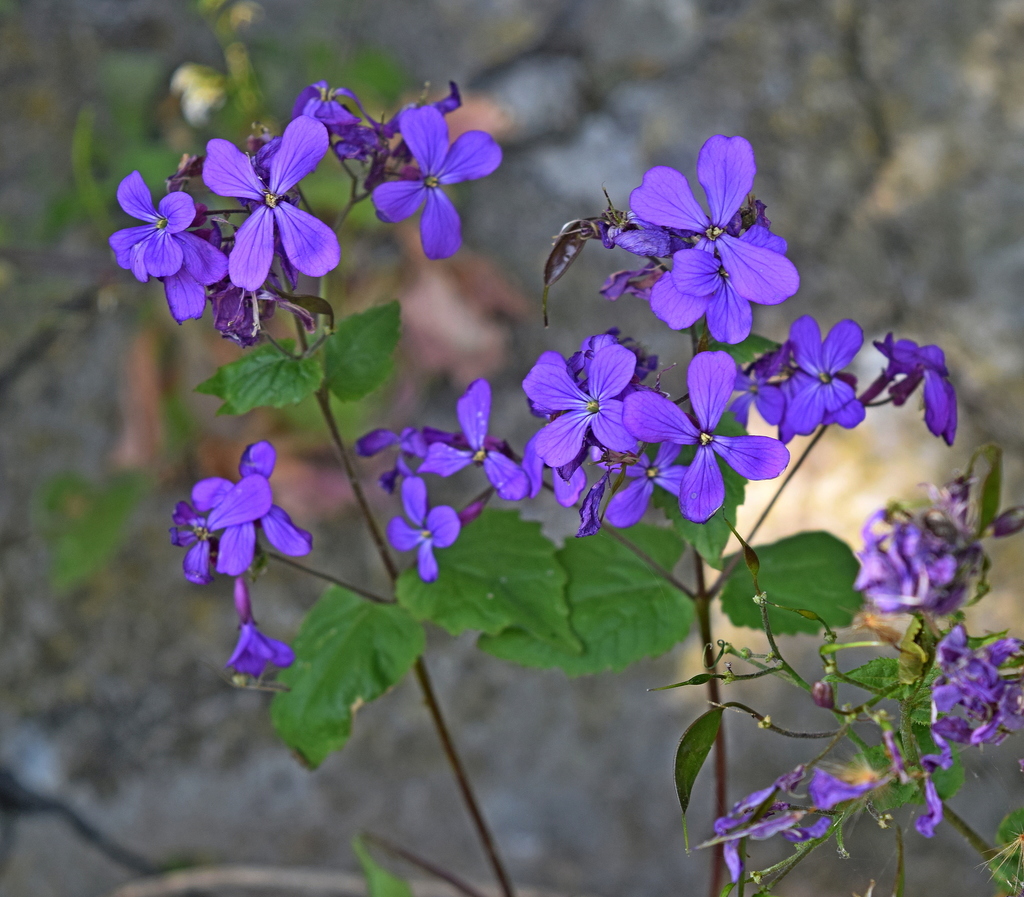
(c) Kostas Zontanos, some rights reserved (CC BY) · licence
Family: Brassicaceae · Type: Herb · Not Native
Lunaria annua (Annual honesty) is a non-native California herb in the Brassicaceae family, recognized by European garden escape; distinctive large translucent seed pods used in dried flower arrangements.
Annual honesty is a naturalized annual found in California Ranges, Central Coast, San Francisco Bay Area, and Southern California coastal regions in disturbed areas at elevations below 1,000 meters. Flowering from April to June, this plant produces striking purple to lavender (occasionally white) flowers with wide-obovate petals 1.7 to 2.5 centimeters long. Growing with hairy stems 40 to 100 centimeters tall, it develops robust upright growth with branching structure. Its broad heart-shaped leaves range from 3 to 12 centimeters long, with wide basal leaves having cordate to cordate-ovate shapes and long petioles. The distinctive round, flattened seed pods are 3 to 5 centimeters long, creating an ornamental appearance in disturbed landscapes.
Identification and appearance
Key characters: European garden escape; distinctive large translucent seed pods used in dried flower arrangements
Habitat and range
Habitat: Disturbed areas
Elevation: < 1000 m
California counties: Santa Cruz, San Bernardino, Butte, Plumas, Los Angeles, Alameda, El Dorado, Sierra, Humboldt, Marin, Napa, San Luis Obispo, San Mateo, San Francisco, Placer, Nevada, Contra Costa, Santa Barbara, San Diego, Santa Clara, Sonoma, Monterey, Mariposa
Outside California: Canada, United States, native to Europe
Bloom period
Lunaria annua blooms Apr-Jun.
How to tell it apart
vs Pelargonium: Lunaria has 4 petals in cross and flat round pods; Pelargonium has 5 petals, irregular flowers, and long-beaked capsules.; vs Hesperis: Lunaria has huge flat round translucent pods (3-5cm); Hesperis has narrow cylindrical pods under 10cm.; vs Pericallis: Lunaria has 4-petaled cross-shaped flowers; Pericallis has composite daisy-like flower heads with many ray flowers.; vs Raphanus: Lunaria has flat translucent coin-like pods; Raphanus has thick beaded cylindrical pods that don't split open.; vs Cardamine: Lunaria has huge round pods (3-5cm wide); Cardamine has narrow linear pods under 4mm wide.
Frequently asked questions
Is Lunaria annua native to California?
No. Lunaria annua is not native to California (recorded as not native).
When does Lunaria annua bloom?
Lunaria annua blooms Apr-Jun.
Where in California does Lunaria annua grow?
Lunaria annua occurs in Santa Cruz, San Bernardino, Butte, Plumas, Los Angeles, Alameda, El Dorado, Sierra and other counties, at elevations of < 1000 m.
What plant family does Lunaria annua belong to?
Lunaria annua is in the Brassicaceae family, genus Lunaria.
What habitat does Lunaria annua grow in?
Lunaria annua grows in Disturbed areas.
Related species
Other California species in the same genus, family, or bioregion.
Sources: Jepson eFlora · Index of California Plant Names · CalPhotos
Last updated 2026-10-07
Data from The California Species Project — 14,000+ California species with verified data from CNPS, CDFW, USFWS, Cal-IPC, and more.