Lupinus microcarpus var. densiflorus
Secund chick lupine
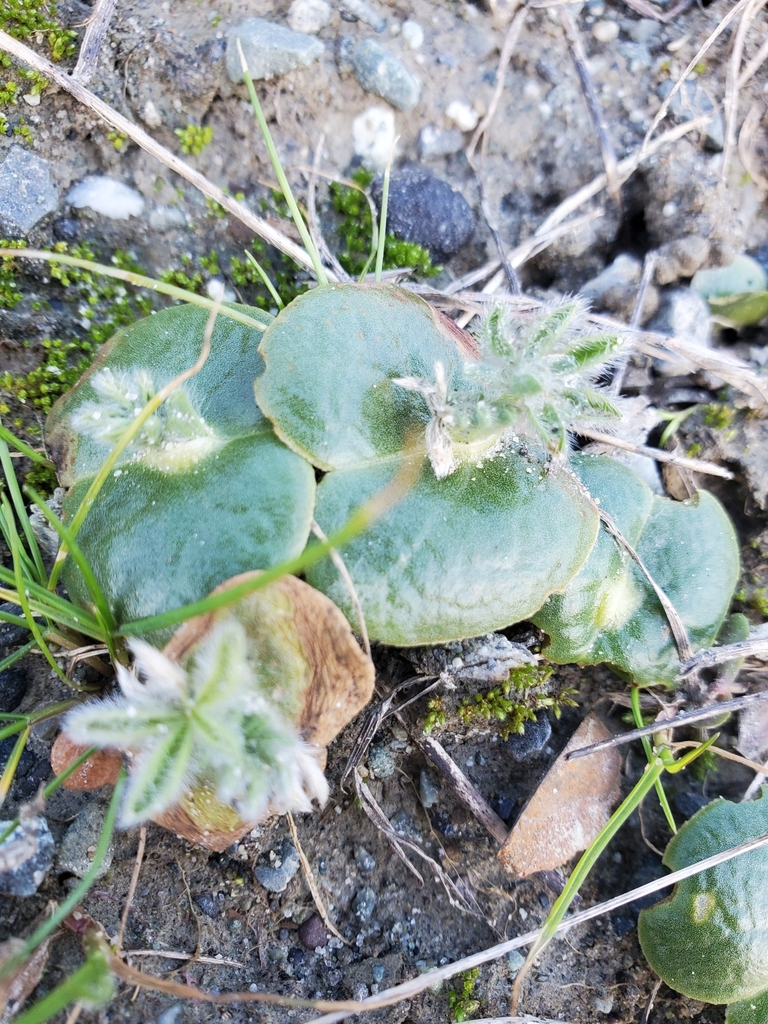
Photo: parent species Lupinus microcarpus · no rights reserved · CC0
Family: Fabaceae · Type: Herb · Native
Lupinus microcarpus var. densiflorus (Secund chick lupine) is a native California herb in the Fabaceae family, recognized by fruit arrangement and petal color from other varieties.
Secund chick lupine is a California native annual found in northwestern California, Sierra Nevada foothills, Tehama County, Central Valley, central and eastern coastal areas, eastern southern California, Transverse Ranges, Peninsular Ranges, Mojave Desert Mountains, and desert regions at elevations below 1,600 meters. Flowering from April to June, this plant produces white to yellow flowers, often tinged with pink or lavender, with distinctive oblanceolate wing petals that have ciliate upper margins. Growing 10 to 30 centimeters tall with spreading inflorescences covered in short to long hairs, it forms dense clusters in open or disturbed areas. Its compound leaves are typical of lupines, with multiple leaflets arranged in a palmate pattern. The fruits are somewhat spreading and tend to cluster on one side of the flower axis, a characteristic feature of this variety.
Identification and appearance
Key characters: 95 sympatric species; distinguished by fruit arrangement and petal color from other varieties
Habitat and range
Habitat: Abundant. Open or disturbed areas, occasionally seeded on roadbanks
Elevation: < 1600 m
California counties: Humboldt, Placer, Kern, Los Angeles, San Luis Obispo, Santa Barbara, Riverside, Monterey, Glenn, Butte, Tulare, Lake, Alameda, Tuolumne, Napa, San Joaquin, Fresno, San Benito, Marin, Santa Clara, Madera, Colusa, San Diego, San Bernardino, Ventura, Calaveras, Amador, Contra Costa, Yolo, El Dorado, San Mateo, Sacramento, Mariposa, Sonoma, Tehama, Yuba, Sutter, Trinity, Stanislaus, Solano, Nevada, Orange, Merced, Siskiyou, Modoc, Mendocino, Lassen, Shasta
Outside California: Arizona, Baja California
Bloom period
Lupinus microcarpus var. densiflorus blooms Apr-Jun.
How to tell it apart
vs Salvia: Lupine has pea flowers and palmate leaves; sage has tubular two-lipped flowers and opposite leaves.; vs Artemisia: Lupine has large showy flower spikes; sagebrush has tiny inconspicuous flowers and silvery aromatic foliage.; vs Thermopsis: Lupine typically has 7-11 leaflets; false lupine has exactly 3 leaflets and bright yellow flowers.; vs Delphinium: Lupine has pea flowers; larkspur has flowers with prominent backward-pointing spur.; vs Vicia: Lupine is upright with palmate leaves; vetch is climbing with pinnate leaves and tendrils.
Frequently asked questions
Is Lupinus microcarpus var. densiflorus native to California?
Yes. Lupinus microcarpus var. densiflorus is native to California (recorded as native).
When does Lupinus microcarpus var. densiflorus bloom?
Lupinus microcarpus var. densiflorus blooms Apr-Jun.
Where in California does Lupinus microcarpus var. densiflorus grow?
Lupinus microcarpus var. densiflorus occurs in Humboldt, Placer, Kern, Los Angeles, San Luis Obispo, Santa Barbara, Riverside, Monterey and other counties, at elevations of < 1600 m.
What plant family does Lupinus microcarpus var. densiflorus belong to?
Lupinus microcarpus var. densiflorus is in the Fabaceae family, genus Lupinus.
What habitat does Lupinus microcarpus var. densiflorus grow in?
Lupinus microcarpus var. densiflorus grows in Abundant. Open or disturbed areas, occasionally seeded on roadbanks.
Related species
Other California species in the same genus, family, or bioregion.
Sources: Jepson eFlora · Index of California Plant Names · CalPhotos
Last updated 2026-10-07
Data from The California Species Project — 14,000+ California species with verified data from CNPS, CDFW, USFWS, Cal-IPC, and more.